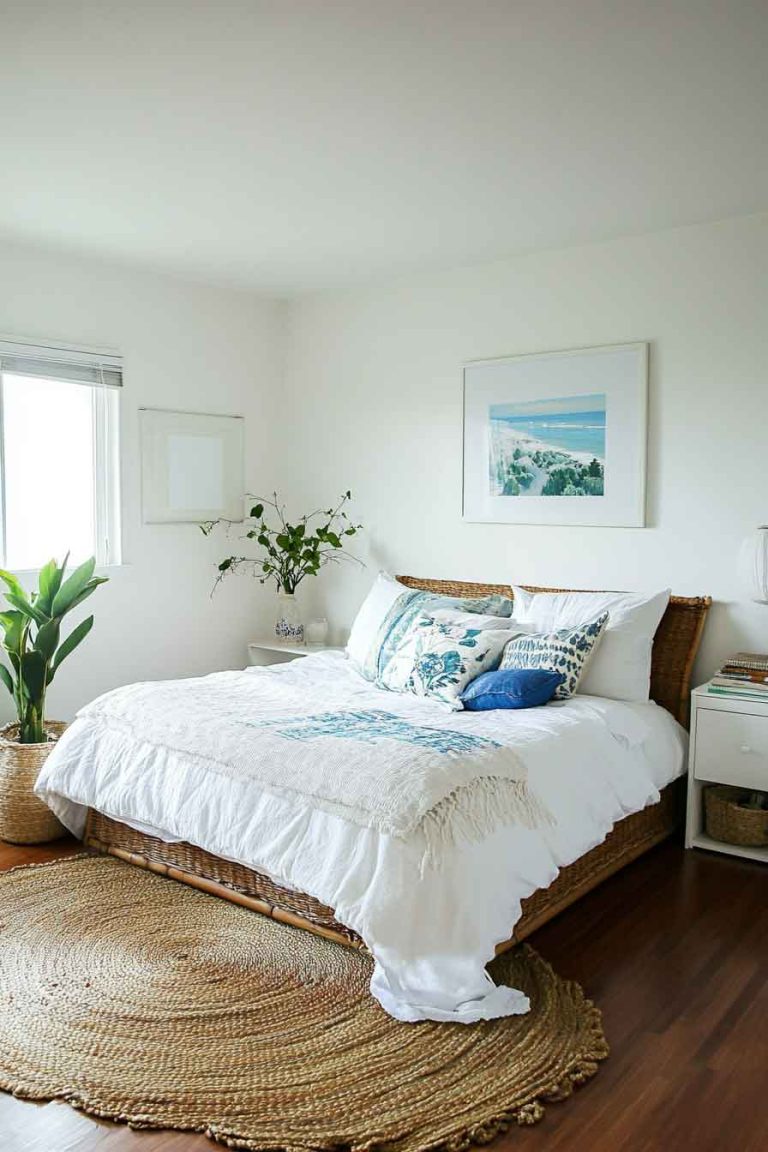
27 Minimalist Bedroom Ideas
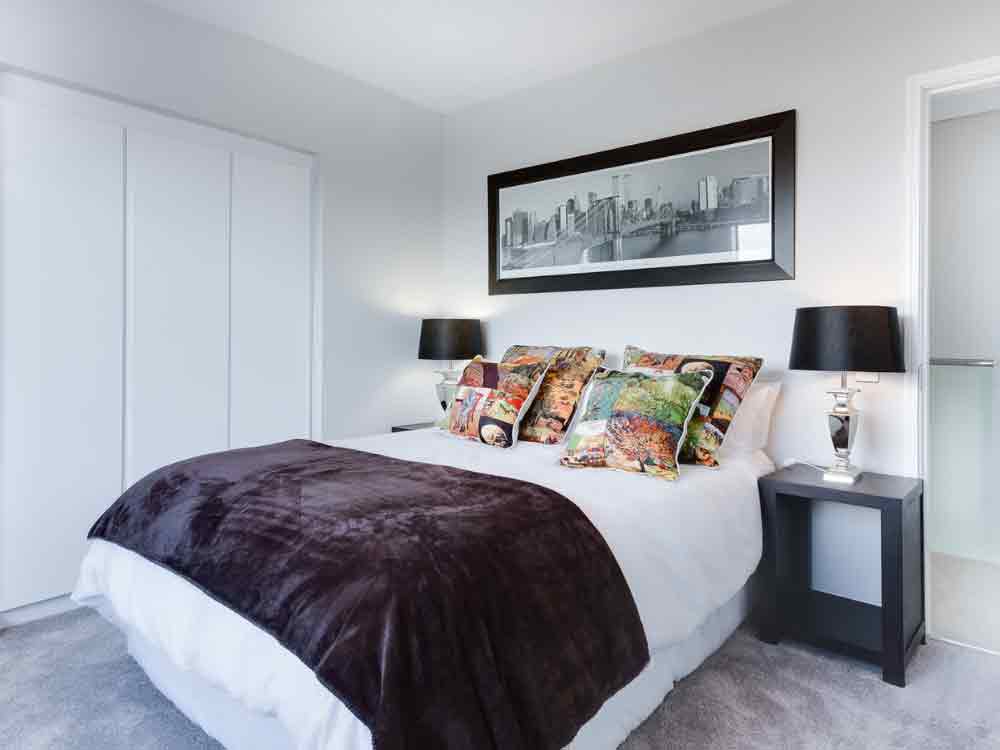
Are you dreaming of a peaceful sanctuary where clutter disappears and calm takes over? These minimalist bedroom ideas will help you create exactly that! Minimalist design has captured hearts worldwide, and it’s easy to understand why.
With its emphasis on clean lines, purposeful furniture, and serene color palettes, minimalism offers the perfect balance of simplicity and sophistication. In this article, we’ll share practical and inspiring ways to transform your bedroom into a minimalist haven, whether you’re redesigning completely or simply removing the excess from your current space.
Many people choose minimalist bedroom design because it creates a restful environment that promotes better sleep and mental clarity. The absence of visual clutter helps reduce stress and anxiety, making your bedroom a true retreat from the busy world outside.
Additionally, minimalist style emphasizes quality over quantity, encouraging you to invest in pieces you truly love and need. Whether you prefer a crisp modern minimalist look or a warmer Scandinavian-inspired approach, there are countless ways to make this style your own.
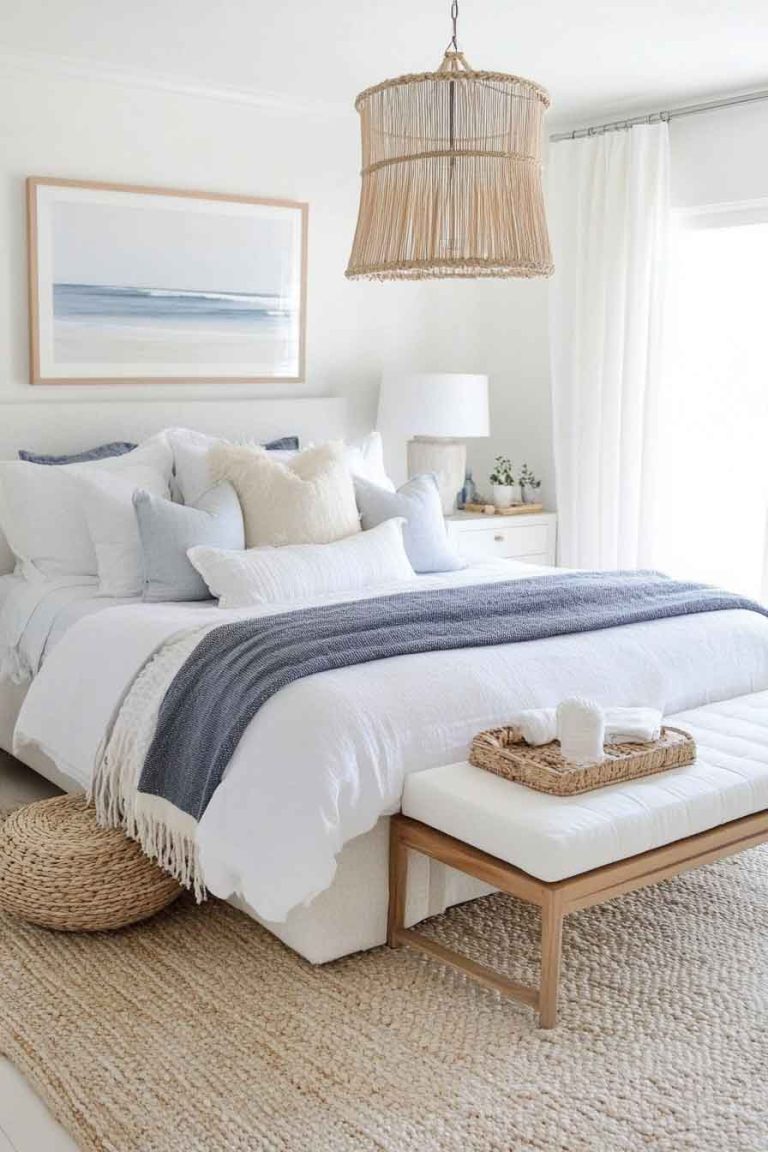
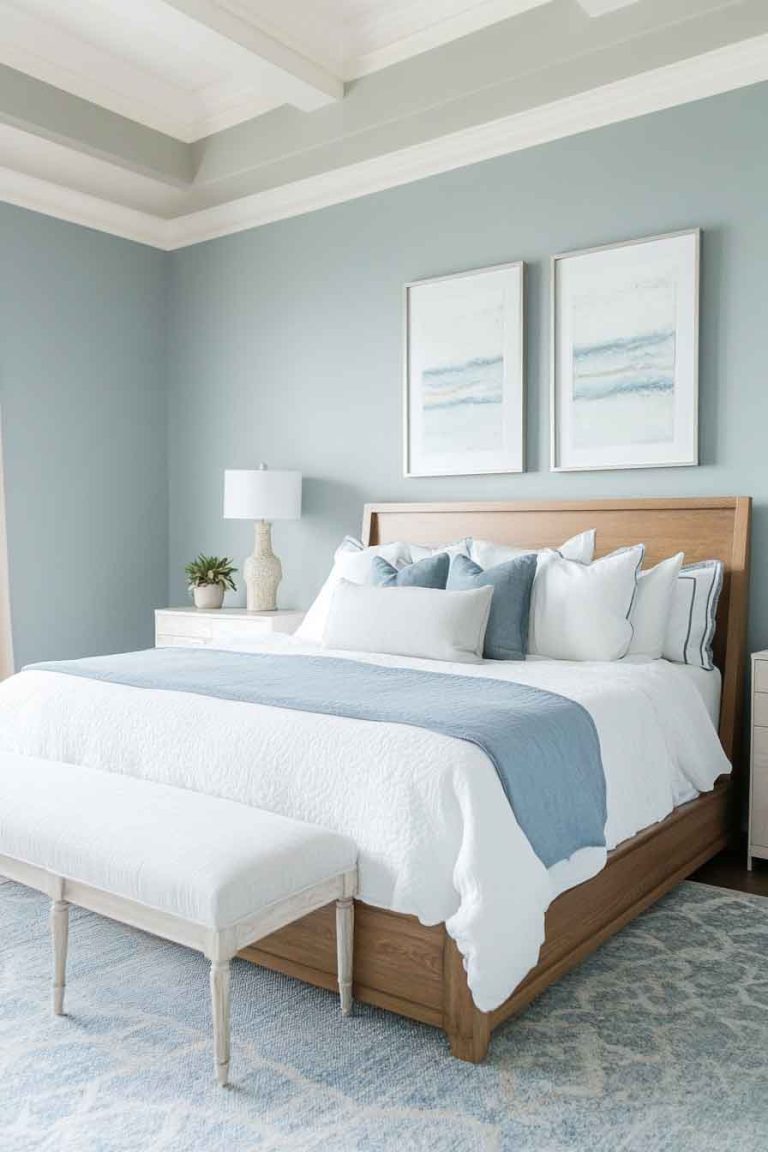
Minimalist bedrooms typically feature neutral color schemes such as white, gray, and beige, with occasional touches of black or muted earth tones for contrast. This style is celebrated for its simplicity and functionality, making it an ideal choice for those seeking a more peaceful and organized living space.
What is Minimalist Bedroom Design?
Minimalist bedroom design is a style of interior decorating inspired by the principle that less is more. It focuses on simplicity, clean lines, and the elimination of unnecessary items.
The minimalist aesthetic is calm, uncluttered, and intentional, often incorporating elements like streamlined furniture, hidden storage, and neutral colors. Minimalist design is about creating space that breathes and choosing only what adds value to your life.
Almost any bedroom can embrace the minimalist approach, regardless of size or architecture. Success with this style comes from thoughtful curation and maintaining only items that serve a purpose or bring genuine joy.
Quality matters more than quantity in minimalist spaces. Think simple bed frames, unadorned windows or subtle curtains, carefully chosen decor, and using natural materials in their purest forms.
Elements of Minimalist Bedroom Design
1. A Neutral Foundation
Neutral color palettes form the backbone of minimalist bedroom design. These calming shades create a serene atmosphere and make the space feel larger and more open.
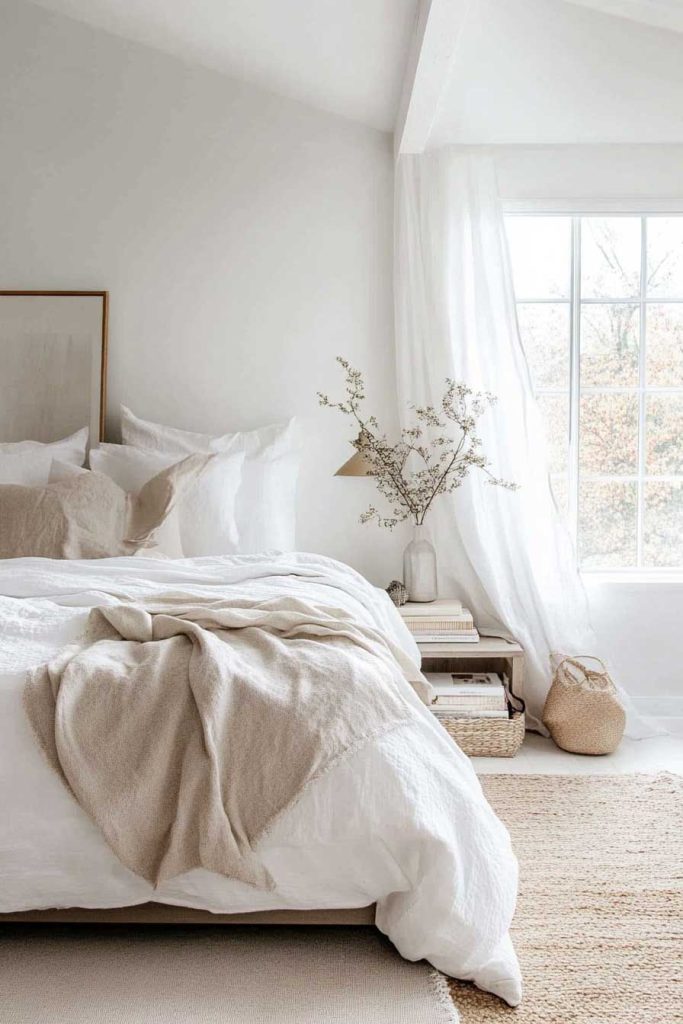
White, beige, gray, and soft earth tones work beautifully as your primary colors. These hues reflect light and create a sense of spaciousness. Layer different shades of the same color family to add depth without introducing visual chaos. Stick to two or three main colors throughout the room to maintain cohesion and calm.
2. Quality Over Quantity
The foundation of minimalist bedroom design is investing in fewer, better-quality pieces. Choose furniture that combines excellent craftsmanship with timeless design.
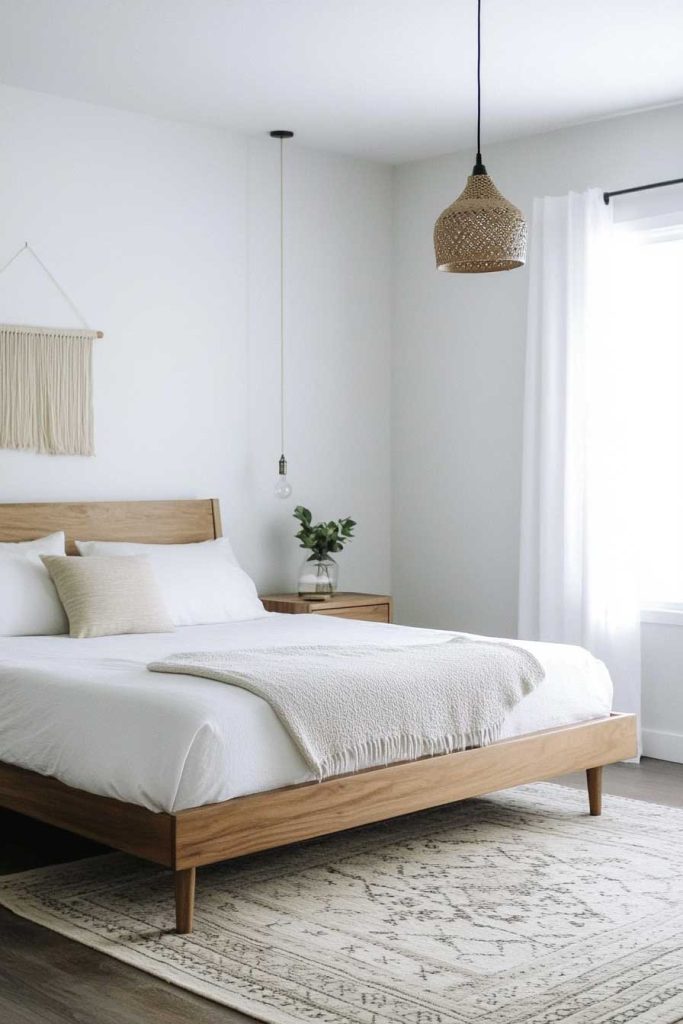
Minimalist furniture features clean lines, simple shapes, and neutral finishes. Each piece should serve a clear purpose in your bedroom. A well-made bed frame, a functional nightstand, and adequate storage are often all you need. Avoid overcrowding the space with unnecessary furniture that disrupts the room’s flow.
3. Declutter and Simplify
The most important step in creating a minimalist bedroom is removing everything that doesn’t serve a purpose or bring you joy. Clear surfaces are essential to the minimalist aesthetic.
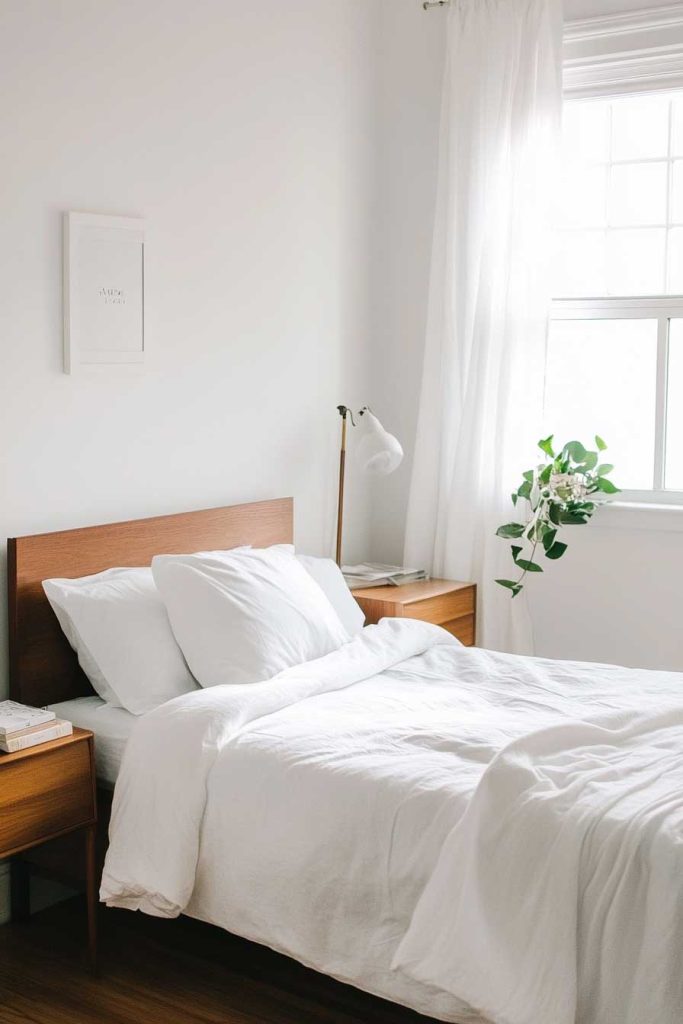
Keep nightstands clear except for one or two essential items like a lamp or a small plant. Remove decorative objects that don’t hold meaning. Store clothing out of sight in closets or dressers. The goal is to create visual peace by eliminating distractions.
4. Hidden Storage Solutions
Smart storage is crucial in minimalist bedrooms. The key is keeping necessary items while maintaining clean, uncluttered surfaces.
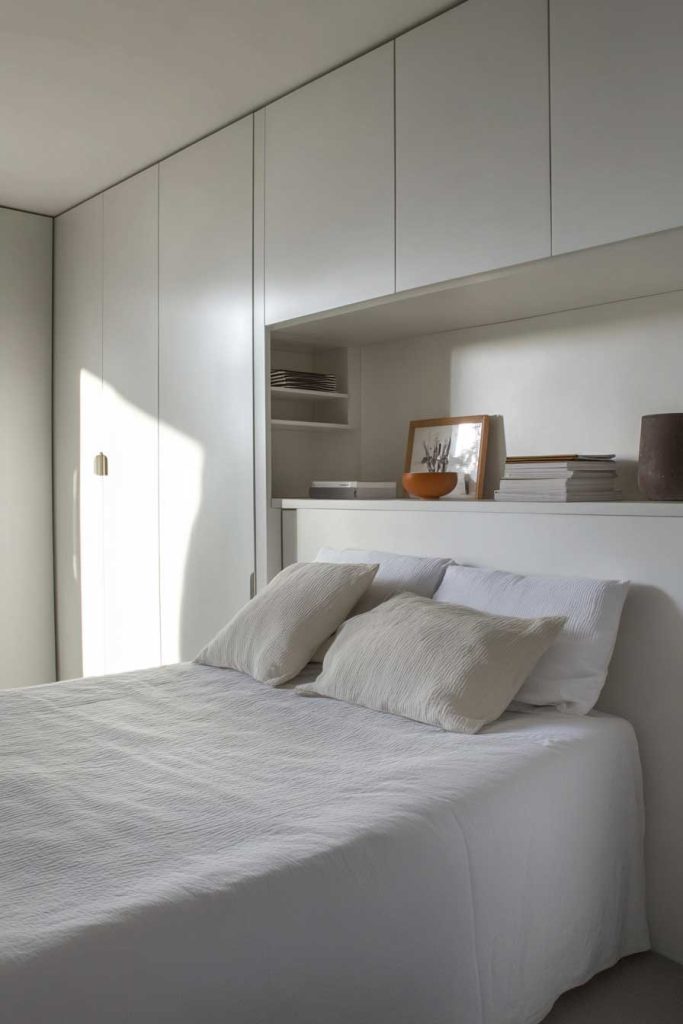
Consider beds with built-in drawers, floating shelves with minimal brackets, and closets with organized systems. Storage should be functional but invisible or barely noticeable. Under-bed storage, wall-mounted cabinets, and built-in wardrobes help maintain the streamlined appearance while keeping your belongings organized and accessible.
5. Embrace Negative Space
Empty space is not wasted space in minimalist design. Negative space allows the room to breathe and creates a sense of calm.
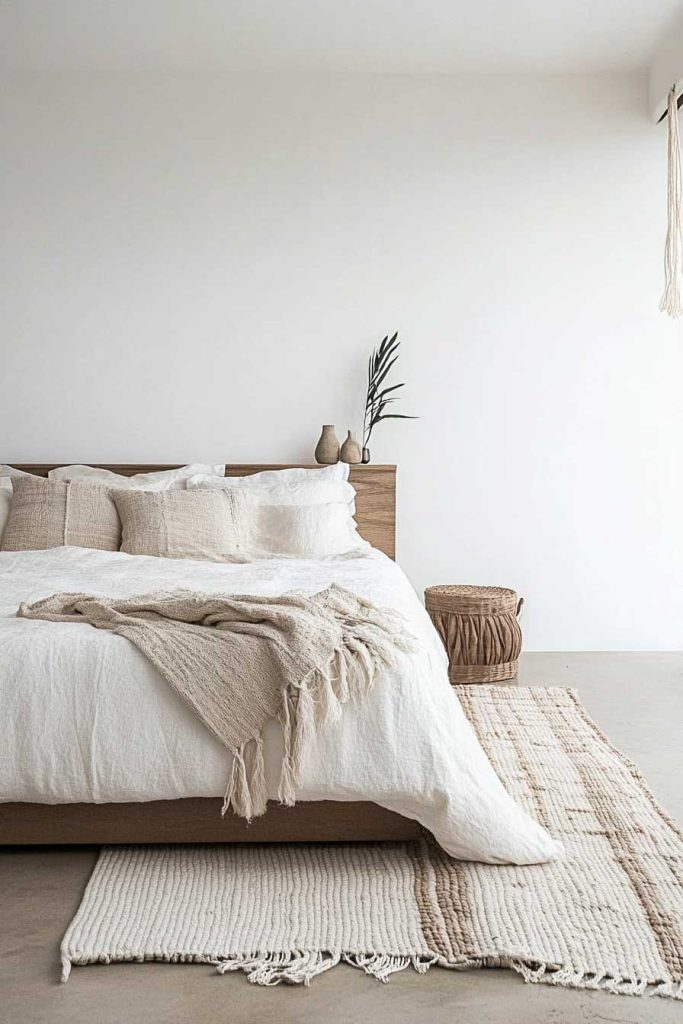
Don’t feel pressured to fill every corner or wall. Leave areas empty intentionally. This openness is what makes minimalist bedrooms feel so peaceful and spacious. The space between objects is just as important as the objects themselves.
6. Simple Window Treatments
Windows in minimalist bedrooms should allow natural light to flow freely while maintaining privacy when needed.
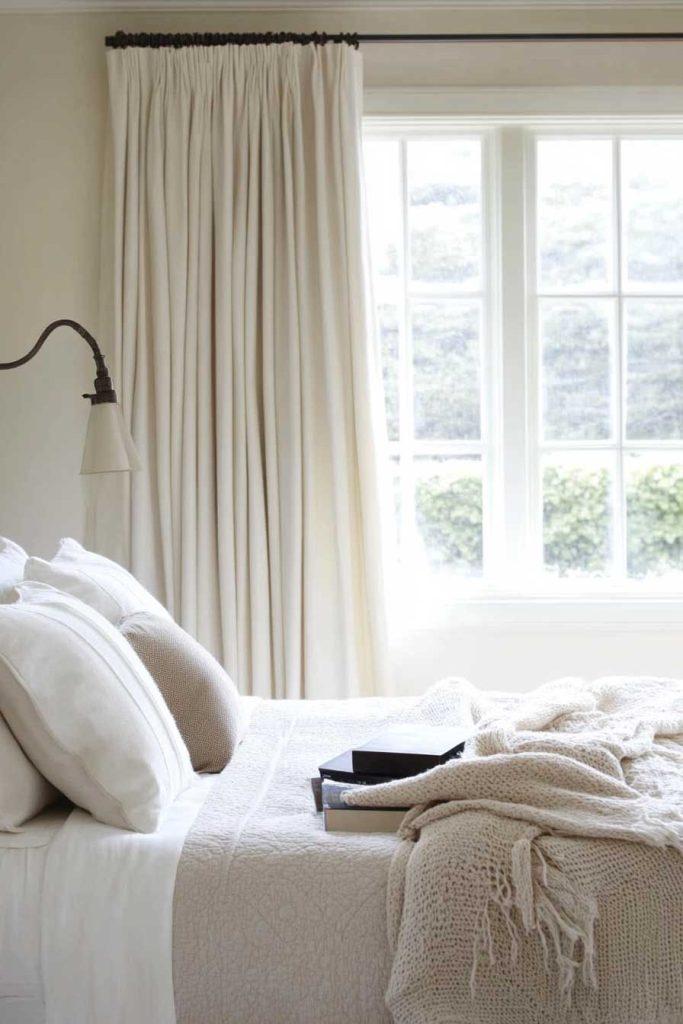
Choose simple curtains in solid neutral colors, or opt for clean-lined blinds or shades. Avoid heavy drapes, busy patterns, or excessive layering. Many minimalist bedrooms feature bare windows when privacy allows, celebrating natural light as a key design element.
7. Minimal Decor
In minimalist bedrooms, less truly is more when it comes to decoration. Each decorative item should be intentional and meaningful.
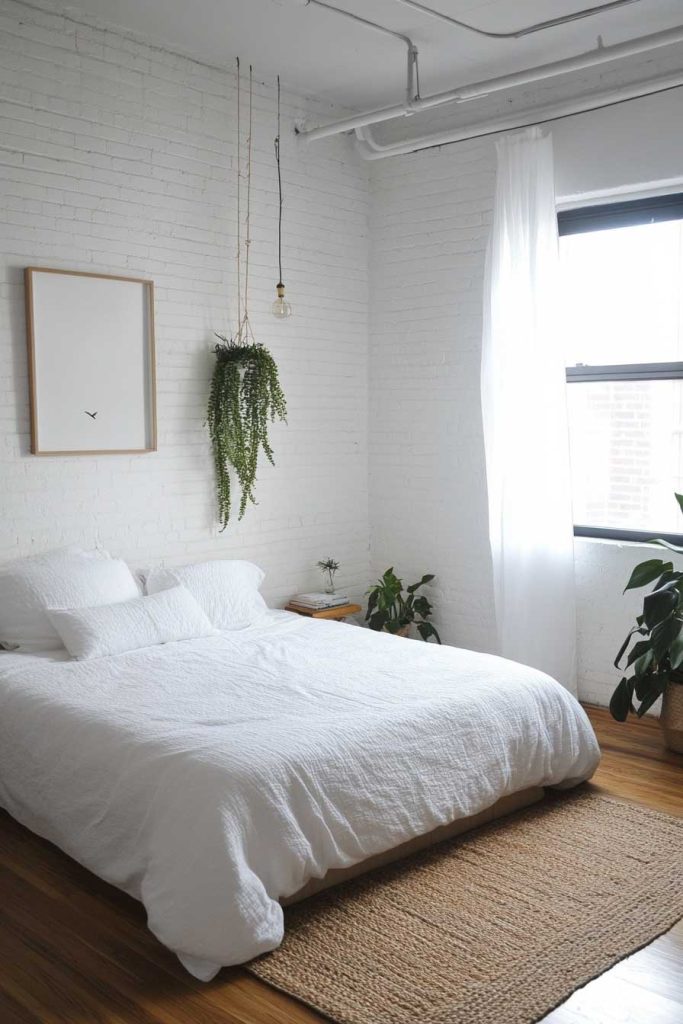
Select one or two pieces of artwork that you love rather than covering walls with multiple frames. A single plant, a carefully chosen vase, or one sculptural object can make a stronger statement than numerous small items. Quality and intention matter more than quantity.
8. Natural Light
Maximizing natural light is essential in minimalist bedroom design. Light makes spaces feel larger, cleaner, and more inviting.
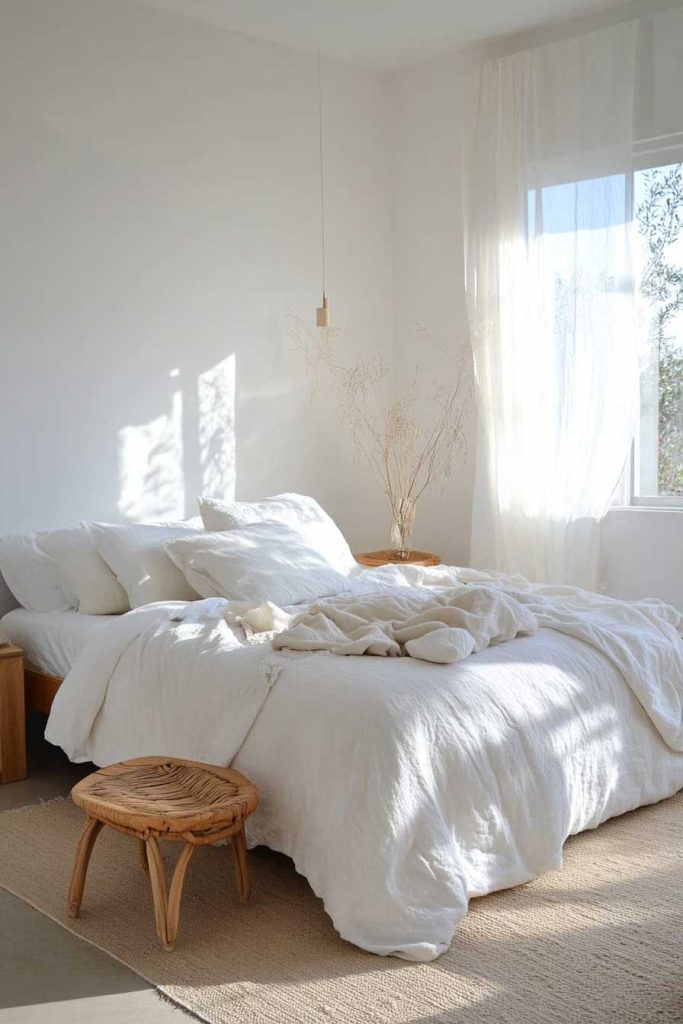
Keep window areas clear and avoid blocking light sources with furniture. Use sheer curtains or leave windows uncovered when possible. Natural light enhances the neutral color palette and highlights the clean lines of minimalist furniture.
9. Textural Interest
While minimalist bedrooms avoid visual clutter, they shouldn’t feel cold or sterile. Texture adds warmth and depth without creating chaos.
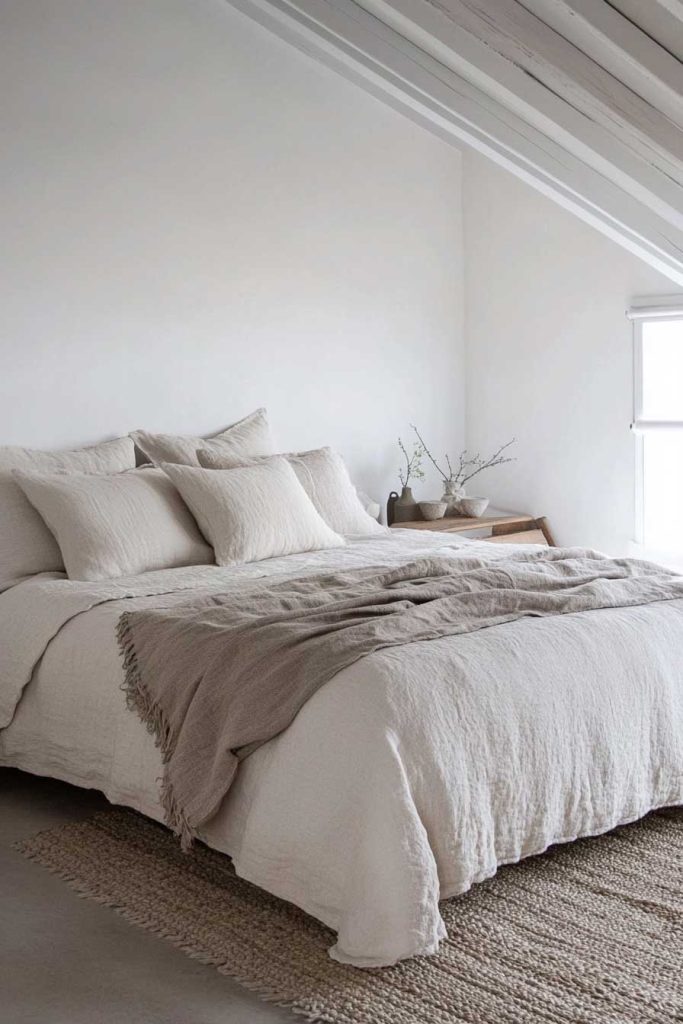
Incorporate different textures through bedding, a simple area rug, or a textured throw blanket. Natural materials like linen, cotton, wool, and wood add organic warmth. Keep textures in the same neutral color family to maintain visual simplicity while adding tactile interest.
10. Functional Lighting
Lighting in minimalist bedrooms should be both practical and beautiful. Choose fixtures with simple, clean designs.
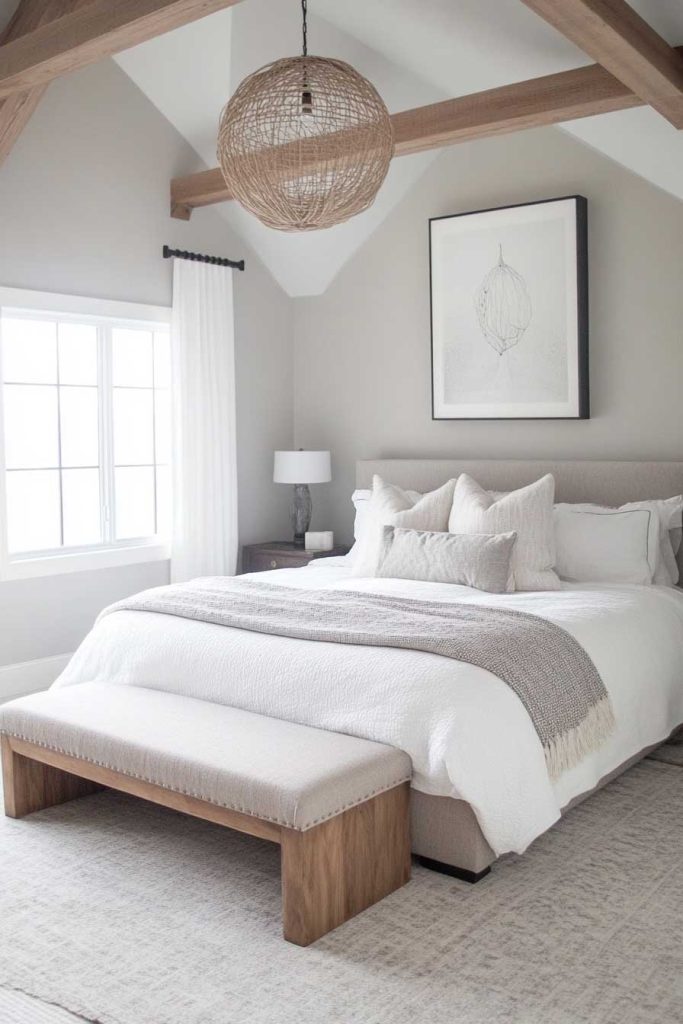
A streamlined pendant light or recessed ceiling lights provide ambient lighting. Simple table lamps or wall-mounted reading lights add task lighting without cluttering surfaces. Avoid ornate chandeliers or overly decorative fixtures that conflict with the minimalist aesthetic.
11. The Right Bed
Your bed is the focal point of any bedroom, and in minimalist design, it should make a quiet statement through simplicity.
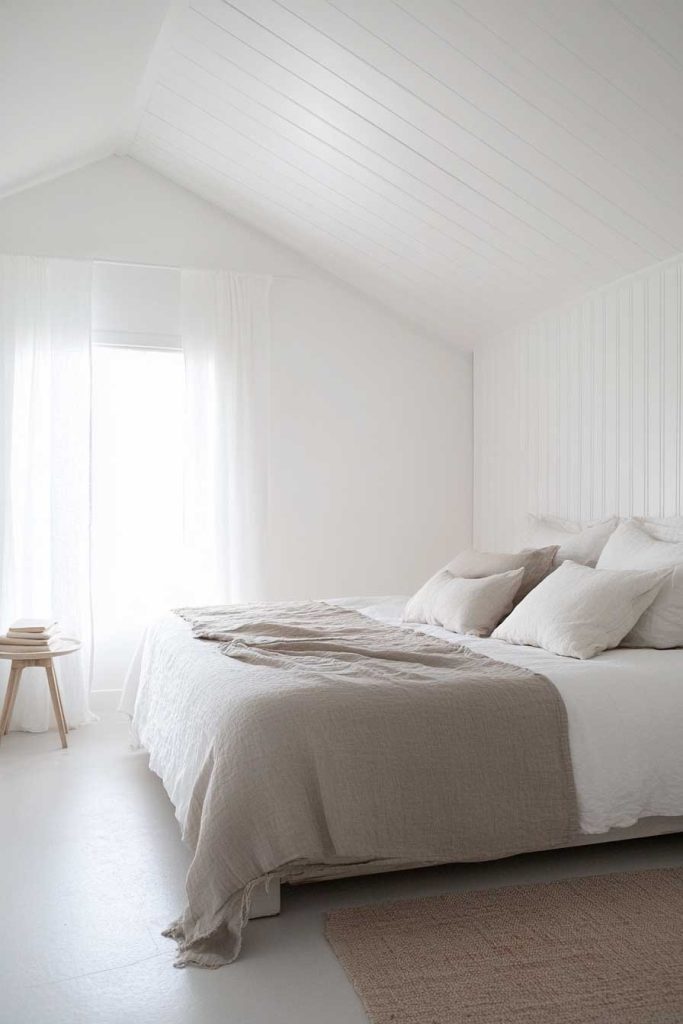
Choose a bed frame with clean lines and a simple headboard, or skip the headboard entirely for an ultra-minimal look. Platform beds work particularly well in minimalist spaces. Dress the bed with high-quality bedding in neutral colors, keeping layers simple and neat.
12. Limit Your Color Palette
Restricting your color choices creates harmony and calm in minimalist bedrooms. Here are effective color approaches:
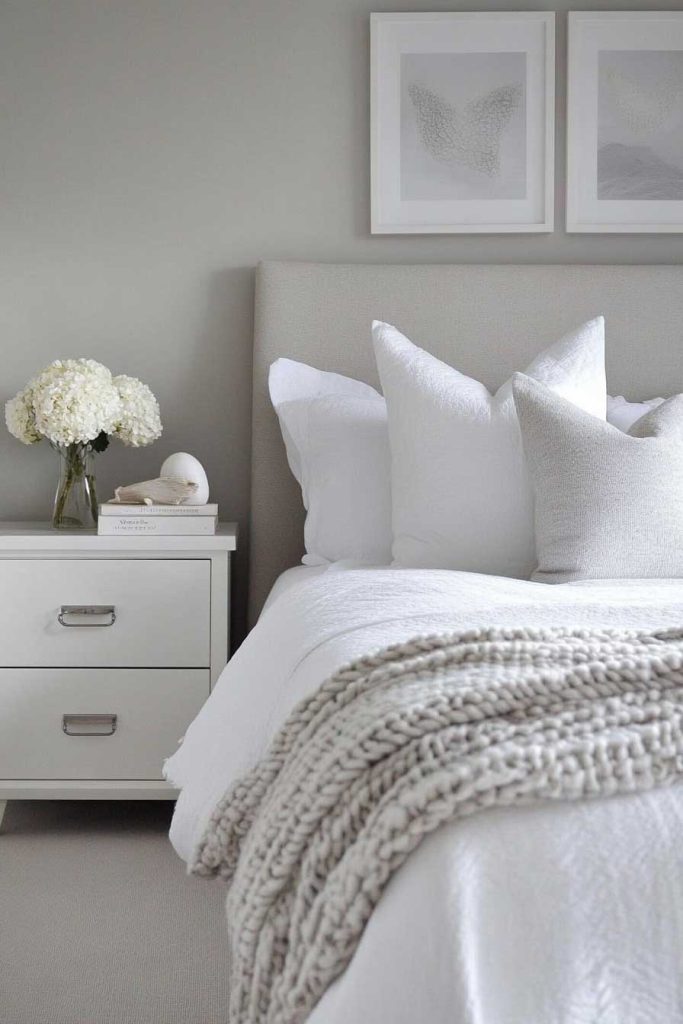
All white: A completely white bedroom feels fresh, clean, and spacious. Add warmth through different textures and natural materials.
White and gray: This combination adds subtle contrast while maintaining serenity. Use varying shades of gray for depth.
Warm neutrals: Beige, cream, and soft taupe create a cozy minimalist bedroom. These colors add warmth without overwhelming the senses.
Monochromatic schemes: Using different shades of a single color creates sophisticated simplicity.
13. Choose Natural Materials
Natural materials bring warmth and authenticity to minimalist bedrooms without adding visual complexity.
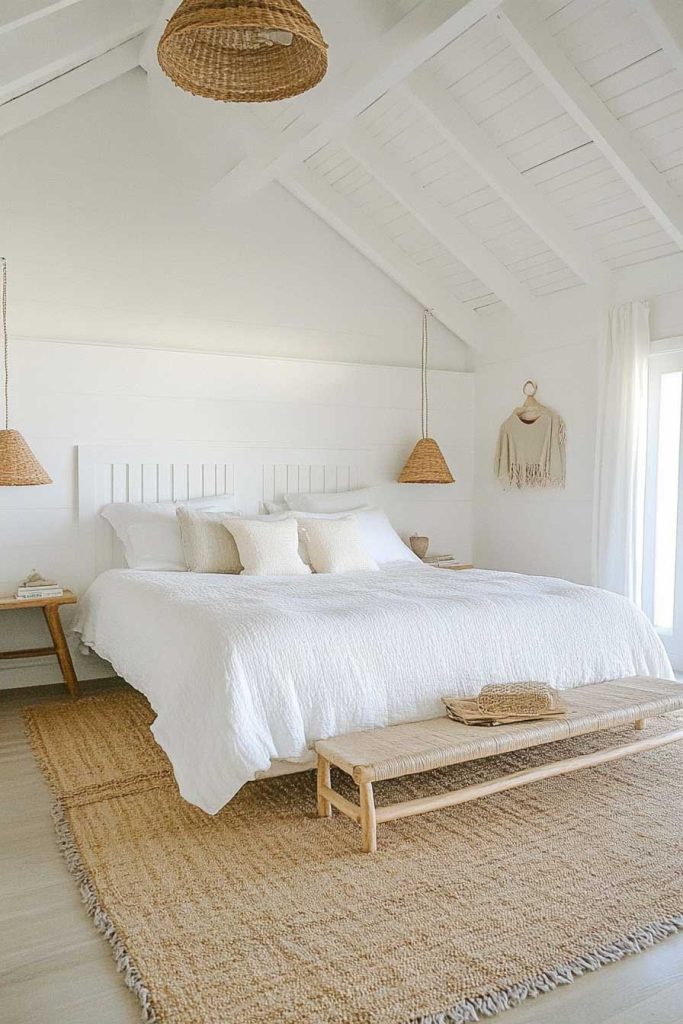
Wood flooring or furniture in light oak, ash, or maple maintains the airy feel. Stone accents add organic texture. Natural fiber rugs in jute or sisal provide subtle pattern. These materials connect the space to nature while supporting the minimalist aesthetic.
14. Keep Surfaces Clear
One of the defining features of minimalist bedrooms is the absence of clutter on surfaces.
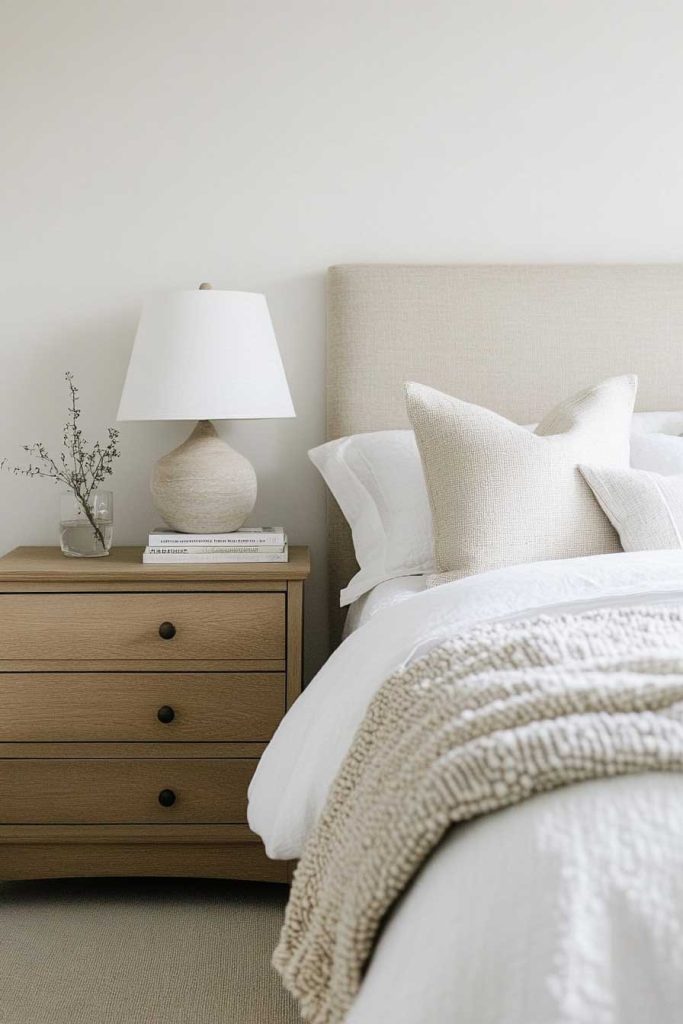
Nightstands should hold only essentials like a lamp and perhaps a book or glass of water. Dressers should have clear tops. Avoid collecting decorative items on surfaces. This discipline creates the calm, organized feeling that makes minimalist bedrooms so appealing.
15. Simple Flooring
Flooring in minimalist bedrooms should be clean and simple, serving as a neutral foundation.
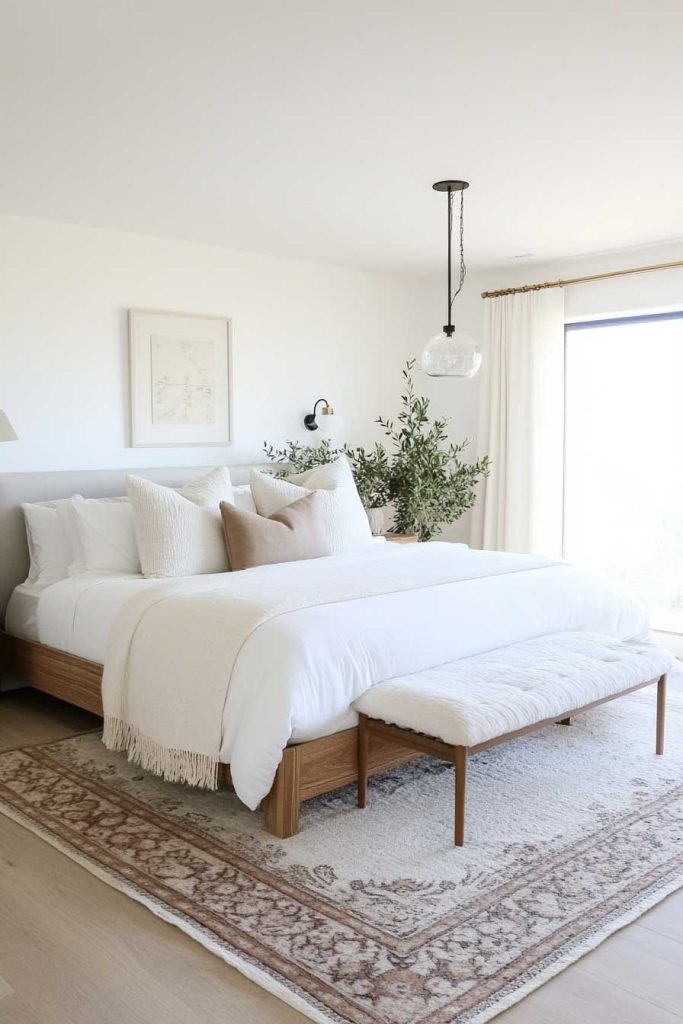
Light wood floors, polished concrete, or neutral carpeting all work well. Avoid busy patterns or dark colors that make the space feel heavy. If using area rugs, choose simple designs in neutral tones that complement rather than compete with the overall design.
16. Streamlined Technology
Technology is part of modern life, but in minimalist bedrooms, it should be integrated thoughtfully.
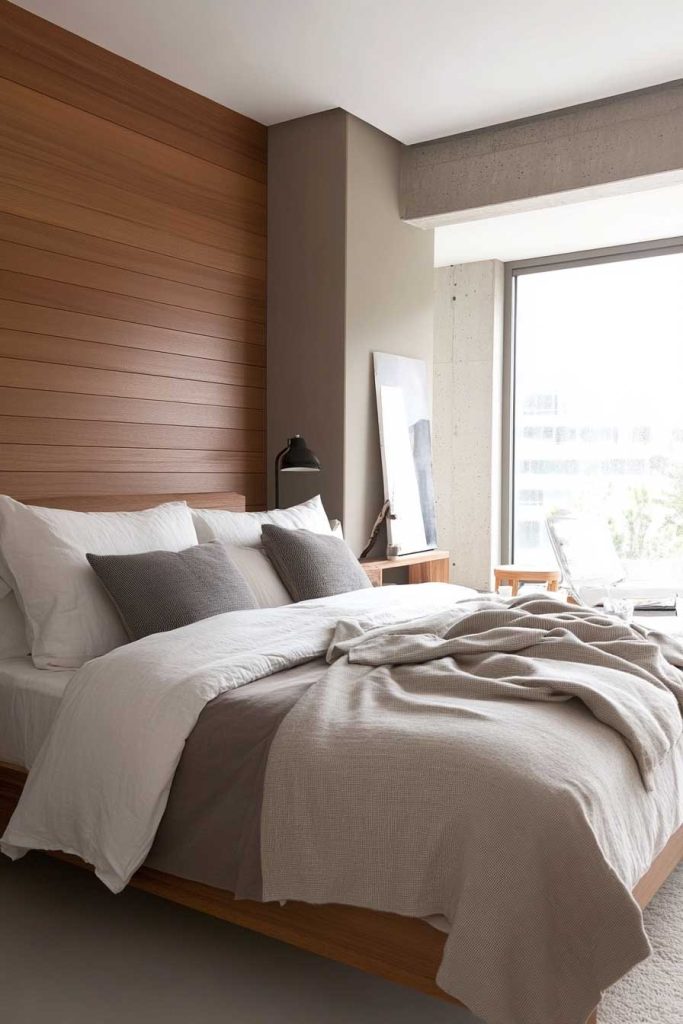
Hide television cables and chargers. Consider wall-mounting screens to save space. Use cord management solutions to keep cables out of sight. Store devices in drawers when not in use. The goal is functionality without visual clutter.
17. Plants for Life
A few carefully chosen plants bring life and freshness to minimalist bedrooms without creating clutter.
Select one or two plants in simple pots. Snake plants, pothos, or peace lilies work well in bedrooms. Place plants intentionally rather than scattering multiple small pots around the room. The greenery provides a natural accent that enhances rather than overwhelms the space.
18. Minimalist Bedding
Bedding in minimalist bedrooms should be simple, high-quality, and comfortable.
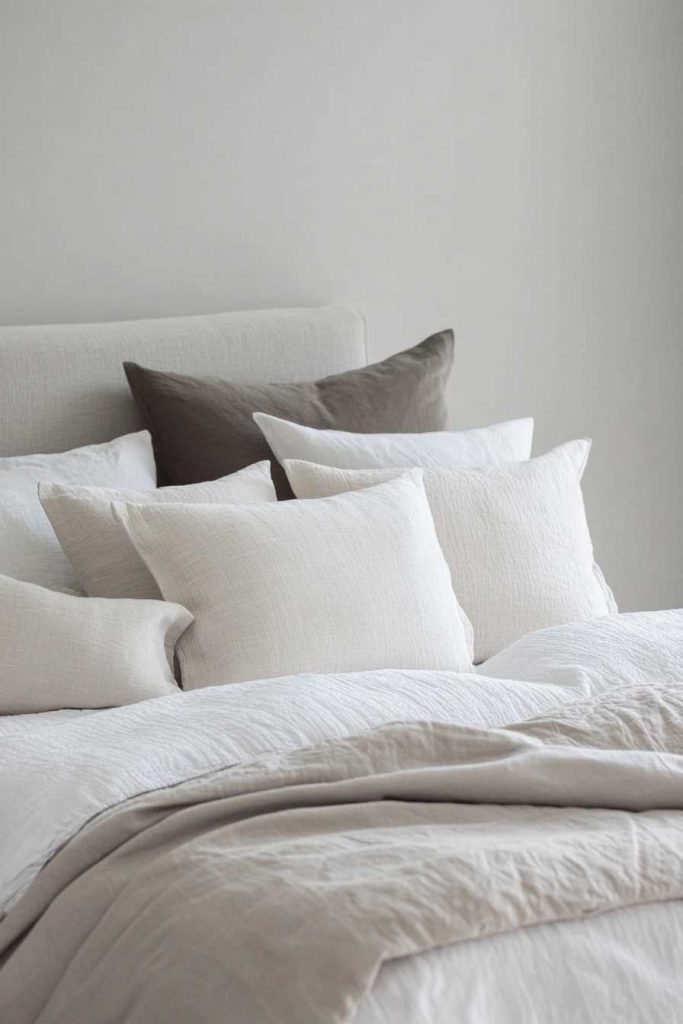
Choose solid colors or very subtle patterns. White, gray, or neutral bedding creates the classic minimalist look. Invest in quality sheets, duvet covers, and pillows rather than layering numerous decorative cushions and throws. Keep pillow arrangements simple with just two or four pillows.
19. Built-In Features
Built-in furniture and features maximize space efficiency while maintaining clean lines.
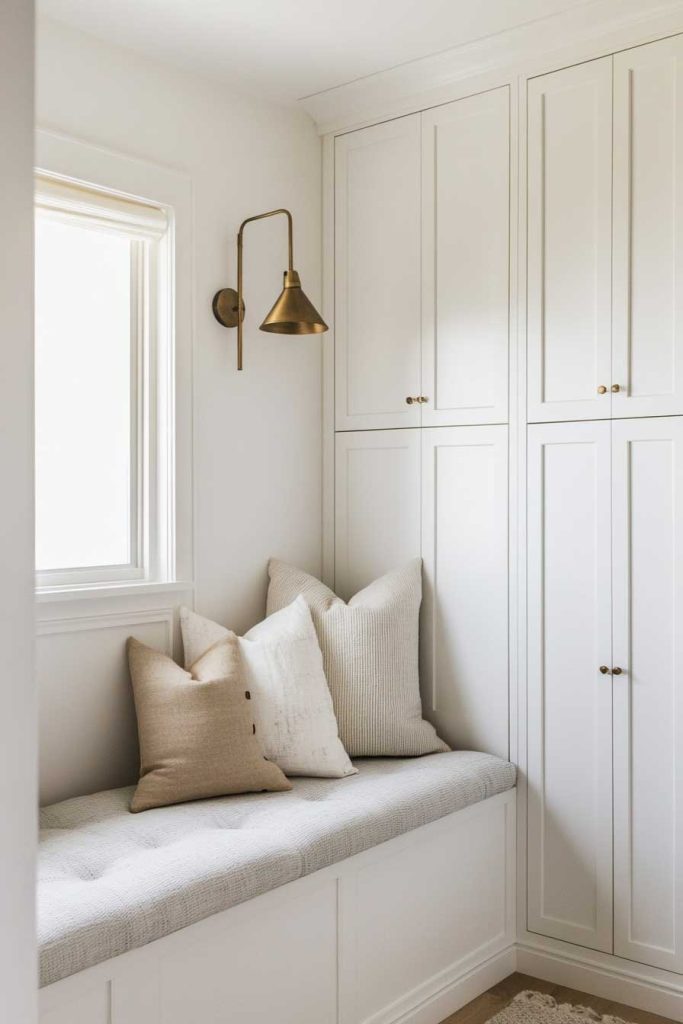
Consider built-in wardrobes that blend with walls, floating nightstands that leave floor space visible, or wall-mounted reading lights that eliminate table lamps. Built-ins create custom solutions while reducing visual clutter.
20. Scandinavian Minimalism
Scandinavian design offers a warmer approach to minimalism, perfect for bedrooms.
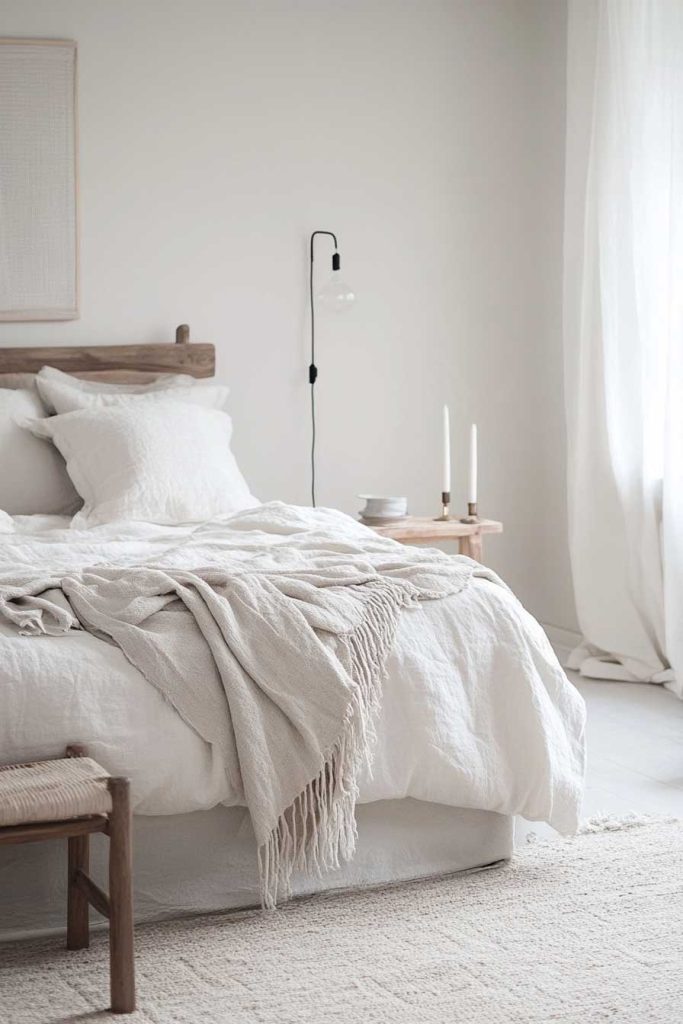
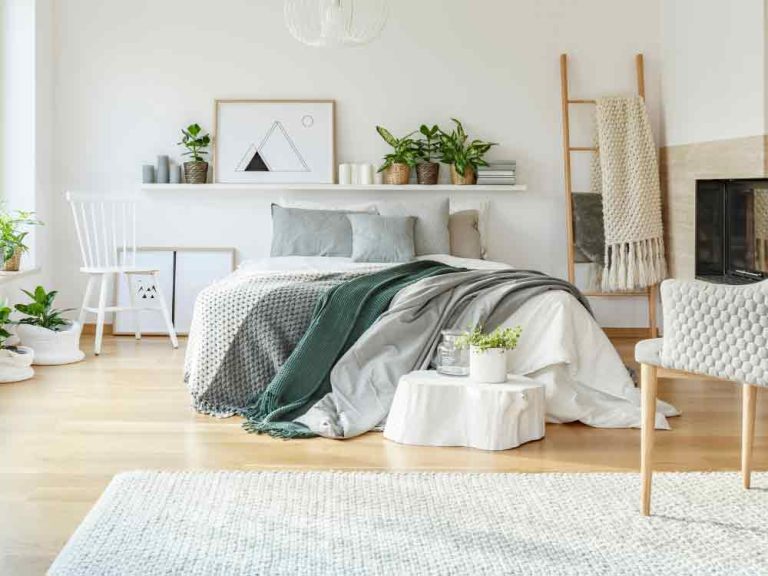
This style combines minimalist principles with cozy elements. Use light wood furniture, add soft textiles in neutral tones, and incorporate hygge elements like candles or soft throws. The result is minimalist but inviting, perfect for a bedroom retreat.
21. Japanese-Inspired Minimalism
Japanese minimalism emphasizes simplicity, natural materials, and connection to nature.
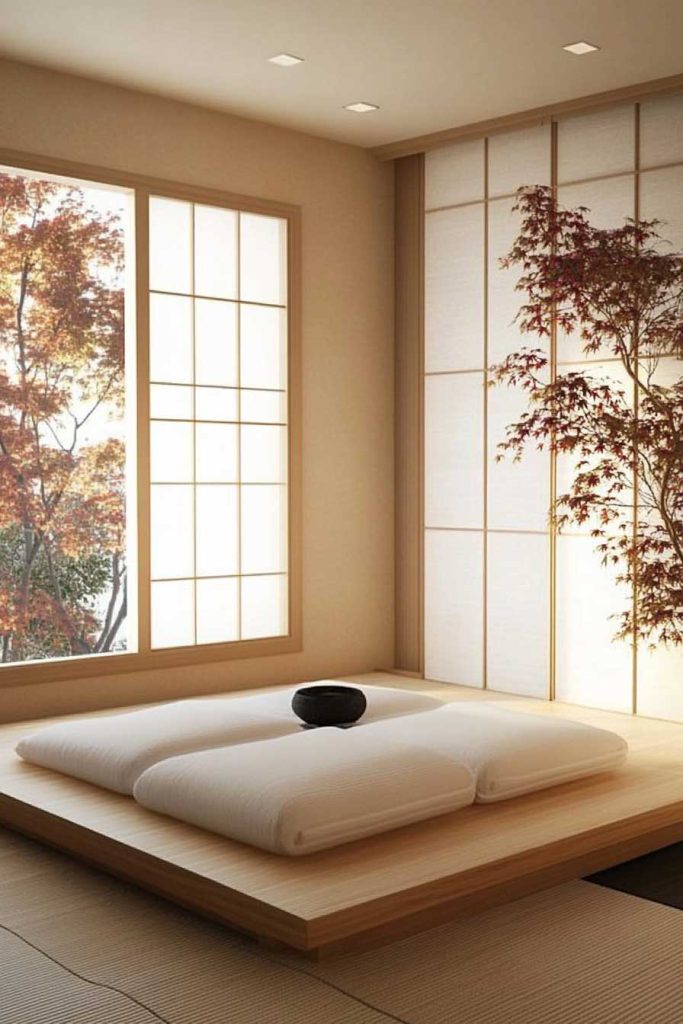
Low platform beds, shoji-screen inspired elements, and natural wood create this aesthetic. Keep decor to an absolute minimum. Use neutral colors with possible black accents. This approach creates an extremely peaceful, zen-like bedroom environment.
22. Minimalist Storage Ideas
Effective storage is essential for maintaining a minimalist bedroom.
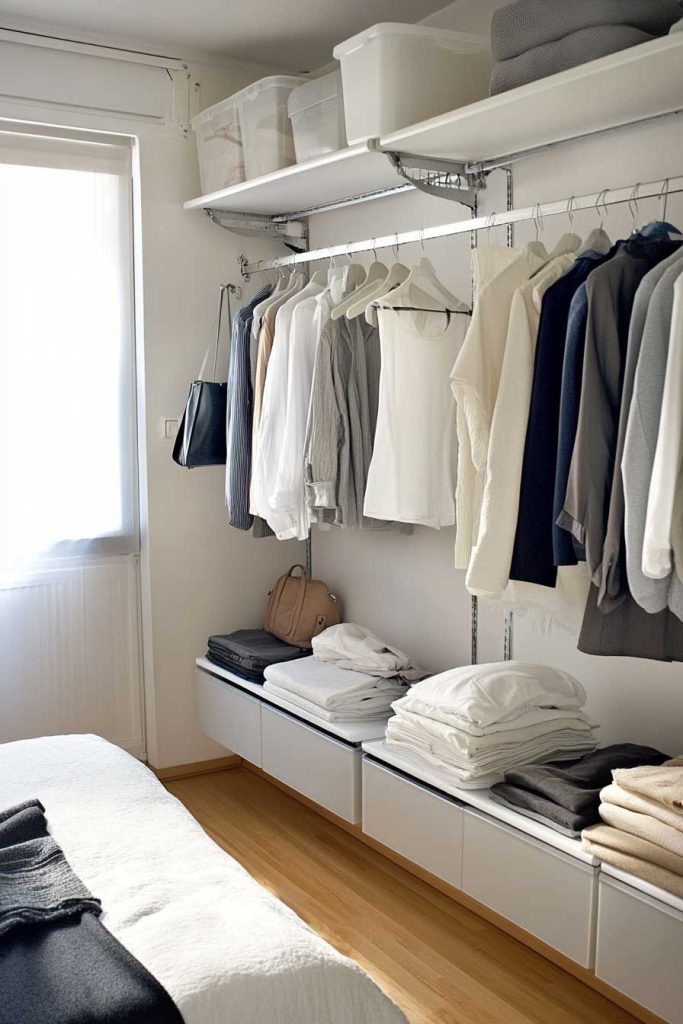
Use drawer dividers to organize clothing efficiently. Install closet systems that maximize vertical space. Choose furniture with hidden storage compartments. Store seasonal items elsewhere. The better your storage systems, the easier it is to keep surfaces clear and maintain the minimalist look.
23. Artwork in Minimalist Bedrooms
Art adds personality to minimalist bedrooms when chosen carefully.
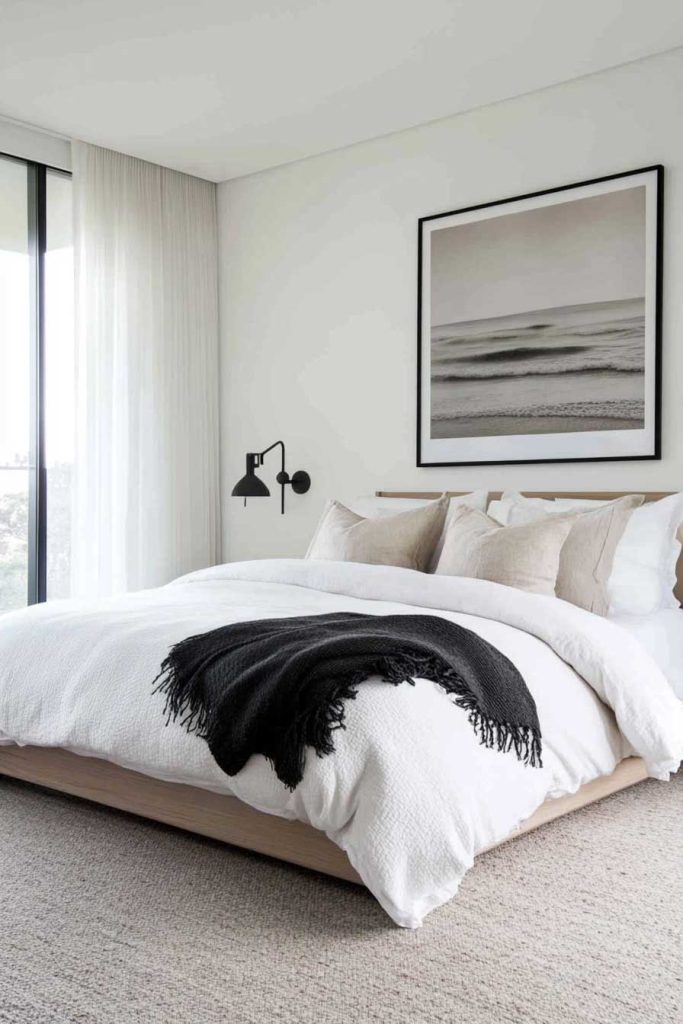
Select one large piece rather than multiple small ones. Black and white photography works beautifully. Abstract art in neutral tones complements the aesthetic. Leave generous space around artwork rather than grouping multiple pieces. The art should enhance the calm rather than create visual noise.
24. Minimalist Bedroom for Small Spaces
Minimalism works exceptionally well in small bedrooms, making them feel larger and more functional.
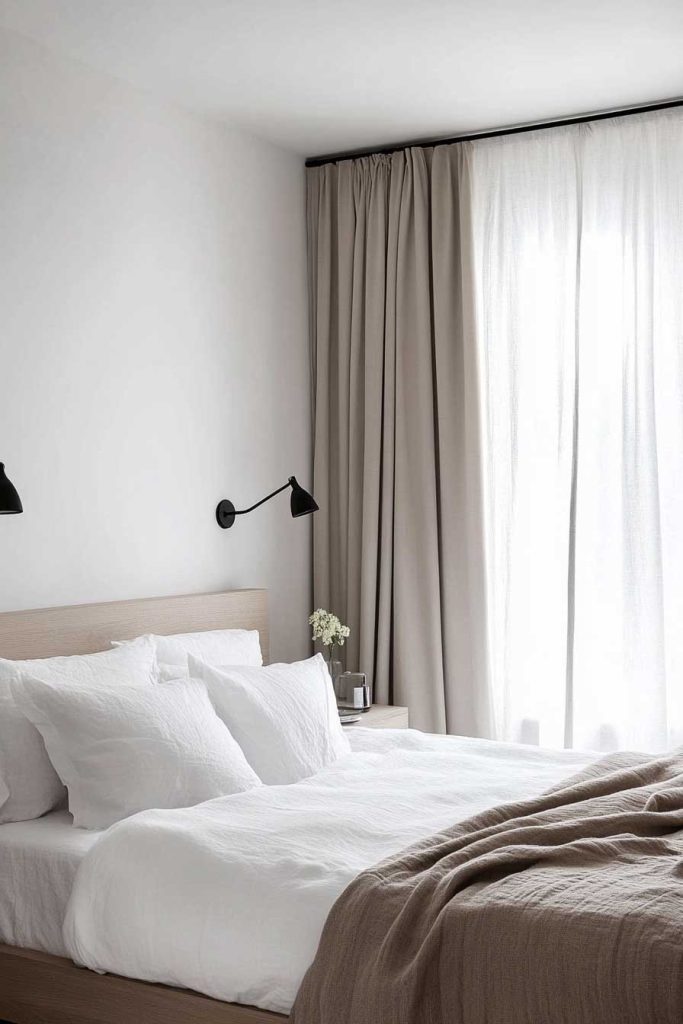
Choose furniture proportional to the room size. Use wall-mounted pieces to free up floor space. Keep color palettes light to maximize the sense of space. Avoid overcrowding with furniture. A small minimalist bedroom can feel more spacious than a larger cluttered one.
25. Maintaining Your Minimalist Bedroom
Creating a minimalist bedroom is one thing, but maintaining it requires ongoing commitment.
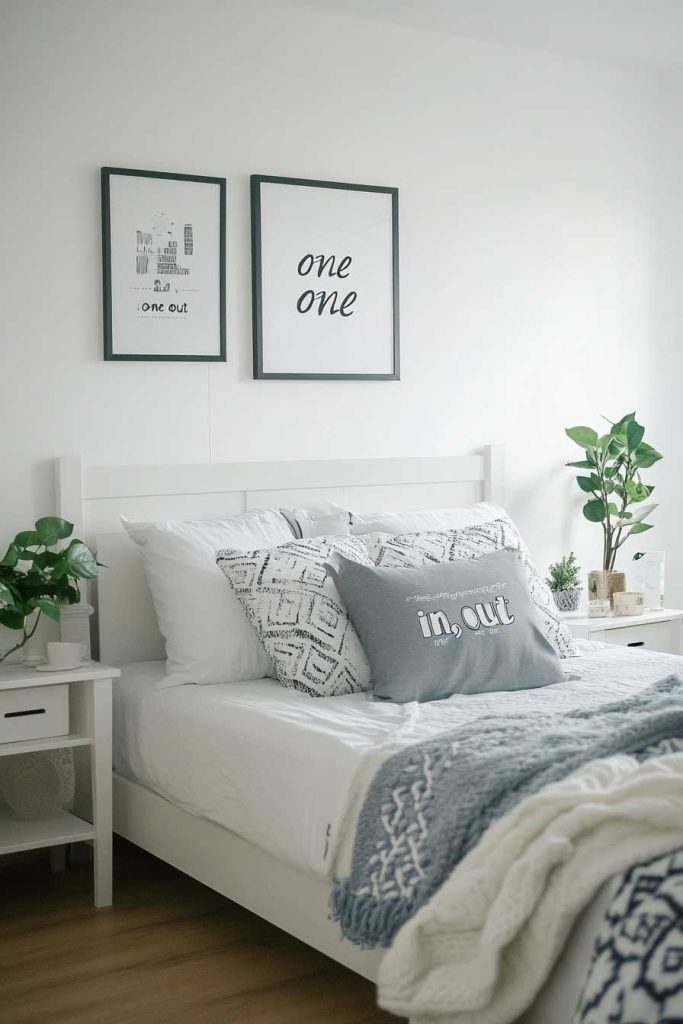
Adopt a “one in, one out” rule for new items. Regularly assess what you keep in the bedroom and remove anything unnecessary. Make your bed daily to maintain the clean aesthetic. Put things away immediately rather than letting items accumulate on surfaces.
26. Minimalist Bedroom on a Budget
You don’t need expensive furniture to create a beautiful minimalist bedroom.
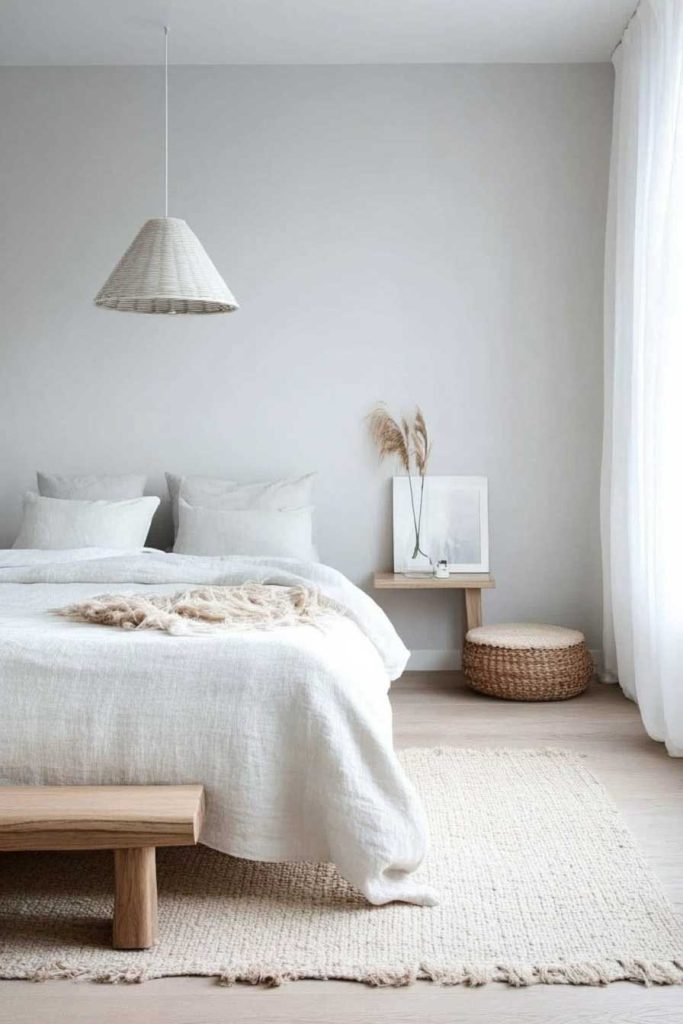
Focus on decluttering first, which costs nothing. Paint walls in affordable neutral colors. Choose a few quality pieces over many cheap items. Shop secondhand for simple furniture. The minimalist aesthetic is about simplicity, not luxury, making it accessible at any budget.
27. Best Places to Shop for Minimalist Bedroom Furniture
If you’re looking to furnish your minimalist bedroom, several retailers offer suitable options:
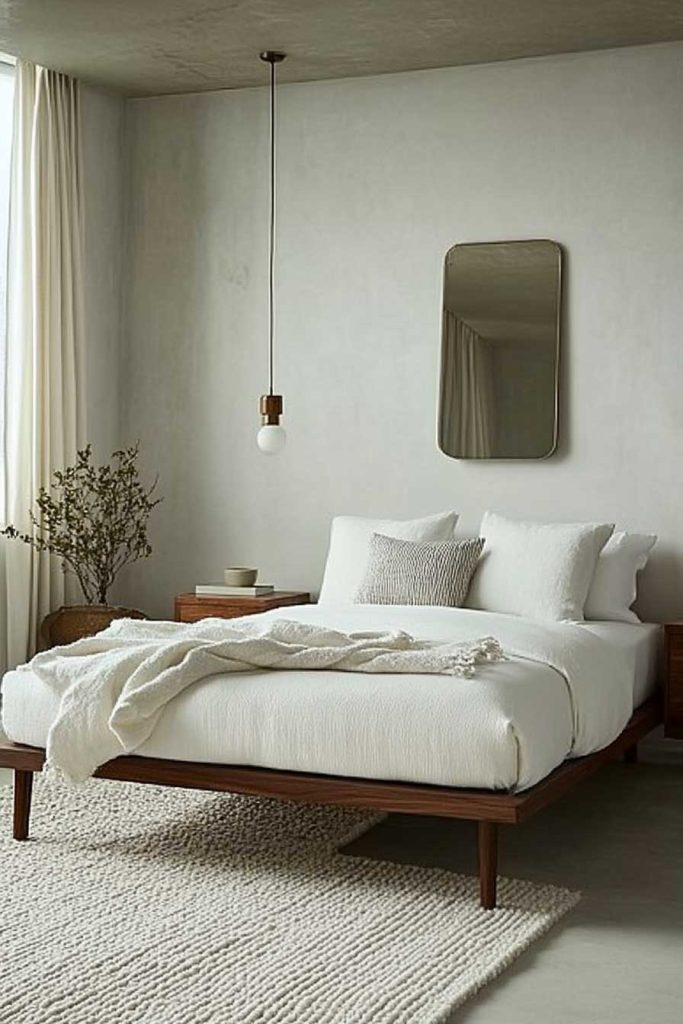
IKEA: Offers affordable, simple furniture perfect for minimalist spaces, with clean-lined beds, storage solutions, and basic furnishings.
West Elm: Features mid-century modern and minimalist furniture with quality construction and timeless designs.
CB2: Specializes in modern, minimalist furniture and decor with streamlined aesthetics.
Muji: A Japanese retailer focused on simple, functional, and affordable minimalist products.
Conclusion
Creating a minimalist bedroom transforms your space into a peaceful sanctuary that promotes rest and mental clarity. Whether you’re starting fresh or gradually simplifying your existing bedroom, the principles remain the same: choose quality over quantity, embrace empty space, and keep only what serves a purpose or brings joy.
Remember that minimalism is personal. Your minimalist bedroom should reflect your needs and preferences while maintaining the core principles of simplicity and intentionality. Start by decluttering, invest in a few quality pieces you love, and resist the urge to fill every space.
The beauty of minimalist bedroom design lies in its ability to create calm in our busy lives. By removing excess and focusing on essentials, you create a room that truly serves its purpose as a place of rest and rejuvenation.