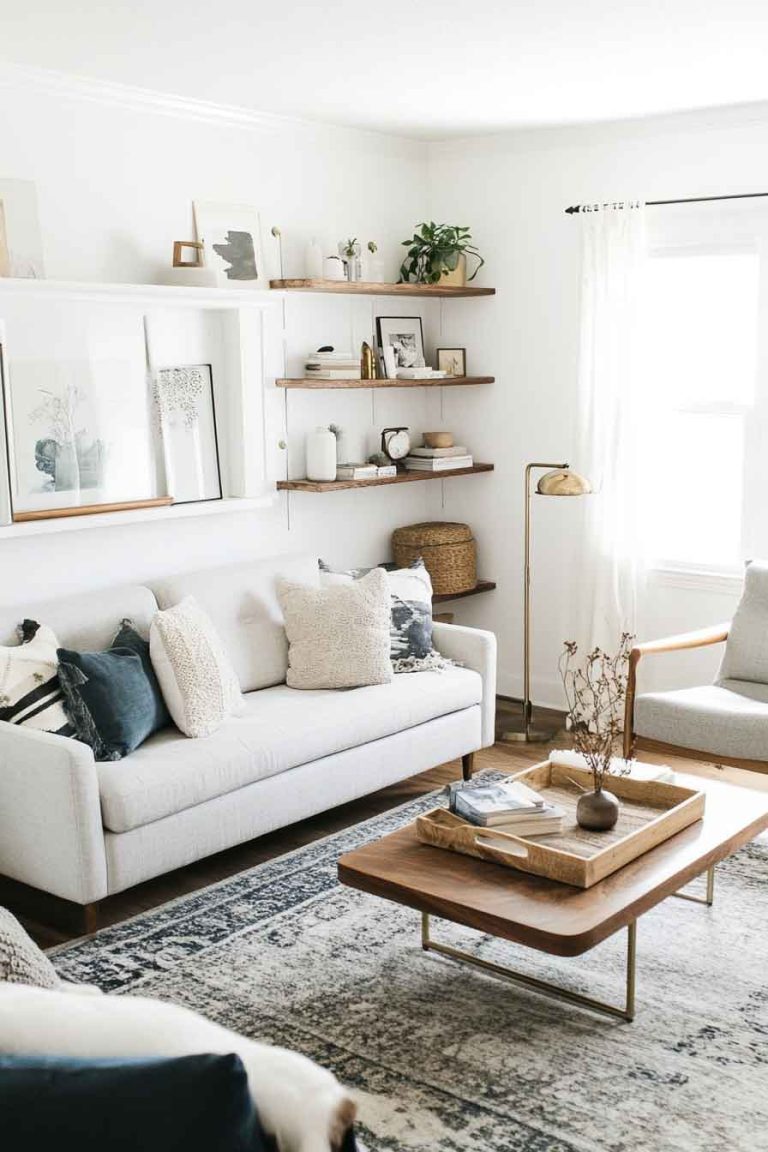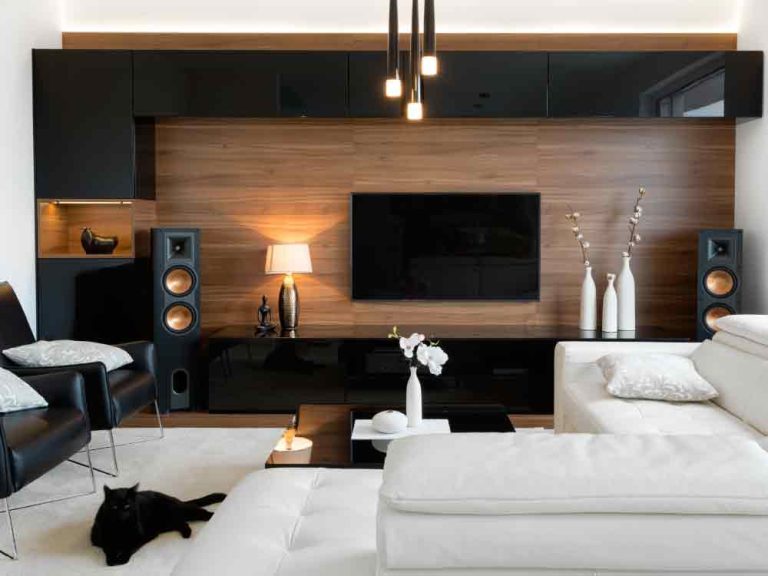
How to Decorate a Living Room: 15 Expert Tips to Transform Your Space
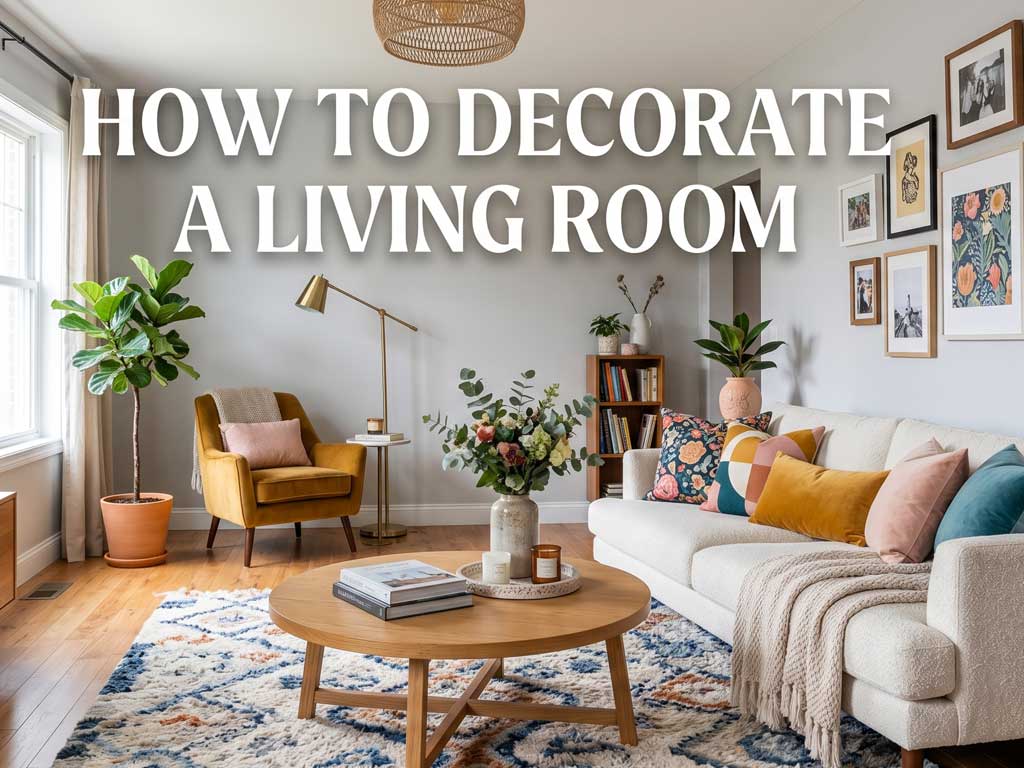
Your living room is the heart of your home — it’s where you relax after a long day, host guests, and make memories with family. Yet for many people, decorating it feels overwhelming. Where do you even start?
The good news: you don’t need a designer budget or years of experience to create a living room that looks pulled-together, stylish, and totally “you.” In this guide, we’ll walk you through exactly how to decorate a living room step by step — from defining your style to the finishing touches that make everything click.
Step 1: Define Your Design Style First
Before you buy a single piece of furniture or a can of paint, get clear on your style. This is the most skipped step — and the one that causes the most regret.
Ask yourself: Do I love clean lines and neutral colors (minimalist)? Warm woods and cozy textures (farmhouse)? Bold patterns and layered pieces (maximalist or eclectic)? Nature-inspired materials and earthy tones (organic modern — one of the biggest trends of 2026)?
Browse Pinterest, Instagram, or this site’s living room decor ideas to save photos that catch your eye. After saving 20–30 images, patterns will emerge. That’s your style.
Pro tip: You don’t have to pick just one style. Most beautiful living rooms blend two — like farmhouse + coastal, or modern + bohemian.
Step 2: Measure Your Room Before Anything Else
This step sounds obvious, yet it’s one of the most common mistakes people make. Buying a sofa that’s too large, a rug that’s too small, or curtains that don’t reach the ceiling are all expensive, avoidable errors.
Measure the full dimensions of your room — length, width, and ceiling height. Also measure:
- Window widths and heights (and the wall space above and below them)
- Any doorways or archways that furniture must pass through
- Existing furniture you plan to keep
Sketch a rough floor plan on paper or use a free app like Planner 5D. Seeing the space to scale will save you hours of rearranging and returning furniture.
Step 3: Choose a Color Palette Using the 60-30-10 Rule
Color is one of the most powerful tools in decorating — and the easiest to get wrong. The 60-30-10 rule is the designer secret that makes a room feel balanced without being boring.
Here’s how it works:
- 60% — your dominant color. This is your walls, large sofa, or area rug. Think of it as your room’s backdrop.
- 30% — your secondary color. This shows up in curtains, an accent chair, or a loveseat.
- 10% — your accent color. This is your throw pillows, vases, artwork, or candles — the “pop.”
2026 color trends to consider: Warm neutrals like creamy beige, mocha, and caramel are dominating living rooms right now. Dusty sage green and soft terracotta are strong accent choices that feel fresh without being trendy-for-a-season.
Avoid all-white rooms (they feel cold and sterile) and all-dark rooms (they feel heavy). The magic is in contrast.
Step 4: Plan Your Furniture Layout Around Function
A common decorating mistake is pushing all the furniture against the walls. It feels “safe,” but it actually makes the room feel empty and disconnected.
Instead, float your furniture toward the center of the room. Here are the key rules for a great living room layout:
- Anchor with a sofa — place it facing the room’s focal point, whether that’s a fireplace, TV, or a large window.
- Add a second seating option — two armchairs, a loveseat, or a chaise longue. This makes the room feel intentional and conversation-friendly.
- Leave a clear traffic path — at least 30–36 inches of walkway between furniture pieces.
- Face seating toward each other — not all aimed at the TV. This creates a more welcoming, social space.
For small living rooms, consider a sectional sofa in an L-shape to maximize seating without crowding the room.
Step 5: Choose the Right Size Rug (Most People Go Too Small)
If there’s one mistake nearly every beginner makes, it’s buying a rug that’s too small. A too-small rug makes your room feel disjointed and can actually make the space look smaller.
The rule: In a living room, your rug should be large enough that the front legs of your sofa AND chairs rest on it. This creates a cohesive “zone” that anchors your seating arrangement.
For most living rooms, that means an 8×10 or 9×12 rug. When in doubt, size up.
Tip for small budgets: Layer a large, affordable jute or sisal rug underneath a smaller patterned or vintage rug. This gives you the size coverage of a large rug with the personality of a decorative one — for less money.
Step 6: Layer Your Lighting (This Changes Everything)
Lighting is the most underrated element in a living room. Most people rely on one overhead light — and that’s why their room always feels flat or too harsh.
Great living room lighting has three layers:
- Ambient lighting — your overhead light or ceiling fixture. This is the base layer.
- Task lighting — a floor lamp beside the sofa or reading chair. Functional and warm.
- Accent lighting — table lamps, LED strip lights behind a TV, or candles. This creates mood and softness.
Designer secret: Always have light sources at different heights. A mix of table lamps, floor lamps, and overhead light gives your room dimension and warmth that a single ceiling fixture simply cannot.
For 2026, warm-toned bulbs (2700K–3000K) are the way to go. Cool white light makes living rooms feel like offices.
Step 7: Pick a Focal Point and Decorate Around It
Every great living room has one clear focal point — the first thing your eyes go to when you walk in. Without it, the room feels visually chaotic.
Common focal points include:
- A fireplace
- A large TV or media wall
- A statement sofa or accent wall
- An oversized piece of artwork (one of the biggest 2026 decor trends)
Once you identify (or create) your focal point, arrange your furniture and decor to frame and highlight it. Don’t fight it — lean into it.
No focal point? Create one. A bold gallery wall, a large arch mirror, or a dramatically painted accent wall all work beautifully.
Step 8: Add Texture — The Secret to a Cozy, Layered Room
You’ve probably seen rooms where everything looks “fine” but feels flat and uninspiring. Nine times out of ten, the missing ingredient is texture.
Texture adds depth, warmth, and visual interest — especially in neutral rooms where color variety is limited.
Layer these textures in your living room:
- Plush — a chunky knit throw, velvet cushions, a boucle accent chair
- Natural — a jute rug, rattan side table, woven basket, wooden tray
- Smooth — a glass coffee table, ceramic vases, a linen sofa
- Metallic — brass lamp, copper candle holders, gold picture frames
You don’t need all of these at once. Pick three or four that align with your style and repeat them throughout the room for cohesion.
Step 9: Bring in Plants and Natural Elements
Plants are one of the easiest, most affordable ways to make a living room feel alive and finished. Biophilic design — decorating with natural elements — is one of the dominant trends of 2026 because it genuinely improves mood and reduces stress.
You don’t need a green thumb. Some of the best low-maintenance plants for living rooms include:
- Pothos (virtually impossible to kill)
- Snake plant (thrives in low light)
- Fiddle leaf fig (a classic statement plant)
- ZZ plant (perfect for dark corners)
Beyond plants, bring in natural elements through wooden bowls, stone coasters, woven baskets, and linen curtains. These materials make a room feel grounded and warm.
Step 10: Style Your Coffee Table Like a Pro
Your coffee table is a natural landing zone for clutter — keys, remotes, magazines, cups. But styled well, it can be one of the best-looking spots in the room.
The classic coffee table styling formula:
- A stack of books — 2–3 coffee table books, stacked, with something small on top
- A tray — corrals smaller items and makes the whole surface feel intentional
- A natural element — a small plant, a wooden bowl, or a vase with stems
- A candle — adds height variation and warmth
Keep it to three or four objects max. Edit ruthlessly — less is almost always more on a coffee table.
Step 11: Hang Curtains High and Wide
Curtains can make or break a living room. Hung correctly, they make your ceilings feel taller and your windows feel larger. Hung incorrectly, they make the room feel small and closed in.
The rules:
- Hang the rod close to the ceiling, not just above the window frame. Ideally 4–6 inches below the ceiling or crown molding.
- Extend the rod 6–12 inches beyond each side of the window frame. This allows the curtain panels to fall beside — not over — the window, letting in maximum light when open.
- Let curtains touch or puddle on the floor for an elegant look. Curtains that hover above the floor look unfinished.
For 2026, linen and sheer curtains in warm neutral tones are the most popular choice — they soften the light and feel effortlessly stylish.
Step 12: Decorate Your Walls (Don’t Leave Them Bare)
Bare walls are one of the fastest ways to make a room feel unfinished. Wall decor doesn’t have to be expensive — it just has to be intentional.
Options for living room wall decor:
- Gallery wall — a curated mix of frames, prints, and personal photos. Mix sizes and frame finishes for an eclectic, collected look.
- One large statement piece — a single oversized artwork or print above the sofa is the cleanest, most sophisticated look.
- Mirrors — an arch mirror or large round mirror adds light, depth, and a sense of space. Especially valuable in smaller rooms.
- Floating shelves — functional and decorative. Style them with books, plants, candles, and small objects.
- Accent wall — wallpaper, shiplap, a bold paint color, or peel-and-stick panels on one wall can completely transform a room.
Sizing tip: Artwork above a sofa should be roughly two-thirds the width of the sofa, and hung so the center of the piece is at eye level (around 57–60 inches from the floor).
Step 13: Add Throw Pillows and Blankets (But Keep It Curated)
Throw pillows and blankets are the easiest, most affordable way to update your living room’s look for any season or mood. They can also make a room feel cozy and inviting — or overdone and cluttered, if you overdo it.
The pillow formula for a sofa:
- For a standard 3-seat sofa: 2 large pillows (22×22″), 2 medium pillows (18×18″), and 1 lumbar pillow in the center
- Vary the textures and patterns, but stick to your color palette
- Ditch the matching pillow set that came with your sofa — it’s the fastest way to make a room look like a showroom
For blankets: drape one casually over the arm of the sofa or fold it over a basket nearby. It adds warmth and livability without looking messy.
Step 14: Declutter and Edit Your Accessories
More is not more when it comes to living room accessories. A room with too many objects on every surface feels chaotic and exhausting to be in.
The editing rule: for every surface in your room, remove half the items. Live with it for a week. You’ll probably find you don’t miss most of what you removed — and the room feels more peaceful.
Keep only what you genuinely love or what serves a clear visual purpose. Store everything else. Built-ins, baskets, and ottomans with storage are your best friends for keeping a living room tidy without sacrificing style.
Step 15: Add Your Personal Touch Last
After all the furniture, lighting, color, and decor is in place — this is when you add the personal layer. The things that make the room unmistakably yours.
This could be:
- A collection of travel souvenirs displayed on a shelf
- Family photos in beautiful frames
- Books that actually reflect what you read
- A piece of artwork by a local artist
- A vintage find from a thrift store or antique market
These personal touches are what separate a room that “looks decorated” from a room that feels lived-in and loved. Don’t skip this step.
Common Living Room Decorating Mistakes to Avoid
Even with the best intentions, it’s easy to fall into these traps:
- Rug too small — the #1 mistake. Always size up.
- All furniture against the walls — float it inward for a more cohesive layout.
- Only one light source — layer your lighting at multiple heights.
- Matching furniture sets — mix pieces for a more collected, personal look.
- Hanging art too high — center it at eye level (57–60 inches from the floor).
- Ignoring scale — oversized furniture in a small room (or tiny furniture in a large one) throws off the whole balance.
- Too much of one texture — layer at least three different materials for depth.
Final Thoughts
Decorating a living room doesn’t have to be expensive or stressful. It just takes a clear plan, a few key principles, and the confidence to trust your own taste.
Start with your style and color palette. Build your furniture layout around function. Layer in texture, lighting, and accessories. Then step back, edit ruthlessly, and add the personal touches that make it home.
The result? A living room you genuinely love walking into every single day.
Looking for more inspiration? Browse our living room decor ideas, cozy living room ideas, and farmhouse living room ideas for hundreds of photos and tips.