25 Small Corridor Ideas: Clever Ways to Transform Your Narrow Hallway
A small corridor is one of the most overlooked spaces in any home. It is the first thing you see when you walk through the door, yet it often gets neglected in favour of larger, more prominent rooms. But here is the truth: a well-designed hallway can completely change the feel of your entire home.
Whether your corridor is long and narrow, short and dark, or awkwardly shaped, there are many smart design tricks that can make it feel bigger, brighter, and far more beautiful. The right combination of colour, lighting, mirrors, and storage can turn even the tiniest passageway into a space you are proud of.
This article explores 25 creative small corridor ideas, each with practical tips you can apply right away. From light and airy styles to bold and dramatic looks, there is something here for every taste and budget.
Let us get started.
1. Use Light Paint Colours to Open Up the Space
One of the easiest and most affordable ways to make a small corridor feel larger is to paint the walls in a light, soft colour. White, cream, pale grey, and soft beige all reflect natural and artificial light, which makes the walls appear to move further away from each other.
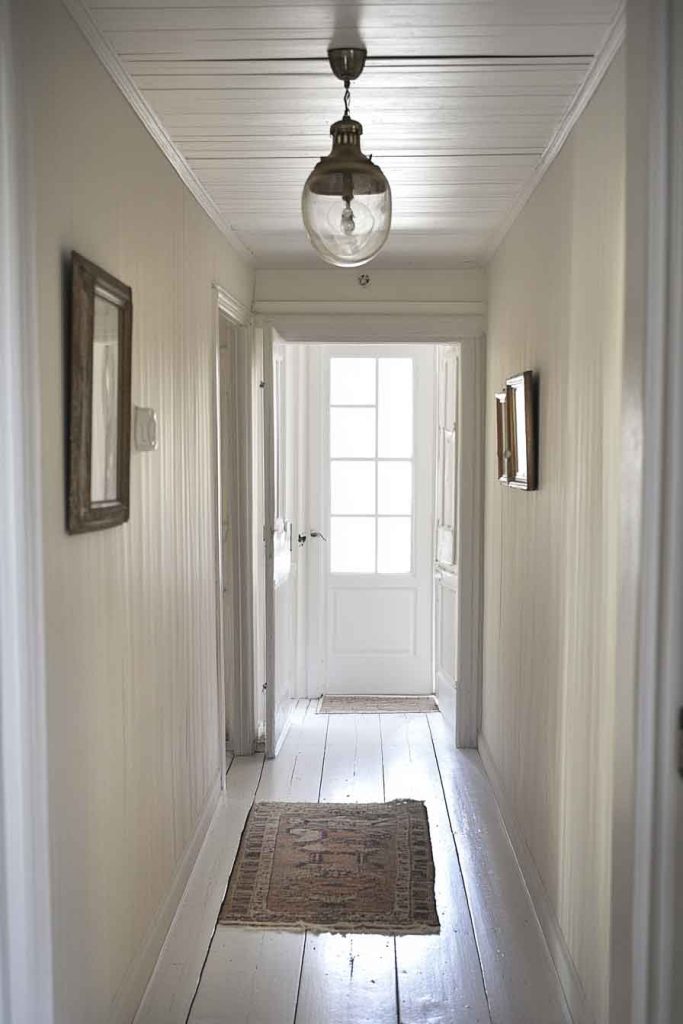
Dark corridors can feel suffocating. A fresh coat of light paint is often all it takes to make the space feel welcoming and airy.
Try a warm white like linen or ivory instead of a stark, cool white. Warm whites feel softer and more inviting, especially in corridors without windows.
- Choose a matte or eggshell finish for walls to reduce glare.
- Paint the ceiling the same colour as the walls to make the corridor feel taller.
- Add a slightly darker shade on the skirting boards for a clean, layered look.
- Avoid very cool or blue-toned whites in north-facing corridors as they can feel cold.
2. Hang a Large Mirror to Double the Visual Space
Mirrors are a designer’s best friend when it comes to small corridors. A large mirror reflects light and creates the illusion of depth, making the hallway feel twice as big as it actually is.
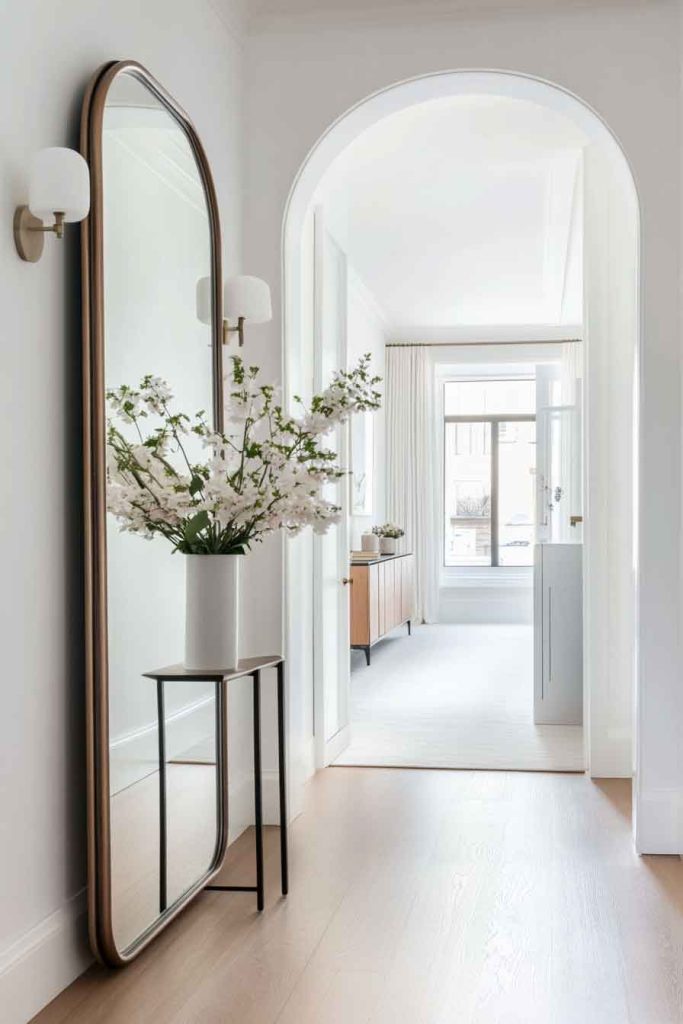
A full-length mirror leaning against one wall is both practical and stylish. It lets you check your outfit on the way out and visually extends the corridor at the same time.
You can also try a series of smaller mirrors arranged in a gallery-style cluster for a more decorative effect. Just make sure the mirrors are positioned to reflect light from a window or lamp rather than a plain wall.
- Choose a mirror with a simple, slim frame to keep things looking clean.
- Place the mirror on the longest wall of the corridor for maximum effect.
- Use an arched mirror for a softer, more modern feel.
- A mirror with built-in hooks underneath serves both form and function.
3. Add Floating Shelves for Storage Without Bulk
In a small corridor, floor space is precious. Floating shelves mounted on the wall give you storage and display space without taking up any room at ground level. They keep the floor clear, which makes the corridor feel open and easy to move through.
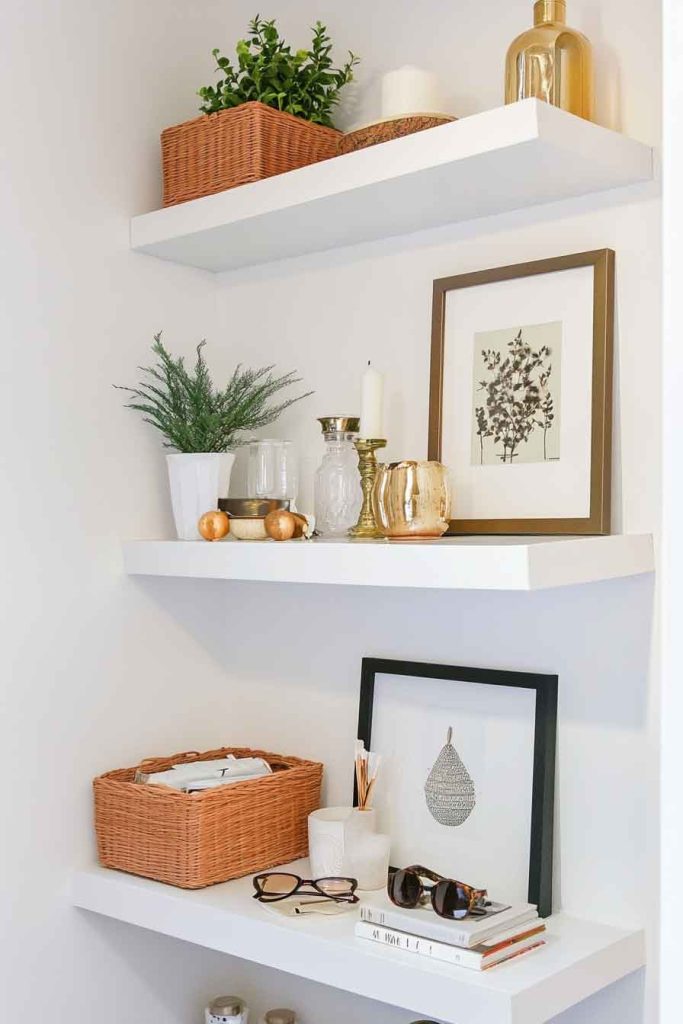
Use the shelves to store keys, sunglasses, and everyday essentials. Add a small plant, a candle, or a framed print to make the shelves feel personal and styled rather than purely functional.
Floating shelves work especially well when painted the same colour as the wall behind them. This creates a seamless, built-in look that feels intentional and polished.
- Install two or three shelves at different heights for a dynamic, layered look.
- Use baskets or small boxes on the shelves to corral clutter.
- Keep the top shelf for decorative items and the lower shelves for everyday use.
- Choose shelves with a thin profile so they do not protrude too far from the wall.
4. Choose a Runner Rug to Add Warmth and Direction
A long, narrow runner rug is one of the best things you can add to a small corridor. It adds warmth, texture, and colour underfoot, and it also has a clever visual trick built in. The lines of the rug draw the eye down the length of the corridor, which makes the space feel longer and more intentional.
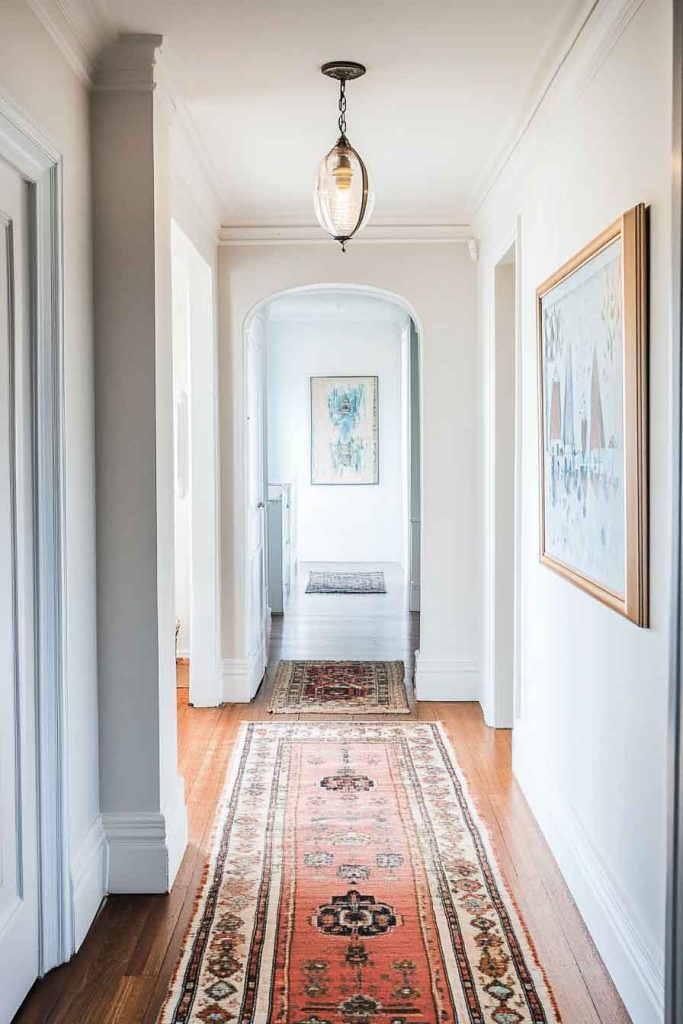
Choose a rug with a geometric pattern or simple stripes for a timeless look. Bold patterns can also work beautifully if the rest of the corridor is kept neutral.
Natural materials like jute, sisal, or cotton are great choices for high-traffic corridor areas as they are durable and easy to clean.
- Make sure the rug is long enough to run most of the length of the corridor.
- Leave a small gap of around five centimetres on each side of the rug so the floor is visible.
- Use a non-slip mat underneath to keep the rug in place.
- Choose a low-pile rug so doors can open freely over it.
5. Install a Slim Console Table for Style and Function
A slim console table is a perfect fit for a narrow corridor. It provides a surface for keys, post, and small everyday items without eating into the walkway space. Look for a table that is no deeper than 30 centimetres so it sits flat against the wall without causing an obstruction.
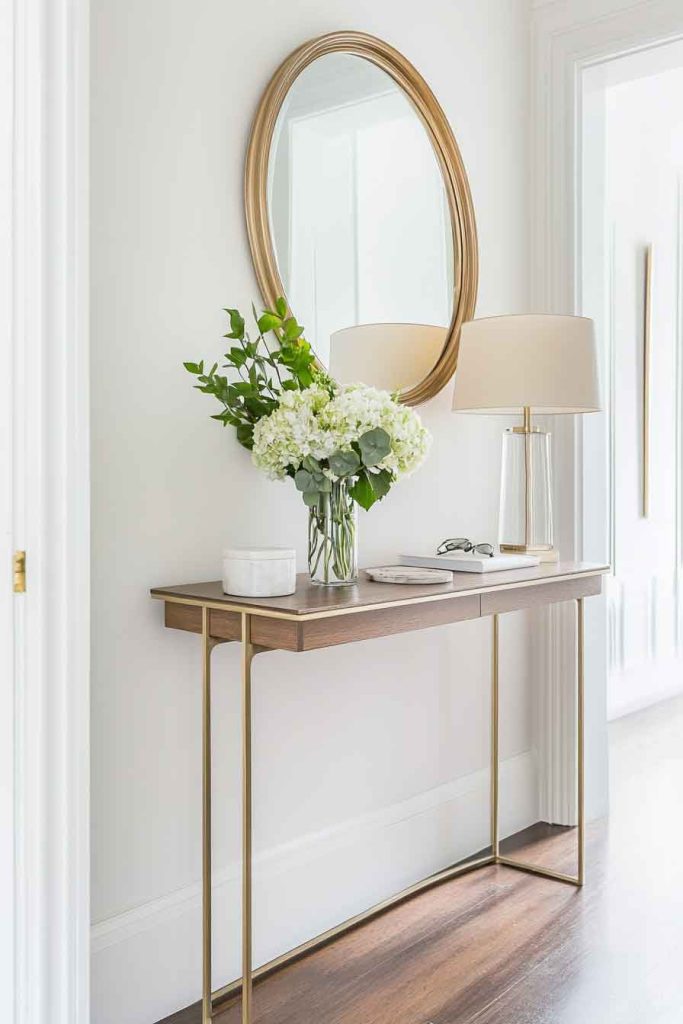
Style the console table with a small lamp, a vase of fresh flowers, and a tray to catch daily essentials. This instantly elevates the look of the corridor and makes it feel like a considered, designed space rather than a forgotten thoroughfare.
Choose a table with open legs rather than a solid base to keep the floor visible beneath it, which helps maintain a sense of openness.
- Pair the console table with a mirror above it for a classic, polished look.
- Use a small drawer or tray to keep keys, coins, and headphones tidy.
- Choose a table in a warm wood tone to add natural warmth to the corridor.
- A metal console table with slender legs feels modern and takes up very little visual weight.
6. Use Vertical Stripes to Make Ceilings Feel Higher
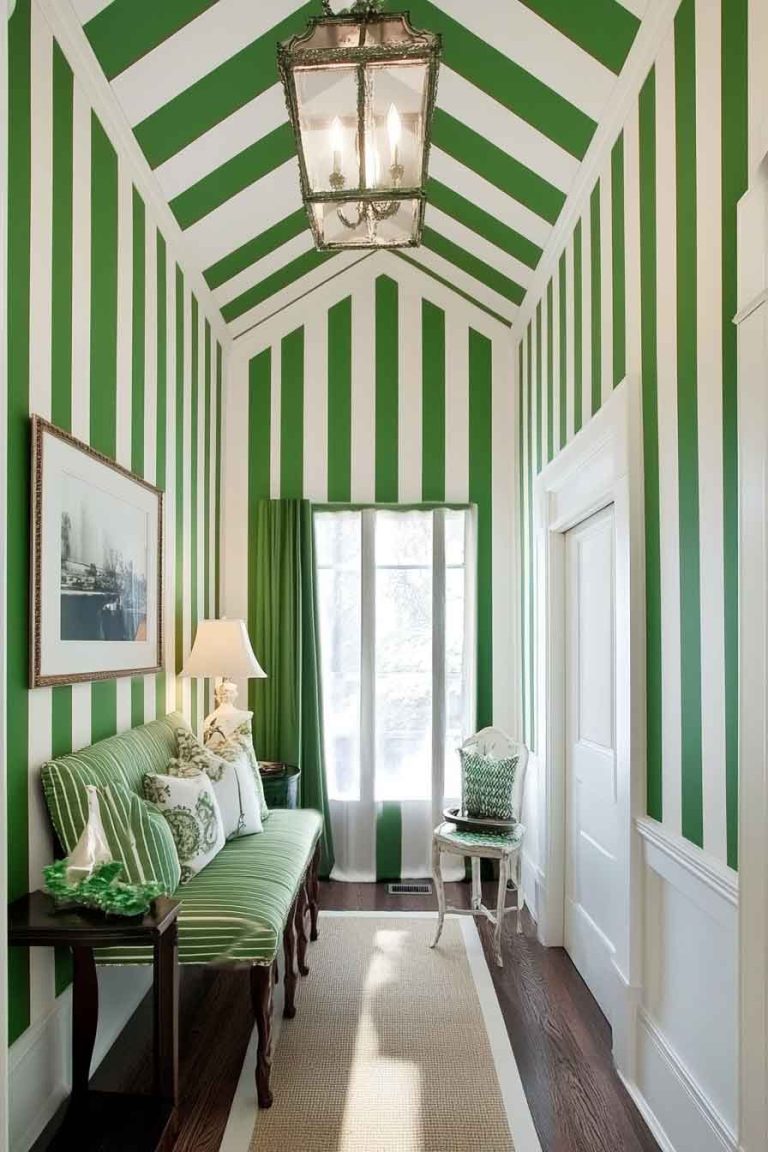
If your corridor feels more like a tunnel than a hallway, vertical stripes on the walls can make a dramatic difference. Stripes draw the eye upward, which creates the impression of higher ceilings and a more spacious feel.
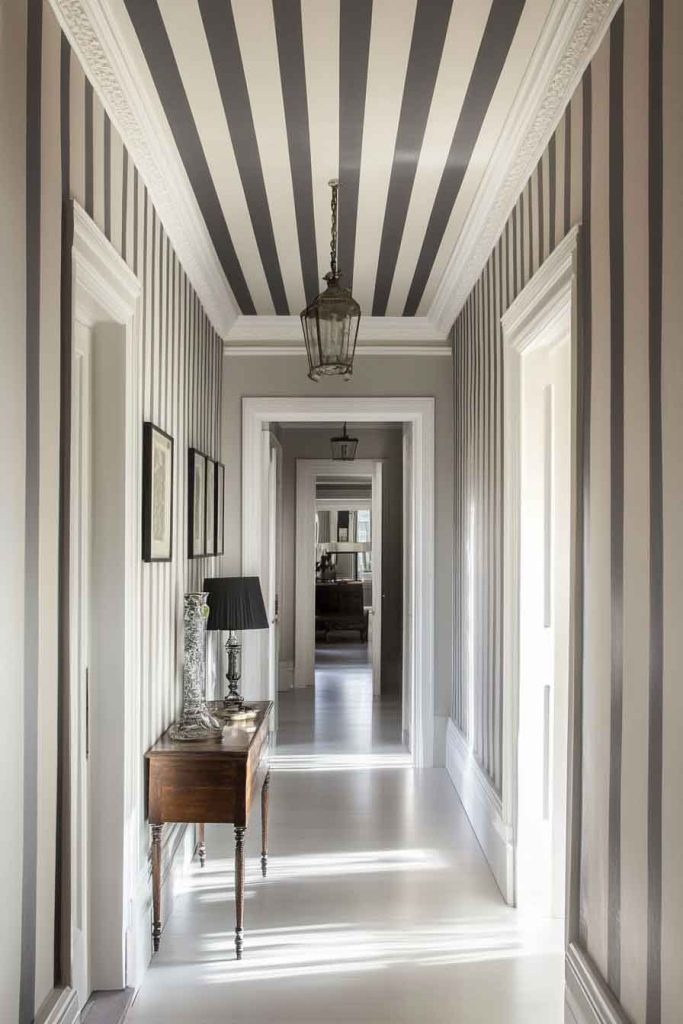
You can achieve this with striped wallpaper, which comes in an enormous range of colours and widths. Thin, tonal stripes in two similar shades of the same colour look elegant and understated. Bold contrast stripes in navy and white or black and cream make more of a statement.
Alternatively, use masking tape and two complementary paint colours to create hand-painted stripes for a completely bespoke result.
- Keep the stripes narrow, around five to ten centimetres wide, for a refined effect.
- Use the same stripe idea on just one wall as an accent if you prefer a softer approach.
- Vertical stripes work best in corridors with flat, uninterrupted wall space.
- Combine with a plain ceiling to let the walls do the talking.
7. Maximise Natural Light With Sheer Curtains or Frosted Glass
If your corridor has a window or a glazed door, make the most of that natural light. Natural light is one of the best tools for making a small corridor feel bigger and more welcoming. Sheer curtains allow light to flow through while providing a degree of privacy. Frosted glass panels in doors let light pass between rooms without sacrificing separation.
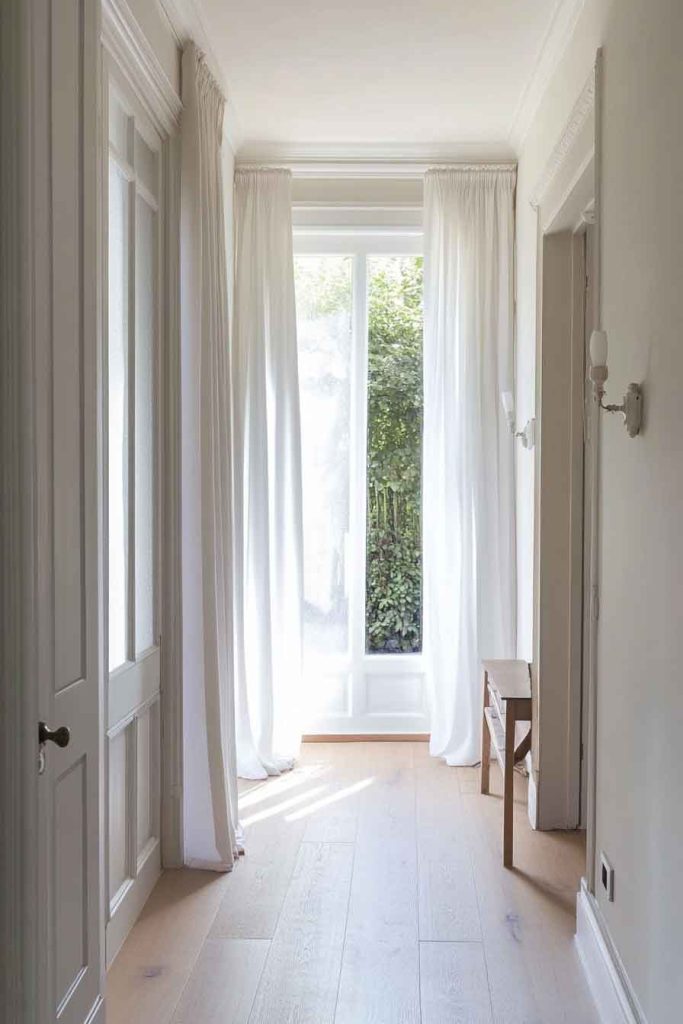
If you have an internal door at the end of a corridor, replacing a solid panel with a glass pane can completely transform how light moves through the space. Even a small amount of borrowed light from an adjacent room can make a dark hallway feel significantly brighter.
- Choose white or off-white sheers to maximise light reflection.
- Hang curtain rails as high as possible to draw the eye upward.
- Use a frosted adhesive film on existing glass panels for an affordable update.
- Keep window ledges clear to allow light to travel as far into the corridor as possible.
8. Add Wall Lights for a Layered Lighting Effect
Overhead lighting in a corridor often creates flat, unflattering illumination. Wall lights, also called sconces, add warmth and depth by casting light at eye level and creating gentle pools of light along the walls.
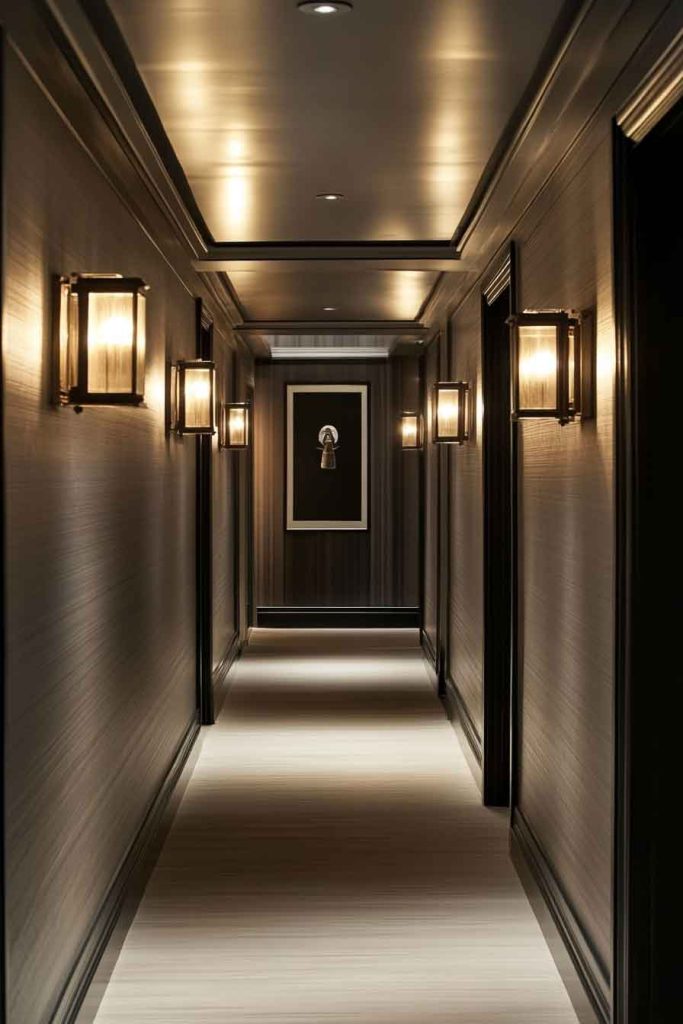
A pair of matching wall lights installed on either side of a mirror or artwork creates a symmetrical, hotel-like feel. Single sconces spaced evenly down a long corridor provide a warm, welcoming glow as you move through the space.
Choose warm white bulbs rather than cool white for a cosy, residential feel. Exposed filament bulbs in a decorative fitting add a touch of character and work well in both traditional and contemporary corridors.
- Install wall lights at around 150 to 165 centimetres from the floor for the most flattering light.
- Use dimmable fittings so you can adjust the brightness for different times of day.
- Battery-operated sconces are ideal if you want to avoid rewiring.
- Layer wall lights with a ceiling pendant or recessed downlights for a flexible lighting scheme.
9. Try Dark Paint for a Bold and Dramatic Corridor
Dark paint in a small corridor may sound counterintuitive, but it can actually work beautifully when done with confidence. Deep shades of navy, forest green, charcoal, or moody terracotta create a sense of depth and drama that makes the corridor feel like a deliberate design statement rather than a neglected space.
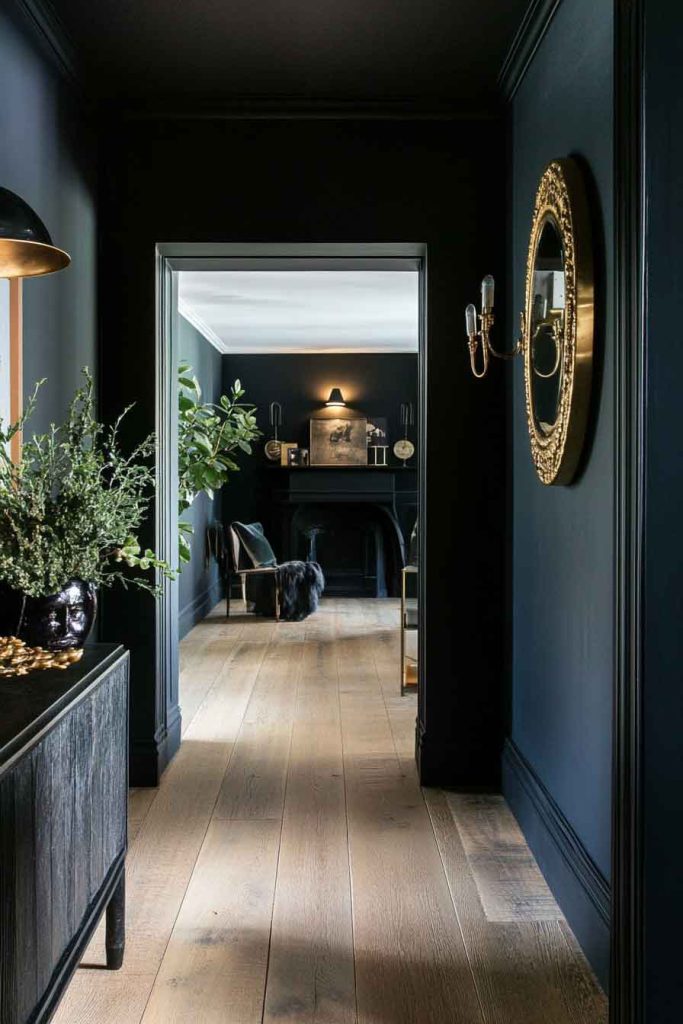
The key to making dark paint work in a small corridor is to embrace it fully. Paint the walls, ceiling, and even the woodwork in the same deep shade for a cocooning, immersive effect. Then add plenty of light through lamps, candles, and metallic accents to prevent the space from feeling gloomy.
Dark corridors look especially striking when framed by the brighter rooms on either side. The contrast draws you through the space and builds a sense of anticipation.
- Choose a paint with a slight sheen to reflect light without being too shiny.
- Add brass or gold hardware and light fittings to warm up dark walls.
- Use a large mirror to bounce light around the space.
- Balance dark walls with a light-coloured floor to keep the space grounded.
10. Hang Artwork to Create a Gallery Hallway
A gallery wall is one of the most effective ways to transform a plain corridor into a space that feels full of personality and interest. A carefully curated collection of art, photographs, and prints turns the walls into something worth looking at as you walk by.
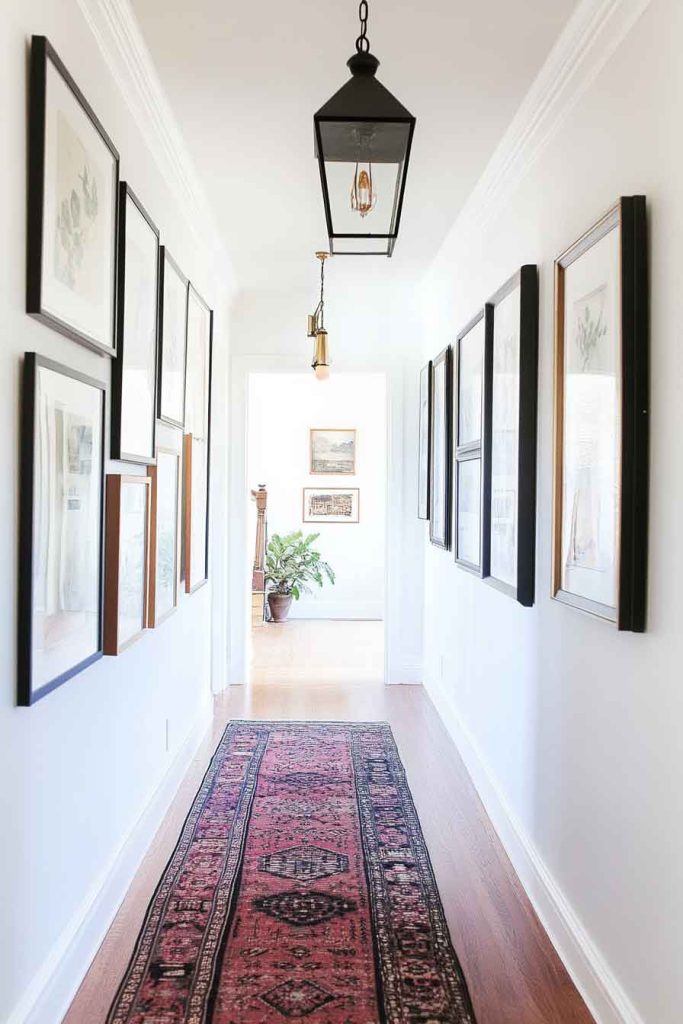
Choose a mix of frame sizes and styles for an eclectic, collected-over-time look. Alternatively, use matching frames in the same finish for a more cohesive, gallery-style arrangement. Black frames on white walls never go out of fashion and look equally good in modern and traditional homes.
Keep the frames at eye level and cluster them closely together to create a sense of abundance. Leaving too much space between frames can make the arrangement feel sparse.
- Use paper templates to plan your layout before putting any nails in the wall.
- Stick to a consistent theme, such as botanical prints, black and white photography, or travel postcards.
- Mix in a small mirror within the gallery arrangement for a practical touch.
- Add a small shelf with a plant or ornament beneath the artwork to ground the display.
11. Install Built-In Storage to Eliminate Clutter
Clutter is the enemy of a small corridor. Shoes, bags, coats, and umbrellas piling up in a narrow hallway make the space feel chaotic and cramped. Built-in storage is one of the most effective long-term solutions because it puts every item in its place and keeps the floor and surfaces clear.
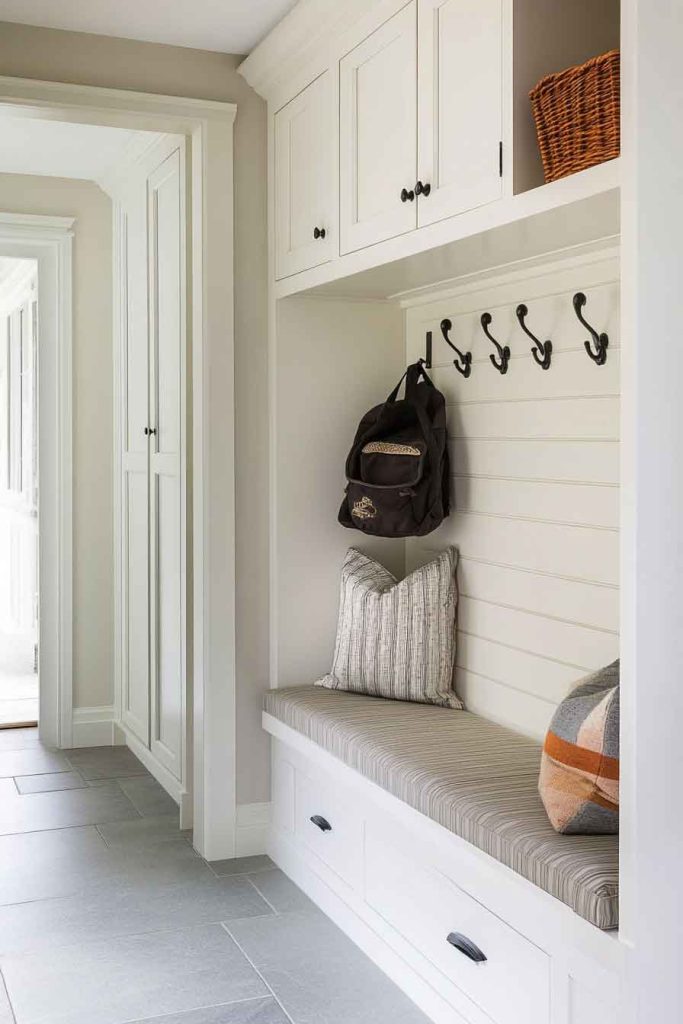
A built-in bench with lift-up lid storage is perfect for shoes and seasonal items. A row of hooks above the bench handles coats, bags, and school bags. Combine with overhead cupboards to keep the top of the storage unit tidy and clutter-free.
If a full built-in is beyond your budget, freestanding shaker-style units or IKEA hacks can achieve a very similar look at a fraction of the cost.
- Choose storage with doors where possible so clutter is hidden from view.
- Add a cushion to a storage bench to make it a comfortable seating spot for putting on shoes.
- Use baskets inside open shelving units to contain smaller items.
- Paint built-in units the same colour as the walls for a seamless, fitted look.
12. Use a Herringbone or Patterned Floor Tile
The floor is one of the most visible surfaces in a corridor, and the right flooring choice can completely change the feel of the space. A herringbone pattern in pale wood-effect tiles or real engineered wood creates a sense of movement and direction that draws the eye down the corridor.
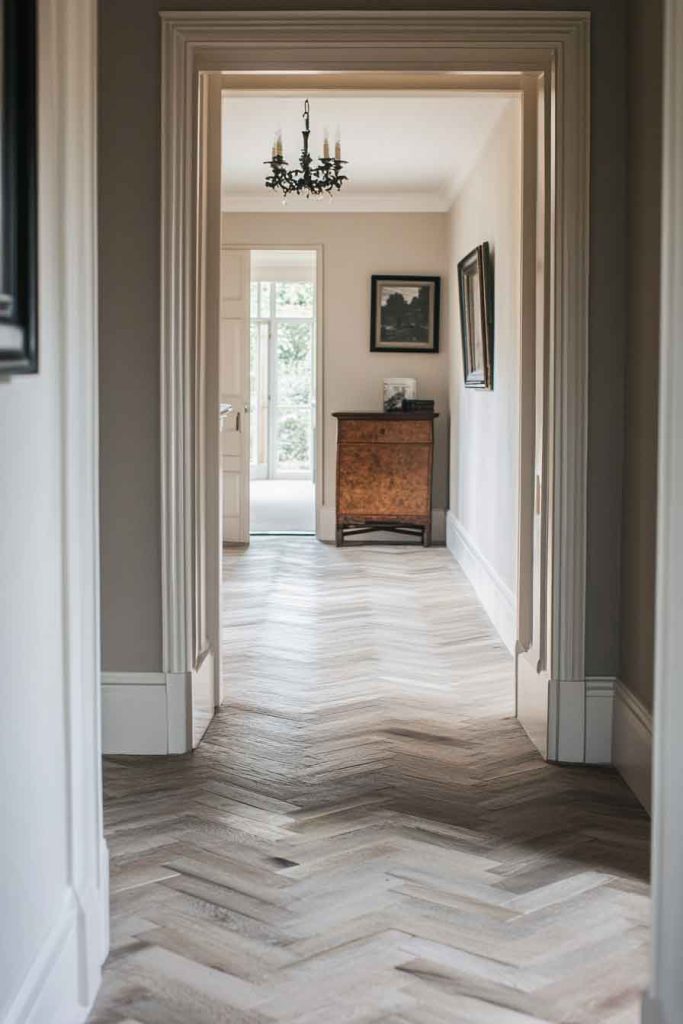
Patterned encaustic tiles in black and white or terracotta and cream add character and a sense of heritage charm. Even in a tiny corridor, a beautiful floor has a significant impact on the overall impression of the home.
If you are working with a rental property or a tight budget, peel-and-stick vinyl tiles in a herringbone or geometric pattern can be surprisingly convincing and easy to install yourself.
- Choose tiles in a scale that suits the size of your corridor. Very large tiles can overwhelm a small space.
- A diagonal tile layout can make a narrow corridor feel wider.
- Keep the floor light in colour if the walls are dark, and vice versa, for a balanced result.
- Add an underfloor heating mat beneath tiles for a luxurious touch in a frequently used space.
13. Add a Statement Light Fitting as a Focal Point
Every corridor needs a focal point — something that catches the eye and gives the space a sense of purpose. A statement ceiling light is one of the easiest ways to achieve this. A beautiful pendant lamp, a small chandelier, or a sculptural flush fitting instantly elevates a corridor from functional to intentional.
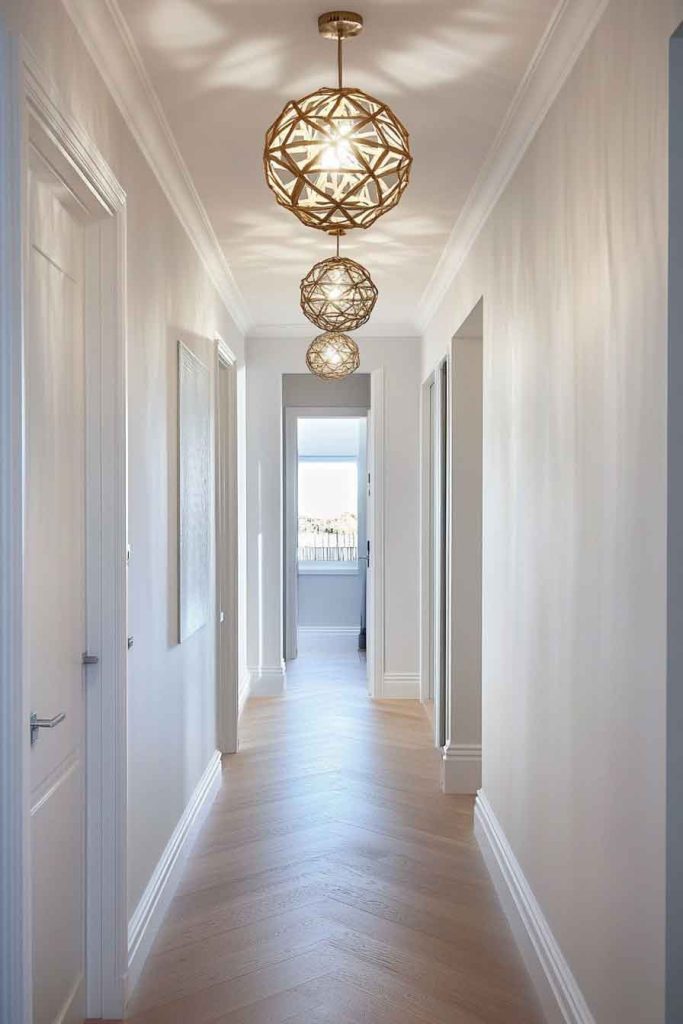
Choose a fitting that complements the style of your home. A rattan pendant suits a natural, Scandi-inspired interior. A faceted glass globe works in a more contemporary setting. A vintage-style filament pendant adds warmth and nostalgia to a traditional hallway.
Even in a low-ceilinged corridor, there are flush and semi-flush fittings with genuine decorative appeal. You do not need height to make a statement.
- Position the light fitting centrally in the corridor for balanced illumination.
- Choose a fitting in a finish that complements your door handles and hardware.
- Layer the ceiling light with wall lights or floor lamps for a richer lighting scheme.
- A sculptural fitting acts as artwork in itself and removes the need for other wall decorations.
14. Incorporate Indoor Plants for Life and Freshness
Plants bring life, colour, and a sense of the natural world into even the most utilitarian corridor. A tall, slender plant like a snake plant, a fiddle leaf fig, or a bamboo palm can fill a corner without taking up too much floor space. Trailing plants on a high shelf or wall-mounted planter add softness and texture to bare walls.
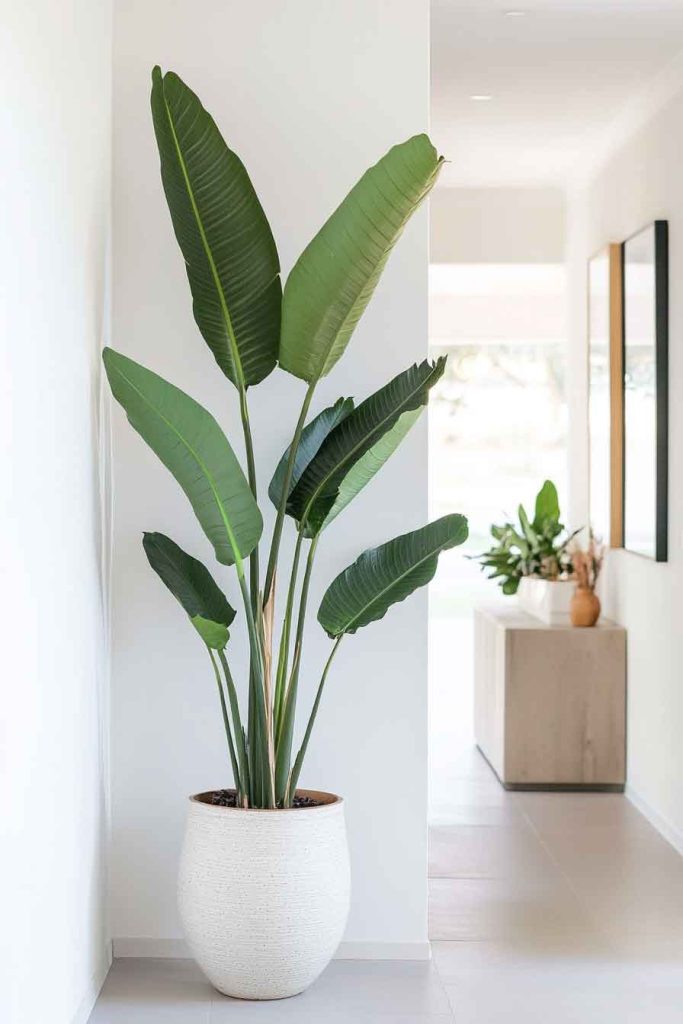
Plants also have a proven positive effect on mood and air quality, making your home feel more welcoming the moment you step through the door.
In corridors without natural light, choose low-maintenance plants that tolerate shade, such as pothos, ZZ plants, or peace lilies.
- Place a single large plant in the corner at the end of a corridor to create a destination point.
- Group several small plants on a floating shelf for a lush, layered display.
- Use a decorative pot that complements the colour palette of the corridor.
- Consider a wall-mounted air plant holder for a striking, minimal look that requires no soil.
15. Try Shiplap or Tongue-and-Groove Wall Panelling
Wall panelling adds texture, warmth, and architectural interest to a plain corridor. Shiplap, tongue-and-groove, or beadboard panelling applied to the lower half of the walls — known as half-height or dado panelling — is a classic choice that works in both period and contemporary homes.
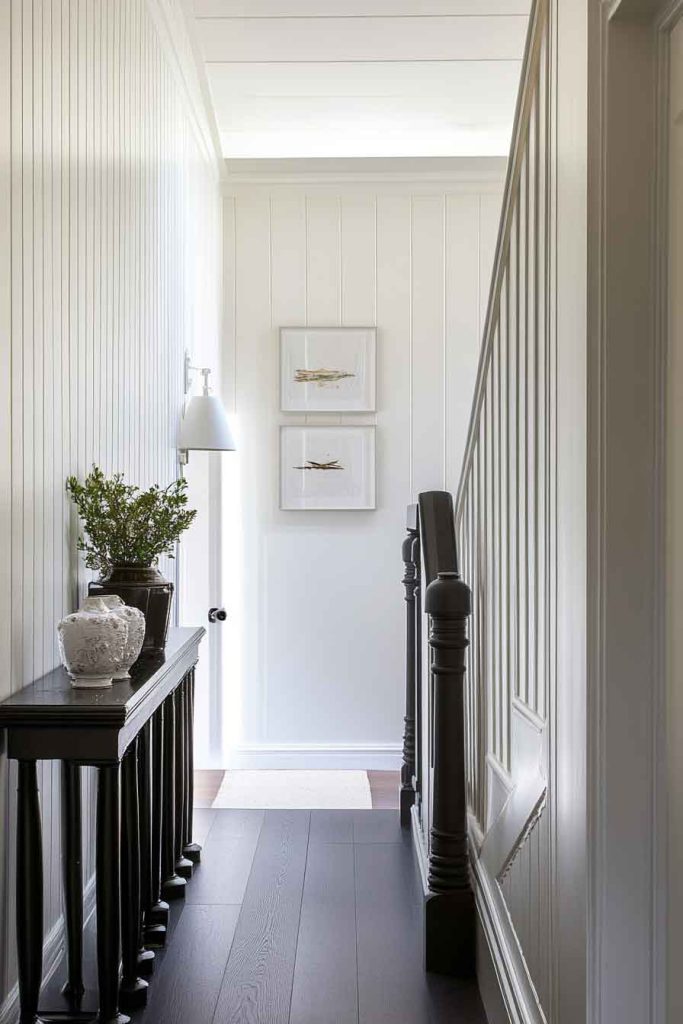
Paint the panelling the same colour as the walls above for a seamless, modern result. Alternatively, use the panelling as a subtle colour break by painting it a slightly darker or contrasting shade to create a dado-line effect.
Panelling also has a practical benefit in corridors: it protects the lower walls from scuffs and marks caused by bags, shoes, and furniture.
- Choose panelling boards around eight to twelve centimetres wide for a traditional look.
- For a more modern result, use wider boards and paint the whole thing in a single colour.
- Combine wall panelling with a contrasting paint colour above for added visual interest.
- Use MDF panelling if budget is a concern — it paints beautifully and is easy to cut and fix.
16. Create a Welcoming Entry Vignette
A vignette is a small, curated arrangement of objects that together create a visually pleasing moment. In a small corridor, a well-styled vignette near the front door signals to anyone entering that this is a cared-for, thoughtful home.
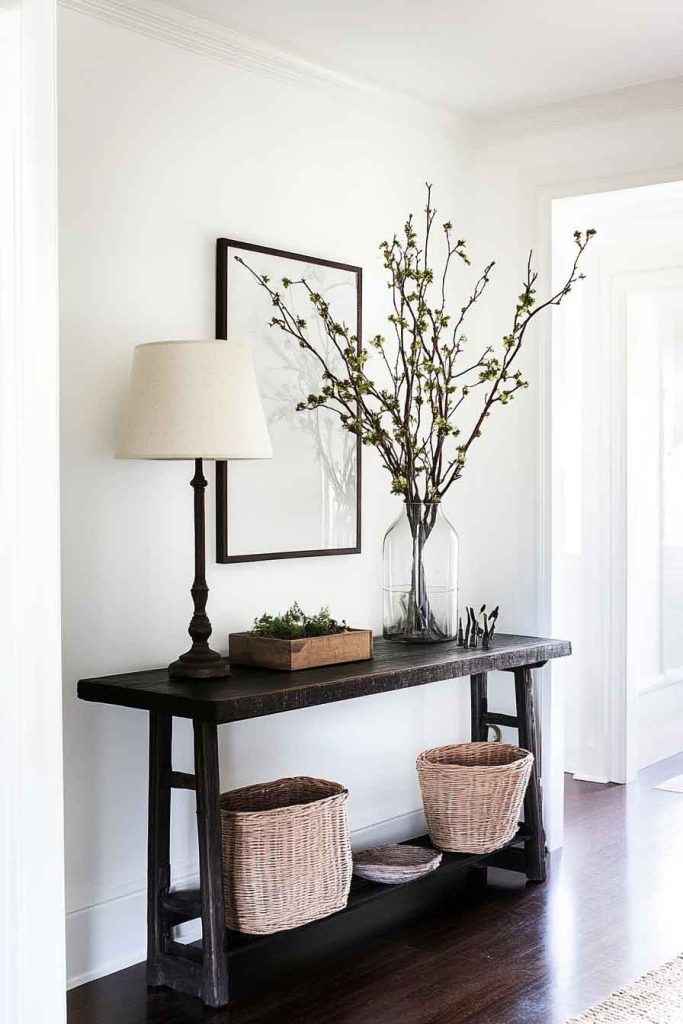
A console table or a small shelf is the foundation. Add a lamp, a vase of flowers or greenery, a small tray for keys, and perhaps one or two decorative objects that reflect your personality. Keep the arrangement simple and balanced — two or three items are usually more elegant than a crowded collection.
Change the vignette seasonally to keep it feeling fresh. Swap in autumnal branches in October, a simple advent wreath in December, and fresh tulips in spring.
- Stick to an odd number of objects for a more natural, less symmetrical arrangement.
- Use items of varying heights to create visual rhythm.
- Include something living — a plant, fresh flowers, or even a small bowl of seasonal fruit.
- Make sure there is always a clear space for keys and everyday essentials so the vignette stays tidy.
17. Use Wallpaper on One Wall for Impact
In a small corridor, covering all four walls in wallpaper can feel overwhelming. But applying a bold or beautifully detailed wallpaper to just one wall — typically the wall at the end of the corridor or the longest wall — creates a stunning focal point without the room feeling too busy.
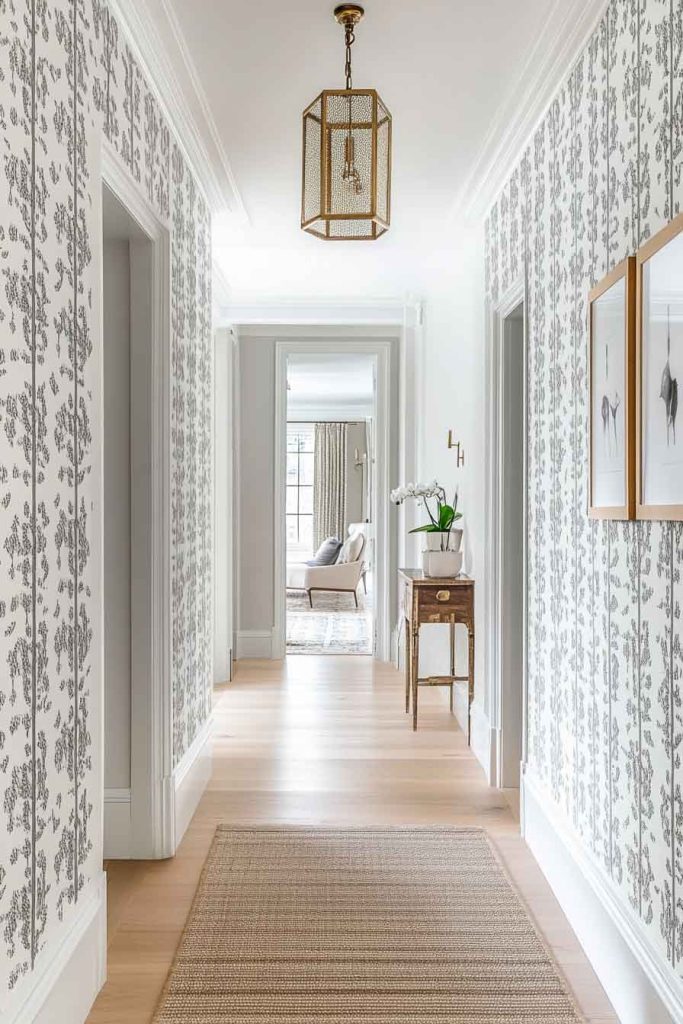
Geometric patterns, botanical designs, and architectural motifs all work well as statement corridor wallpaper. Even a delicate, tone-on-tone texture can add a layer of sophistication that plain paint simply cannot achieve.
Wallpaper is also more forgiving to hang in a corridor than in a larger room because you are working with smaller, more manageable sections of wall.
- Measure the wall carefully and order slightly more wallpaper than you need to allow for pattern matching.
- Pair a bold wallpaper with simple, neutral furniture and fittings so the pattern takes centre stage.
- Use a wallpaper with a vertical repeat to draw the eye upward and make ceilings feel higher.
- Peel-and-stick wallpaper is an excellent option for renters or those new to wallpapering.
18. Hang Hooks at Different Heights for a Practical Display
A row of hooks is perhaps the most practical addition you can make to any corridor. But instead of a generic hook rail, consider creating a more dynamic arrangement by combining hooks at different heights on a piece of painted wood or directly on the wall.
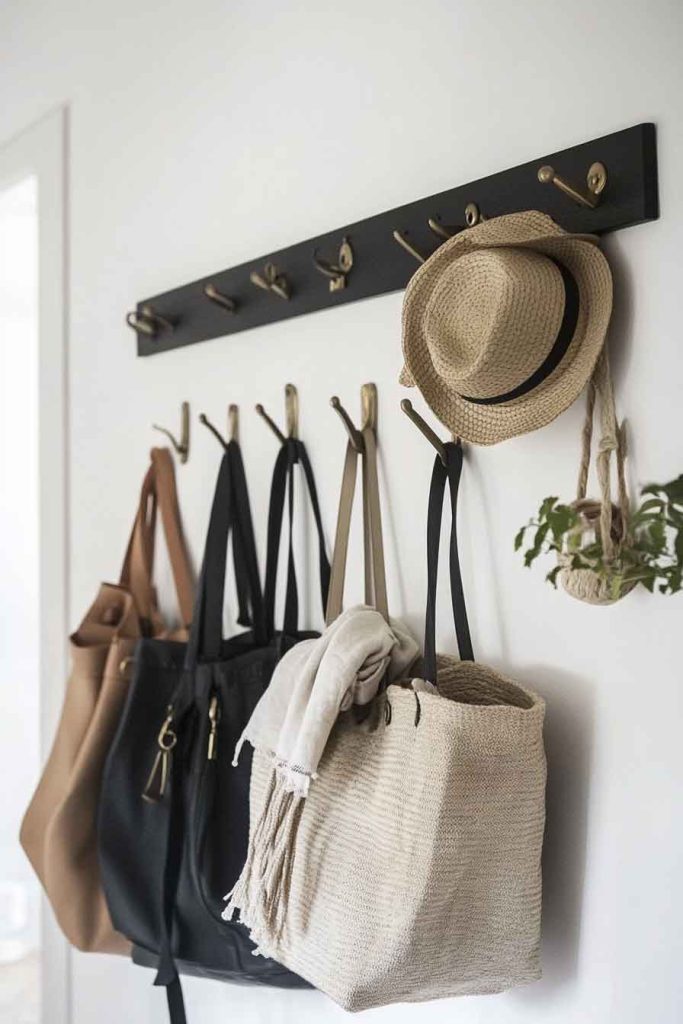
Higher hooks handle adult coats and bags. Mid-level hooks are perfect for children’s items. Lower hooks near the floor are great for dog leads, shopping bags, and umbrellas.
Mix different styles of hooks — a combination of knob hooks, J-hooks, and double hooks — for an eclectic, personal look. Brass, matte black, and ceramic hooks all have their own character and can complement different interior styles.
- Space hooks at least ten centimetres apart so items do not overlap and become tangled.
- Mount a small shelf above the hooks to hold a plant or everyday items.
- Use a painted plank of wood as a hook board to avoid drilling multiple individual holes in the wall.
- Add a small basket or fabric bag hanging from one hook for scarves, hats, and gloves.
19. Choose Light-Coloured Flooring to Brighten the Space
Just as light walls make a corridor feel more spacious, light flooring has the same effect at ground level. Pale oak, light ash, white-washed boards, or cream-coloured stone tiles all reflect both natural and artificial light, which visually lifts the space and makes it feel less closed-in.
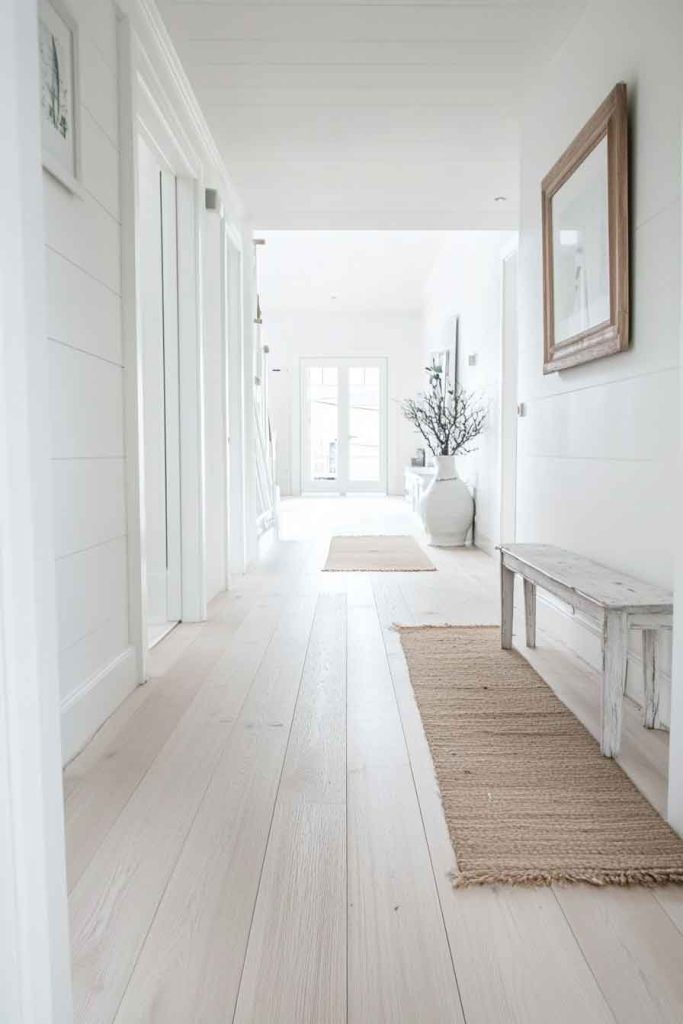
Light floors also show less dust and footprints than very dark floors, making maintenance slightly easier in a high-traffic corridor.
If your corridor already has dark flooring that you cannot change, use pale rugs and light fittings to counterbalance the depth of the floor.
- Choose flooring with a smooth, low-sheen finish to maximise light reflection.
- Use the same flooring throughout the corridor and into adjacent rooms to create a sense of flow.
- Light grout in between pale floor tiles prevents the grout lines from visually breaking up the floor.
- Add a textured rug in a slightly deeper tone for warmth without losing the light feel.
20. Use Wainscoting for a Classic and Elegant Look
Wainscoting is a traditional form of wall panelling that covers the lower portion of a wall, usually to around one-third or one-half of the wall height. It originated as a practical solution to protect walls from moisture and damage, but today it is valued almost entirely for its decorative effect.
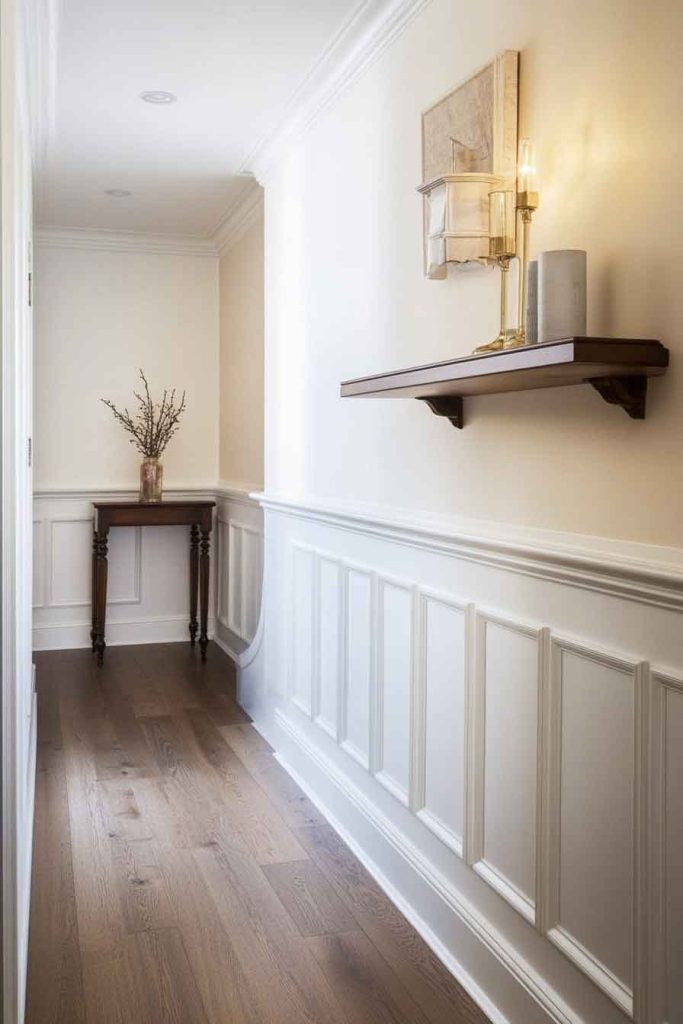
In a small corridor, wainscoting adds instant architectural character and makes even a newly built home feel like it has substance and history. It also provides a natural visual break that prevents walls from feeling monotonous and blank.
Paint the wainscoting in a complementary tone to the wall colour above — slightly darker, slightly lighter, or in a contrasting accent colour.
- Classic wainscoting uses recessed panels with a moulded frame. Flat panel versions are simpler and more modern.
- Cap the top of the wainscoting with a narrow shelf for displaying small decorative items.
- Combine wainscoting with a wallpapered upper wall for a rich, layered effect.
- Choose a satin finish on the wainscoting so it is easy to wipe clean in a busy hallway.
21. Add a Bench or Ottoman for Seated Entry
A small bench or upholstered ottoman near the front door is both practical and welcoming. It provides somewhere to sit when putting on shoes, a place to set down bags, and a softening element that makes the corridor feel less like a pure thoroughfare.
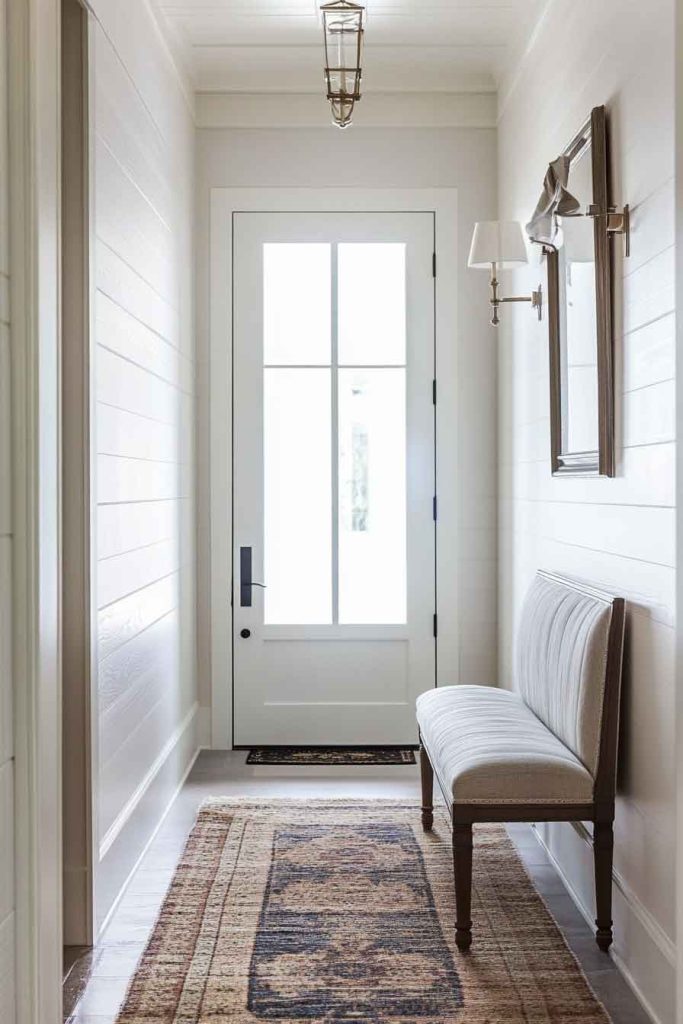
Choose a bench with a slim profile — around 40 to 45 centimetres deep — so it does not protrude too far into the corridor. A bench with integrated storage underneath is even more practical in a small space.
An upholstered bench in a textured fabric — boucle, velvet, or linen — adds a touch of luxury and tactile warmth that harder materials like wood or metal cannot provide on their own.
- Position the bench against the wall opposite the door so it is the first thing you see on entering.
- Pair the bench with a mirror above for a classic, practical arrangement.
- Use the same fabric on the bench as on nearby cushions or soft furnishings for a cohesive look.
- A painted wooden bench with tapered legs works well in both modern and traditional corridor styles.
22. Try Two-Tone Walls for a Modern, Layered Effect
Painting walls in two contrasting tones — a darker shade on the lower half and a lighter shade on the upper half — is a simple but highly effective technique for adding visual interest to a small corridor. It references the traditional idea of a dado rail without requiring any actual panelling or woodwork.
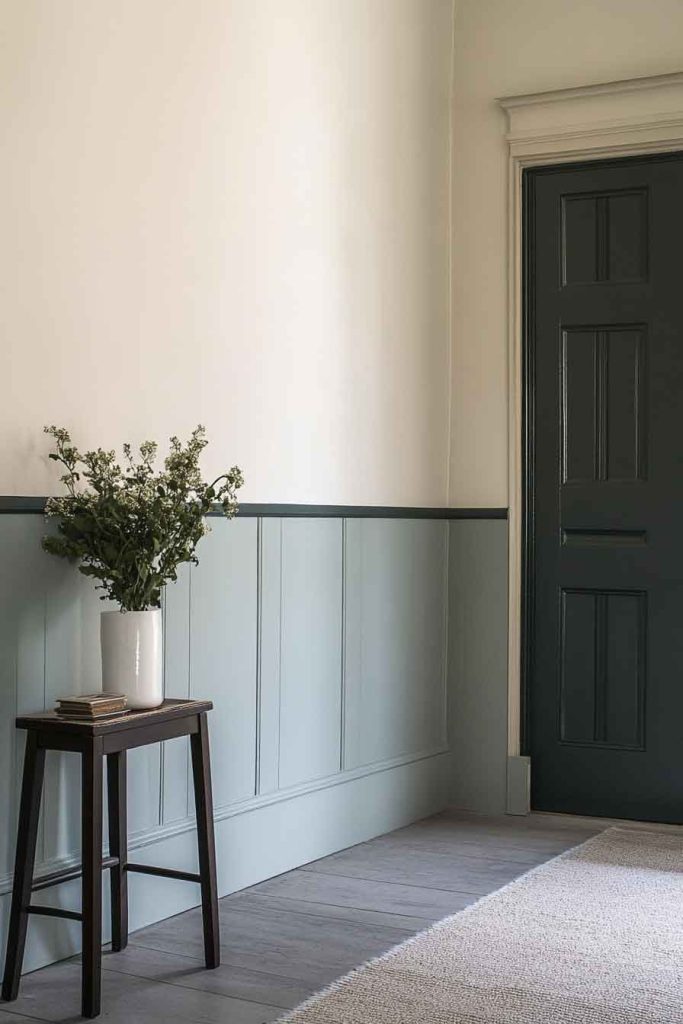
Use a strip of masking tape at chair-rail height (around 90 centimetres from the floor) to create a clean, straight dividing line between the two colours. Remove the tape carefully while the paint is still slightly wet for the sharpest edge.
This technique works especially well with complementary shades from the same colour family — for example, sage green on top and olive on the bottom, or blush on top and terracotta on the bottom.
- The lower colour should usually be the darker of the two to ground the space visually.
- Use a strip of timber dado rail, painted in a complementary tone, to add a physical transition line.
- Carry the colour combination through into adjacent rooms for a cohesive flow.
- Try a very pale upper half with a stronger lower half for a dramatic but elegant result.
23. Display Books and Objects on a Ladder Shelf
A leaning ladder shelf is a practical and decorative addition to a small corridor with slightly more room to spare. It leans against the wall at an angle, taking up very little floor space at its base while providing several shelves of storage and display space as it rises.
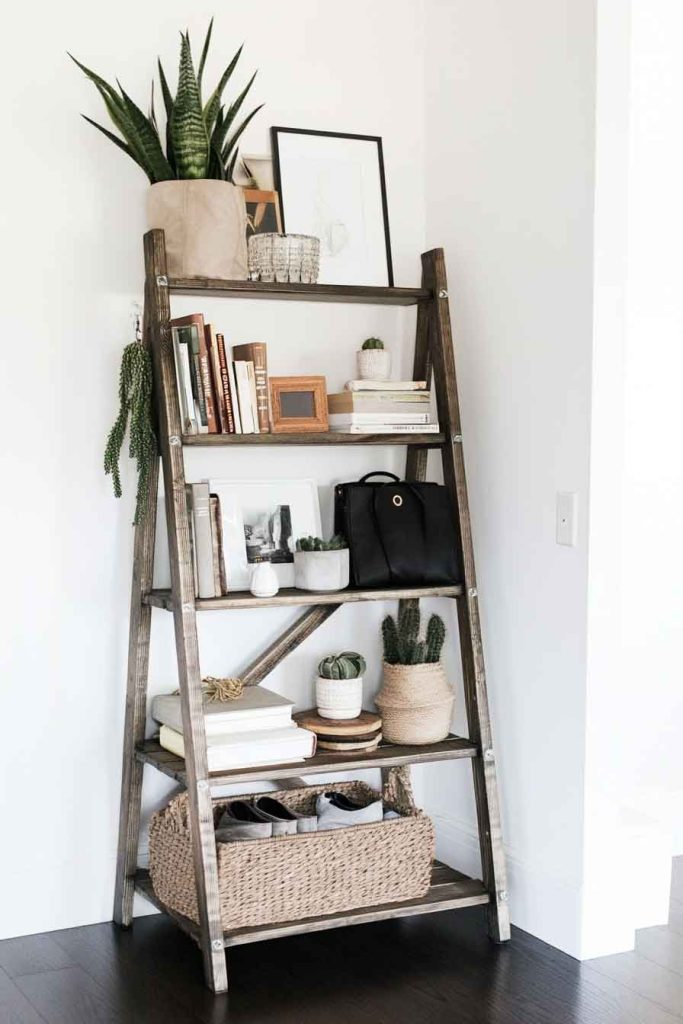
Style the ladder shelf with a mix of books, small plants, framed prints, and decorative objects for an eclectic, relaxed look. Keep the overall arrangement open and airy rather than crammed with items, so the shelf looks curated rather than cluttered.
A wooden ladder shelf in a natural or whitewashed finish suits a Scandinavian or coastal aesthetic. A black metal ladder shelf works well in an industrial or contemporary corridor.
- Lean the shelf against the wall at the end of the corridor to create a destination point.
- Use the lower shelves for practical items like bags and shoes, and the upper shelves for purely decorative objects.
- Keep the shelf to a maximum of 40 centimetres deep so it does not obstruct the walkway.
- Anchor the shelf to the wall with a safety strap to prevent it from tipping.
24. Use a Monochromatic Colour Scheme for a Sophisticated Look
A monochromatic colour scheme — using different tones, textures, and finishes of a single colour throughout the corridor — is one of the most elegant and foolproof approaches to small space design. It removes the visual complexity of multiple competing colours, which instantly makes the space feel calmer and more spacious.
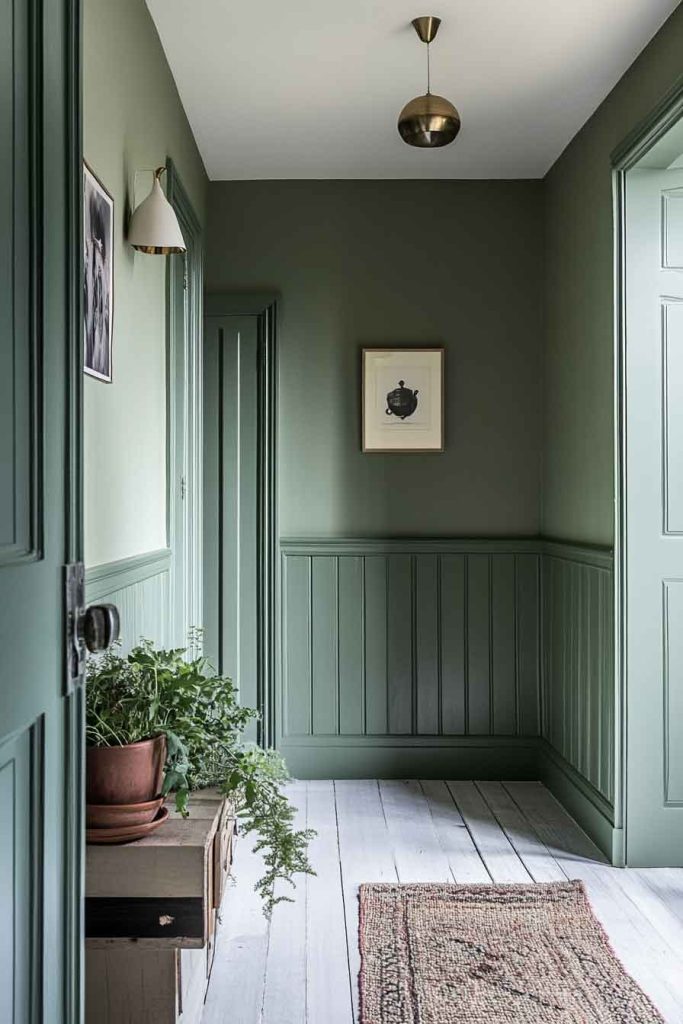
Choose a base colour that you love and apply it to the walls, ceiling, woodwork, and soft furnishings. Vary the depth of the shade and the finish of the paint to add dimension. A matte mid-tone on the walls, a slightly darker eggshell on the skirting boards, and a lighter tint on the ceiling creates a subtle, layered effect within a single palette.
Introduce texture to prevent the scheme from feeling flat — a linen curtain, a woven rug, and a velvet cushion all in the same general tone create richness without colour contrast.
- Warm greens, dusty blues, soft terracottas, and tonal greys all work exceptionally well as a monochromatic corridor palette.
- Add metallic accents in brass or copper to warm up a cool monochromatic scheme.
- Include at least one natural material — wood, stone, or rattan — to ground the palette.
- A single piece of art in a contrasting colour can act as a deliberate focal point within the monochromatic scheme.
25. Frame the End Wall as a Destination
In a long, narrow corridor, the wall at the far end is the first thing you see as you enter. Treating it as a destination — a place worth walking towards — transforms the entire feeling of the space. Instead of a blank wall that the corridor simply runs into, you create a moment of visual interest and arrival.
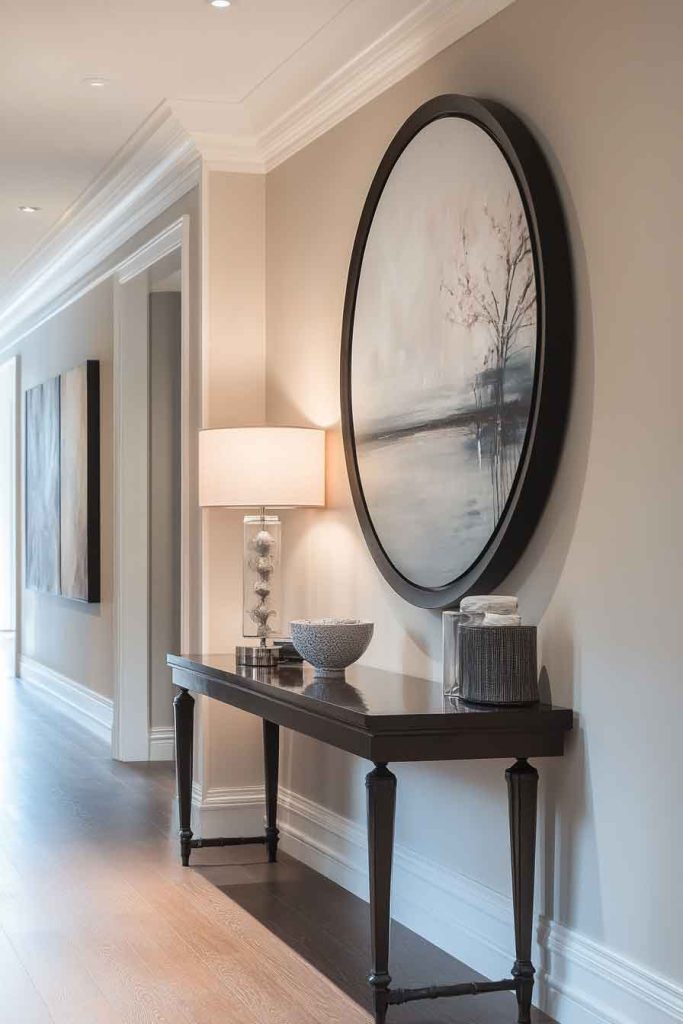
Hang a large piece of artwork or a statement mirror on the end wall. Add a console table below it with a lamp and a few carefully chosen objects. Paint the end wall in a slightly deeper tone than the side walls to draw the eye forward. The result is a corridor that feels purposeful, layered, and visually complete from the moment you step into it.
This principle works in short corridors too. Even a small end wall with a well-framed print and a simple shelf becomes something worth looking at.
- Choose artwork that is large enough to make an impact — at least 60 centimetres wide on an average-sized end wall.
- A round mirror on the end wall reflects the length of the corridor back at you, doubling its visual depth.
- Use a warm-toned lamp on the console table to create a welcoming glow at the end of the corridor.
- Paint the end wall in the same colour as the adjacent room to visually extend the space beyond the corridor.
Final Thoughts
A small corridor does not have to be a forgotten space. With the right combination of light, colour, storage, and decorative touches, even the narrowest hallway can become one of the most characterful rooms in your home.
Start with the basics — light walls, good lighting, and clear floors — and build from there. Add a mirror, a runner rug, and a few well-chosen pieces of furniture and art. Whether you prefer a minimal Scandinavian style, a bold and dramatic look, or a warm and cosy feel, there is a combination of these 25 small corridor ideas that is exactly right for your home.
The corridor is your home’s first impression. Make it count.