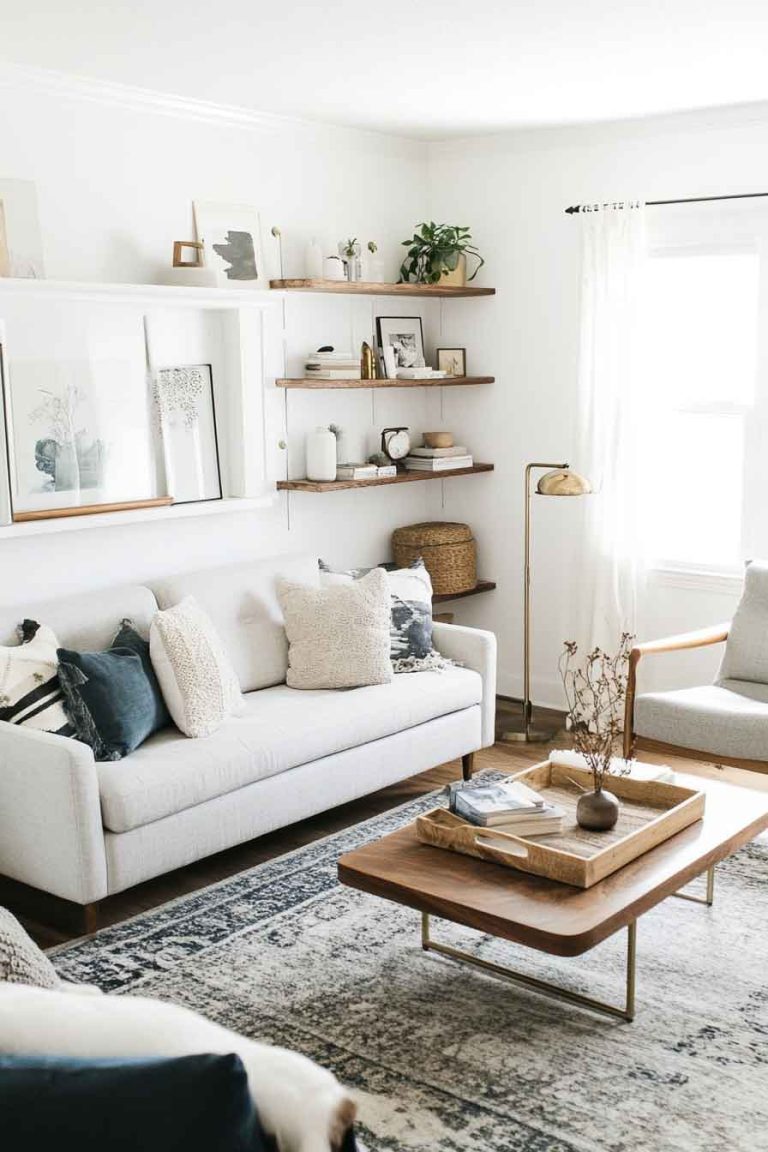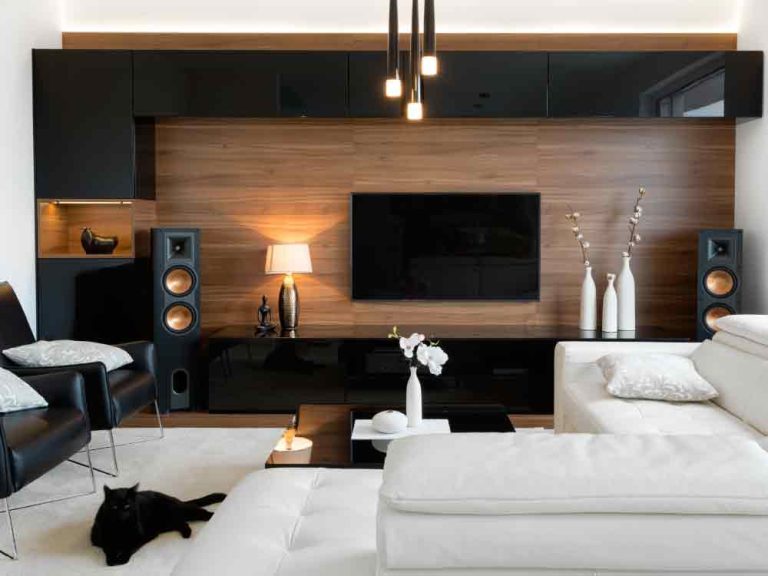
33 Japandi Living Room Design Ideas
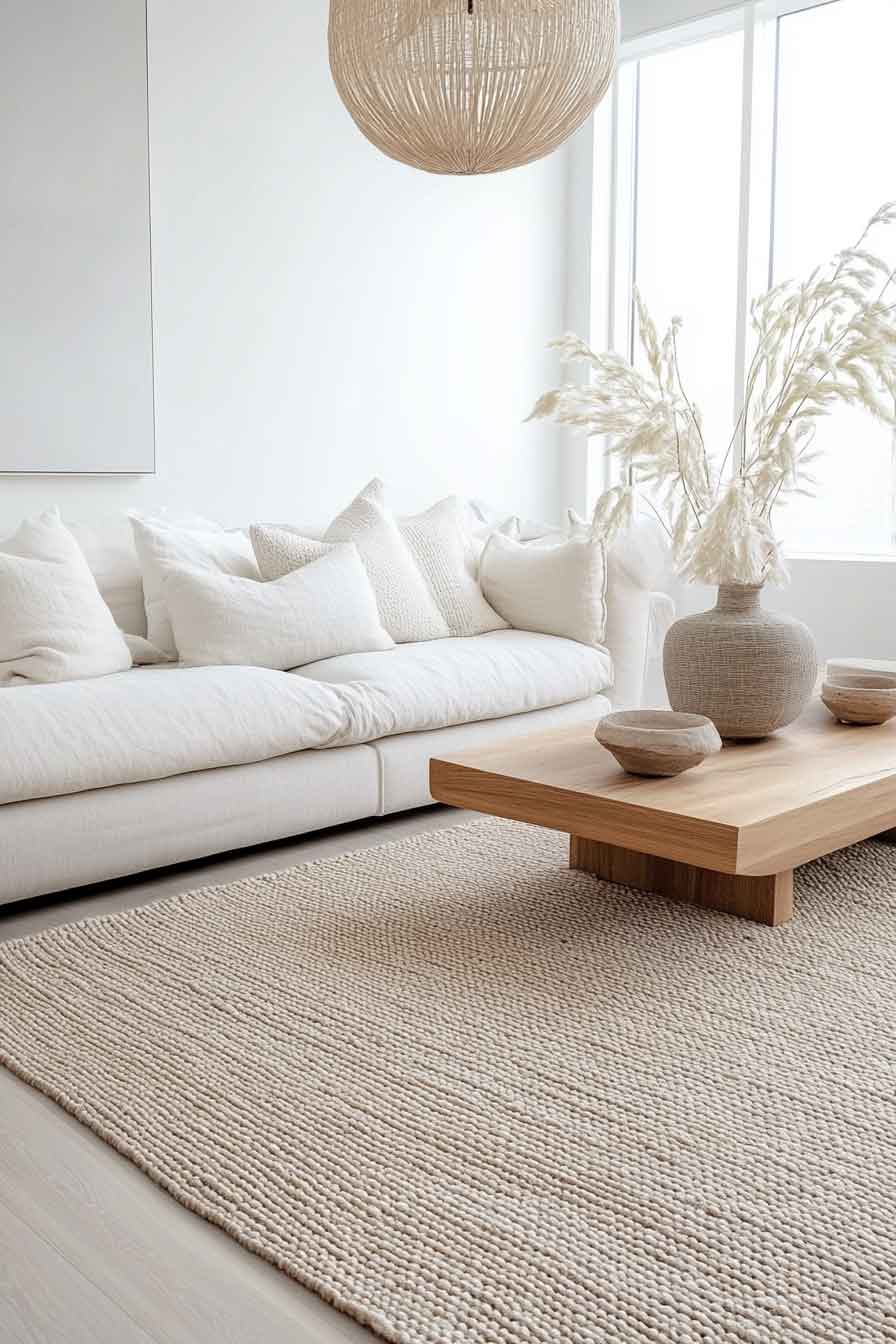
Do you want to create a living space that perfectly balances minimalism with warmth? Look no further than these Japandi living room design ideas! Japandi style is a harmonious blend of Japanese and Scandinavian design that has been captivating homeowners and designers alike in recent years.
With its focus on natural materials, clean lines, and functional beauty, Japandi design offers the perfect combination of serenity and comfort. In this article, we’ll explore creative and practical ways to incorporate Japandi elements into your living room, whether you’re redesigning your entire space or simply adding some peaceful touches to your current decor.
There are many reasons why people choose Japandi design for their living rooms. One of the main reasons is that it creates a calm and peaceful environment that promotes relaxation and mindfulness. Natural materials like wood, bamboo, and stone give the space an organic and grounding feel.
Additionally, Japandi style emphasizes quality over quantity and thoughtful simplicity, making your home feel more organized and intentional. Whether you prefer a more traditional Japanese aesthetic or lean toward Nordic minimalism, there are countless possibilities for personalization.
Japandi design typically incorporates neutral color palettes such as beige, cream, gray, and soft earth tones, with occasional pops of muted colors like sage green or dusty blue. This style is known for its clean lines and uncluttered spaces, making it a popular choice for those who appreciate calm and sophisticated living environments.
What is Japandi Design?
Japandi is a design style that combines the best elements of Japanese and Scandinavian interior design. It merges the Japanese philosophy of wabi-sabi (finding beauty in imperfection) with the Scandinavian concept of hygge (cozy contentment).
The Japandi aesthetic is minimalist yet warm, serene yet inviting, often incorporating elements like natural wood, handcrafted ceramics, and simple textiles. Japandi design is all about creating balance and harmony in your space.
Regardless of your home’s size or location, almost any living room can embrace the Japandi philosophy. The key is in the thoughtful details and intentional choices that portray a clean, functional, and peaceful atmosphere.
Less is more with this approach. Think low-profile furniture, clean horizontal lines, natural light, handmade pottery, and implementing sustainable materials throughout the foundation of your design.
Elements of Japandi Design
1. A Neutral and Earthy Palette
Japandi design relies on a carefully chosen neutral color palette that creates a sense of calm and spaciousness. The foundation typically includes soft whites, warm beiges, gentle grays, and earthy browns.
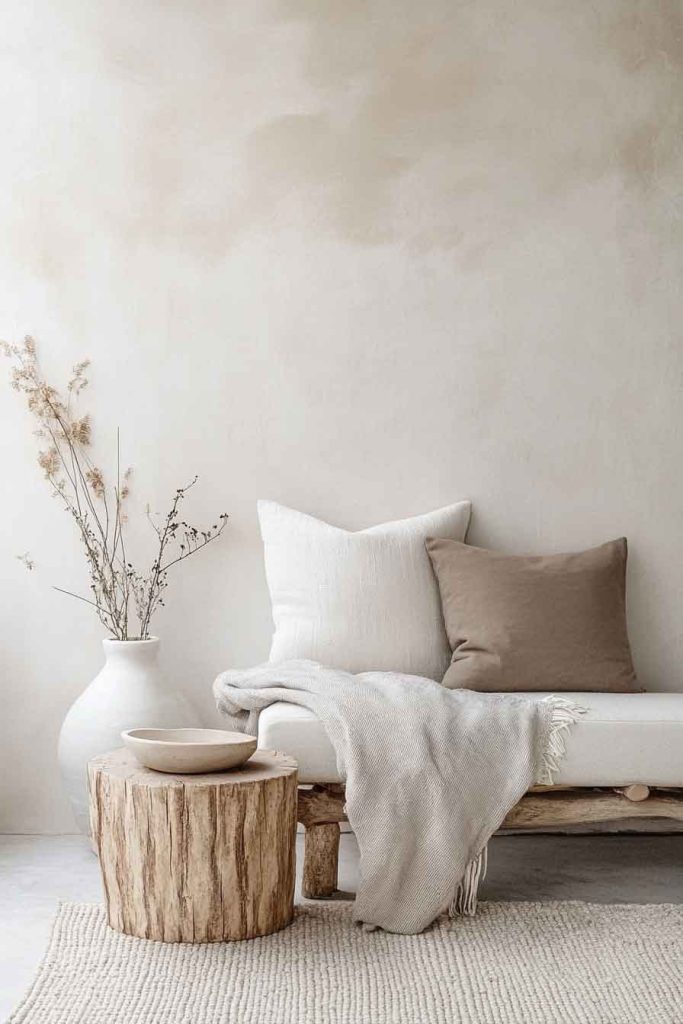
These colors work together to create a peaceful backdrop that allows natural materials and textures to shine. You can layer different shades of neutrals to add depth without overwhelming the space. Occasionally, introduce muted accent colors like sage green, soft terracotta, or dusty blue through small decorative items, but keep these touches minimal to maintain the serene overall look.
2. Low-Profile Furniture
Japandi furniture is characterized by low-profile pieces with clean, simple lines. Furniture sits closer to the ground, inspired by traditional Japanese design, which creates a sense of openness and flow in the room.
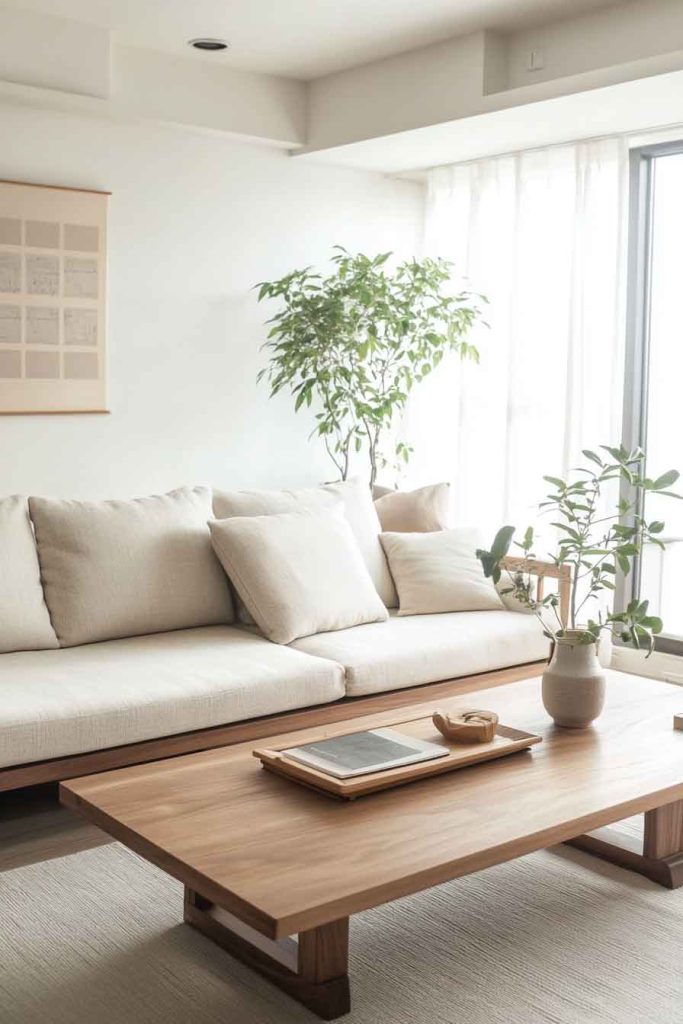
Look for sofas, coffee tables, and seating with minimal ornamentation and functional designs. Wood is the preferred material, often in lighter tones like oak, ash, or beech. The furniture should be both beautiful and practical, with hidden storage options to maintain the uncluttered aesthetic.
3. Natural Materials
The use of natural, sustainable materials is essential in Japandi design. Wood is the primary material, but you’ll also find bamboo, rattan, paper, stone, and natural fibers like linen, cotton, and jute.
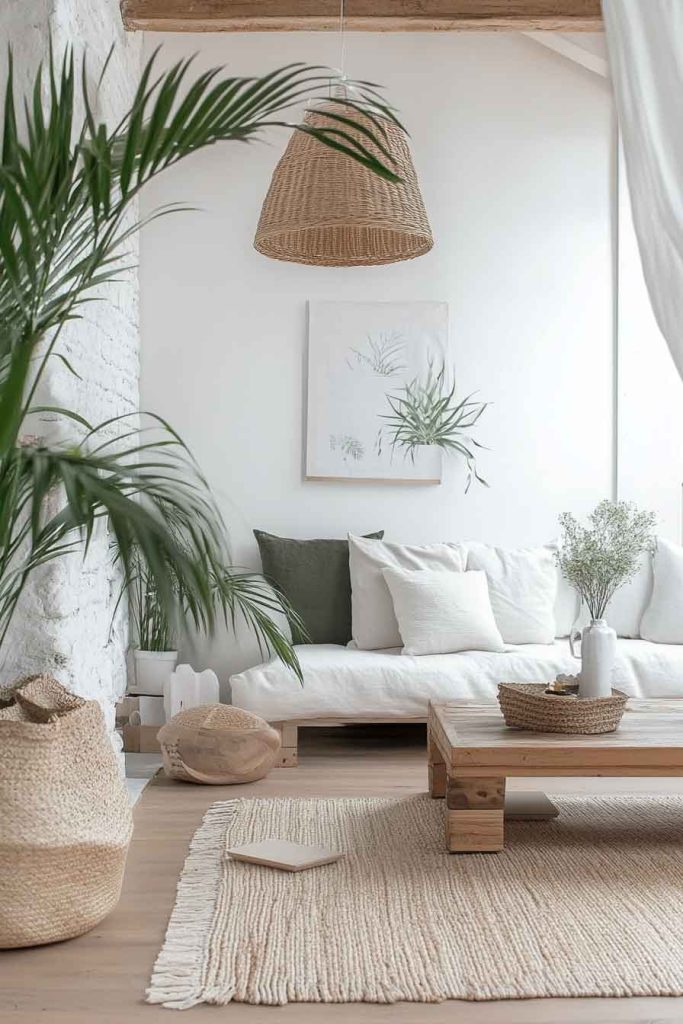
These materials bring warmth and texture to the minimalist space. Choose untreated or lightly finished woods that showcase the natural grain and imperfections. The goal is to create a connection with nature and bring organic elements indoors.
4. Functional Minimalism
Japandi design embraces the principle of functional minimalism. Every item in your living room should have a purpose and a place. This doesn’t mean your space should feel cold or empty, but rather intentionally curated.
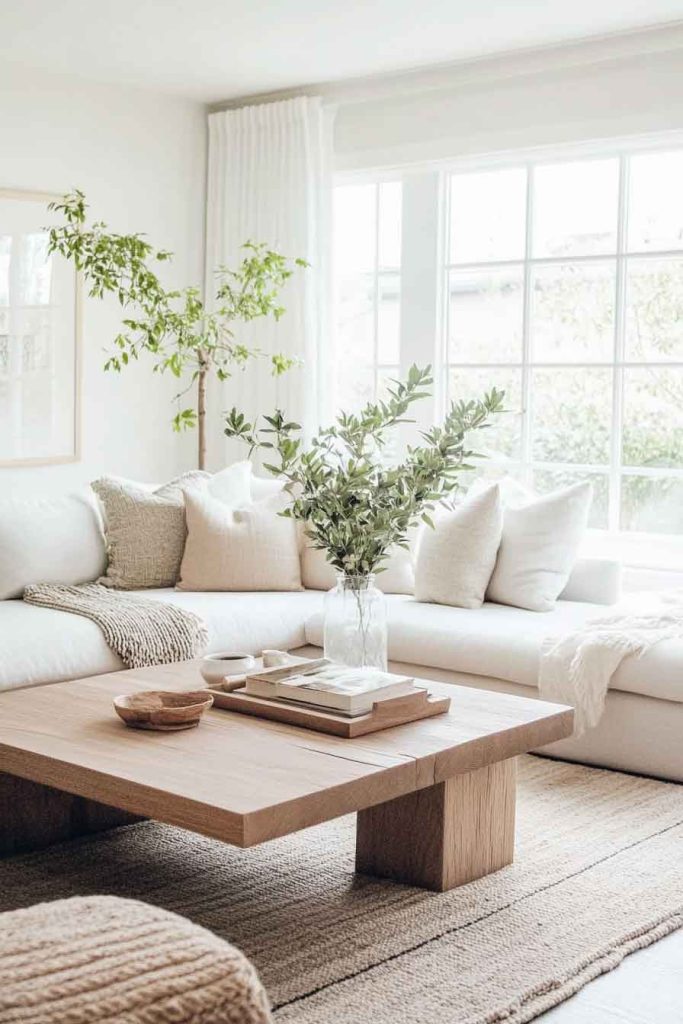
Choose quality pieces over quantity, and avoid unnecessary decorations. Built-in storage, multifunctional furniture, and thoughtful organization keep the space clean and clutter-free. This approach creates a peaceful environment where you can truly relax.
5. Embrace Wabi-Sabi
Wabi-sabi is the Japanese philosophy of finding beauty in imperfection and impermanence. In Japandi design, this means celebrating natural materials that show their age, handmade items with slight irregularities, and organic shapes.
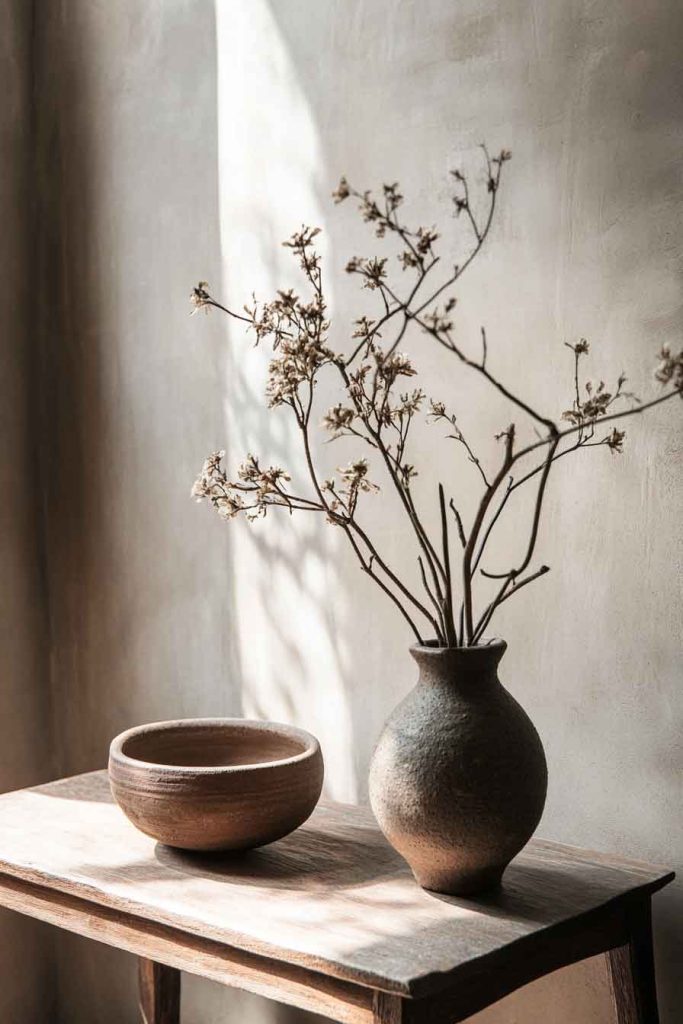
A handcrafted ceramic vase with an uneven glaze, a wooden table with visible knots and grain, or a linen cushion with natural texture all embody wabi-sabi. These imperfect elements add character and authenticity to your space.
6. Incorporate Natural Light
Natural light is crucial in Japandi design. Large windows, sheer curtains, and minimal window treatments allow sunlight to fill the space and highlight natural materials.
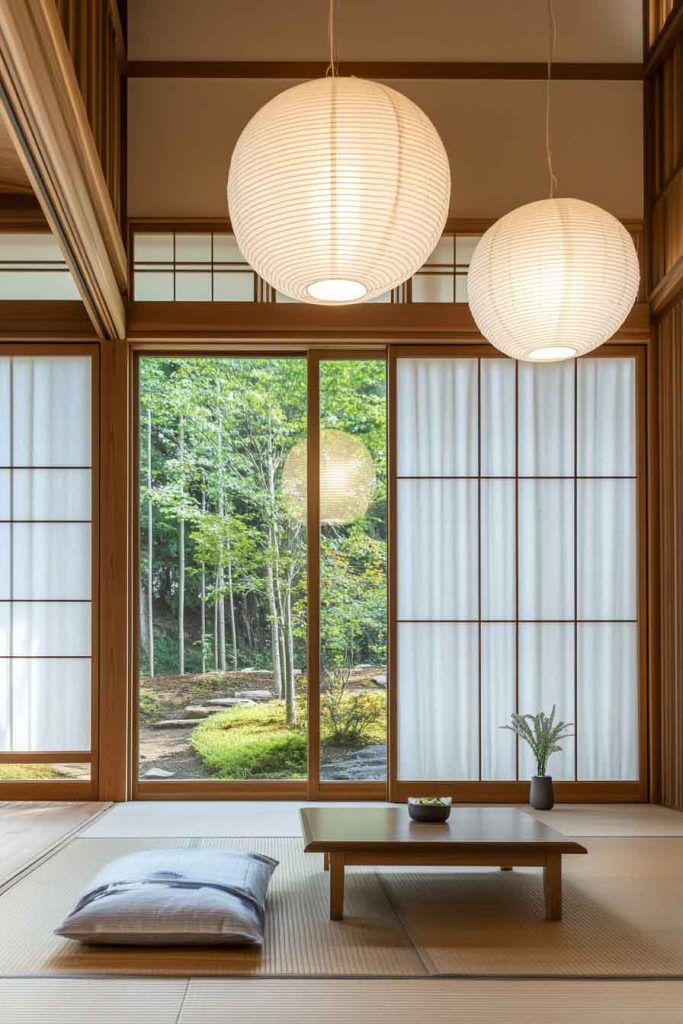
If your living room lacks natural light, use warm artificial lighting with paper lanterns, wooden lamps, or simple pendant lights. The lighting should be soft and layered, creating a cozy atmosphere in the evening while keeping the space bright during the day.
7. Create Cozy Comfort (Hygge)
While Japandi is minimalist, it should never feel cold or unwelcoming. The Scandinavian concept of hygge brings warmth and coziness to the clean Japanese aesthetic.
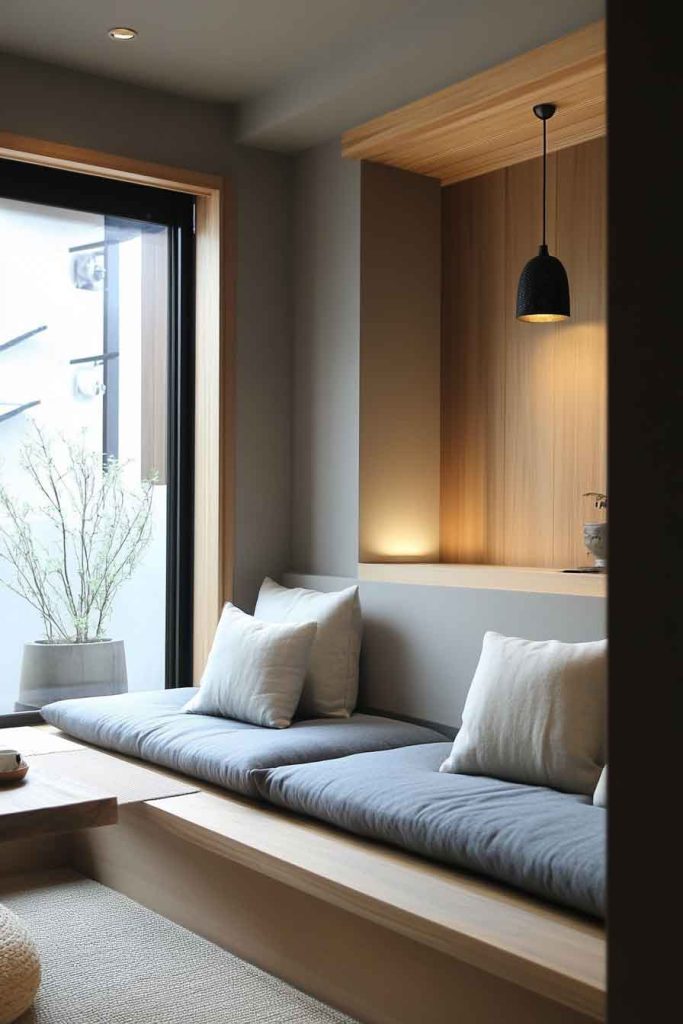
Add soft textiles like wool throws, linen cushions, and cotton rugs to create comfortable seating areas. These cozy elements invite you to relax and enjoy your space. Layer different textures to add warmth without adding clutter.
8. Add Greenery
Plants are essential in Japandi design, bringing life and a connection to nature into your living room. Choose plants with simple, elegant forms like bonsai trees, bamboo, snake plants, or fiddle leaf figs.
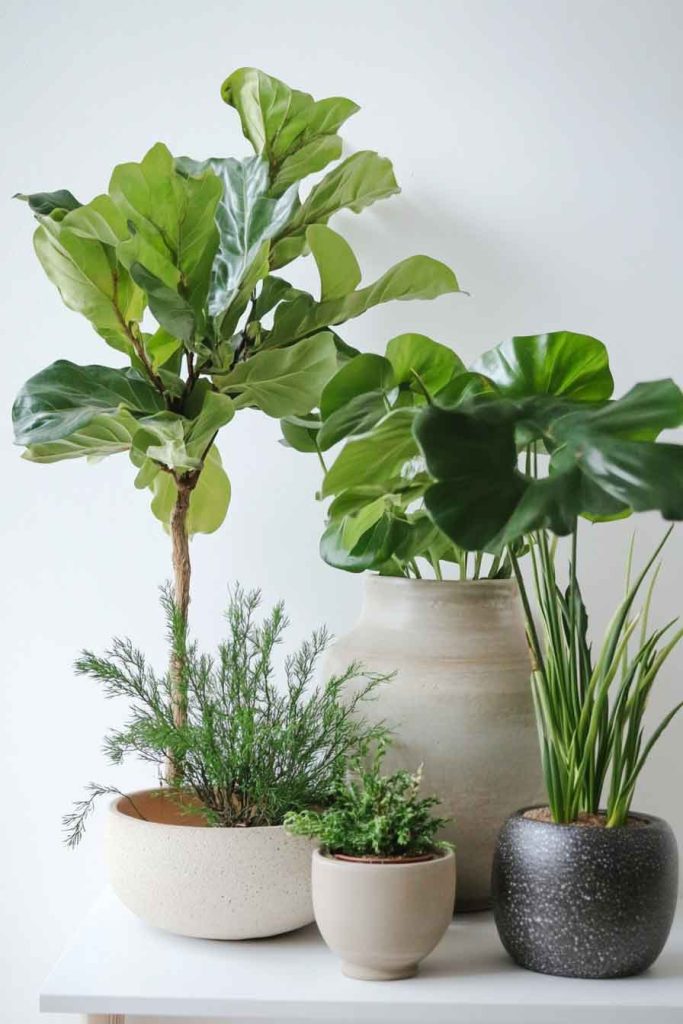
Display plants in simple ceramic or concrete planters that complement the neutral palette. Don’t overcrowd the space with too many plants. Instead, choose a few statement plants that can breathe and be appreciated individually.
9. Introduce Texture Through Textiles
Textiles add warmth and texture to the minimalist Japandi living room. Natural fabrics like linen, cotton, wool, and hemp work best in neutral colors.
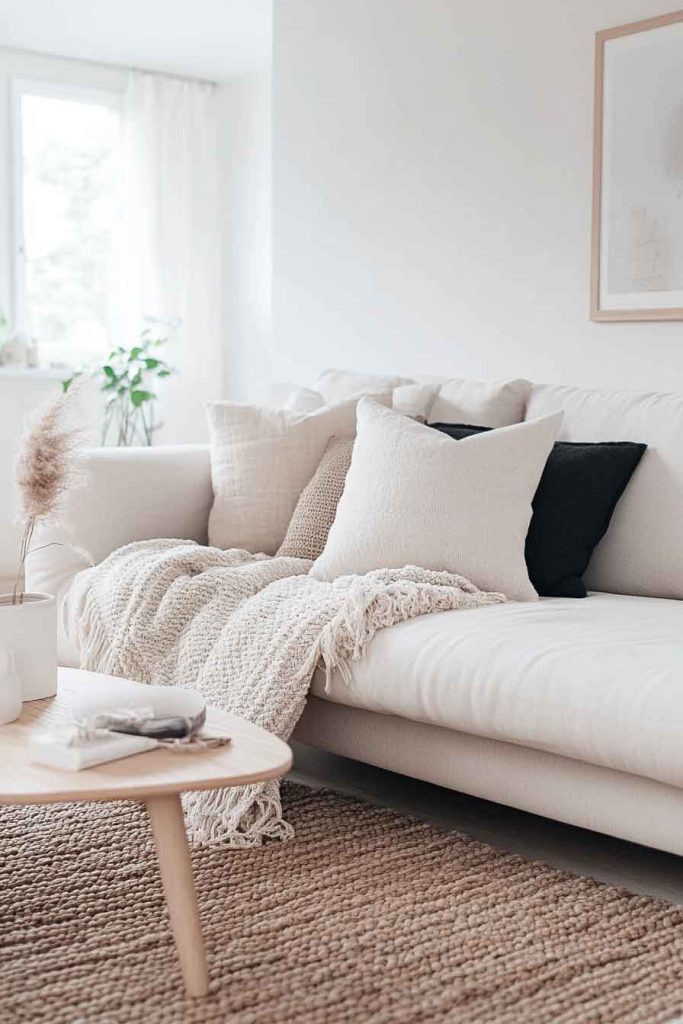
Layer different textures through throw pillows, blankets, curtains, and area rugs. A chunky knit throw over a linen sofa, or a jute rug under a wooden coffee table, adds visual interest while maintaining the calm aesthetic. Keep patterns minimal or absent, focusing on texture instead.
10. Balance and Symmetry
Creating visual balance is important in Japandi design. While you don’t need perfect symmetry, the space should feel harmonious and well-proportioned.
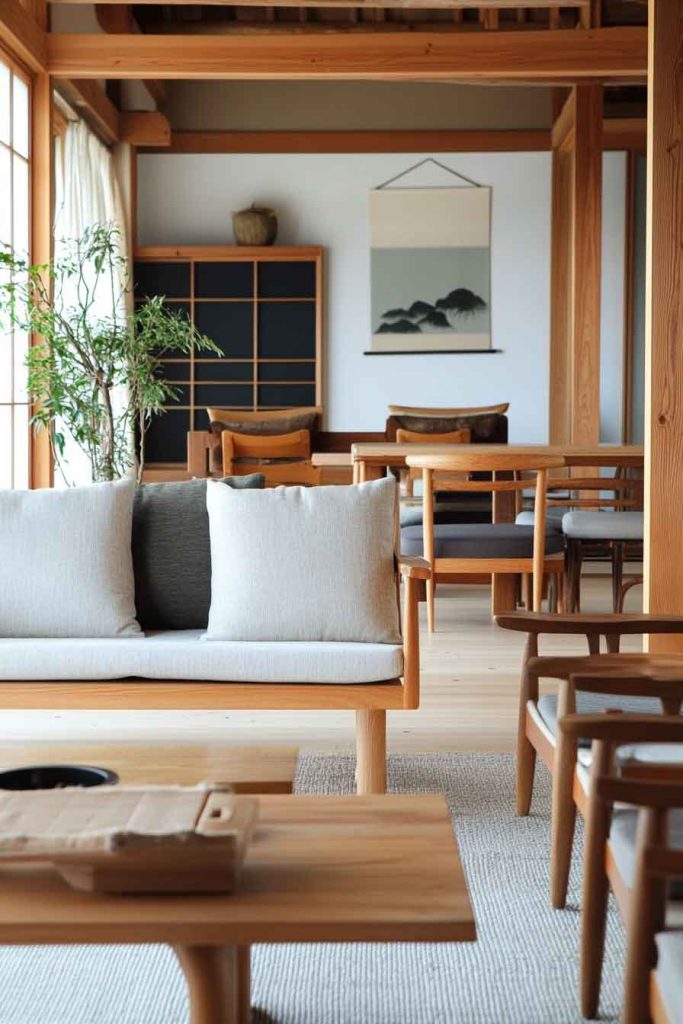
Arrange furniture to create natural pathways and conversation areas. Balance heavier furniture pieces with lighter elements. Use negative space intentionally, allowing the room to breathe. This balanced approach creates a sense of calm and order.
11. Handcrafted and Artisan Pieces
Japandi design values craftsmanship and handmade items. Incorporate pottery, woven baskets, wooden bowls, or handcrafted textiles into your living room.
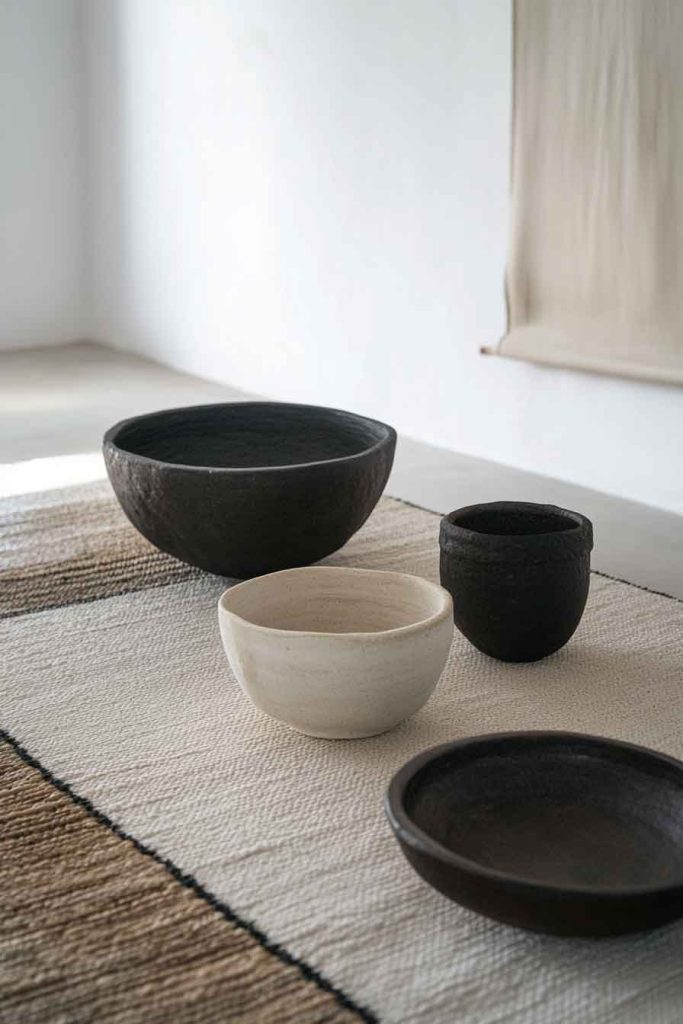
These artisan pieces add personality and warmth to the minimalist space. Each handmade item tells a story and brings authenticity to your design. Choose pieces that show the maker’s hand and celebrate traditional techniques.
12. Minimal Wall Decor
Wall decor in a Japandi living room should be minimal and intentional. One or two pieces of art are often enough to make an impact without overwhelming the space.
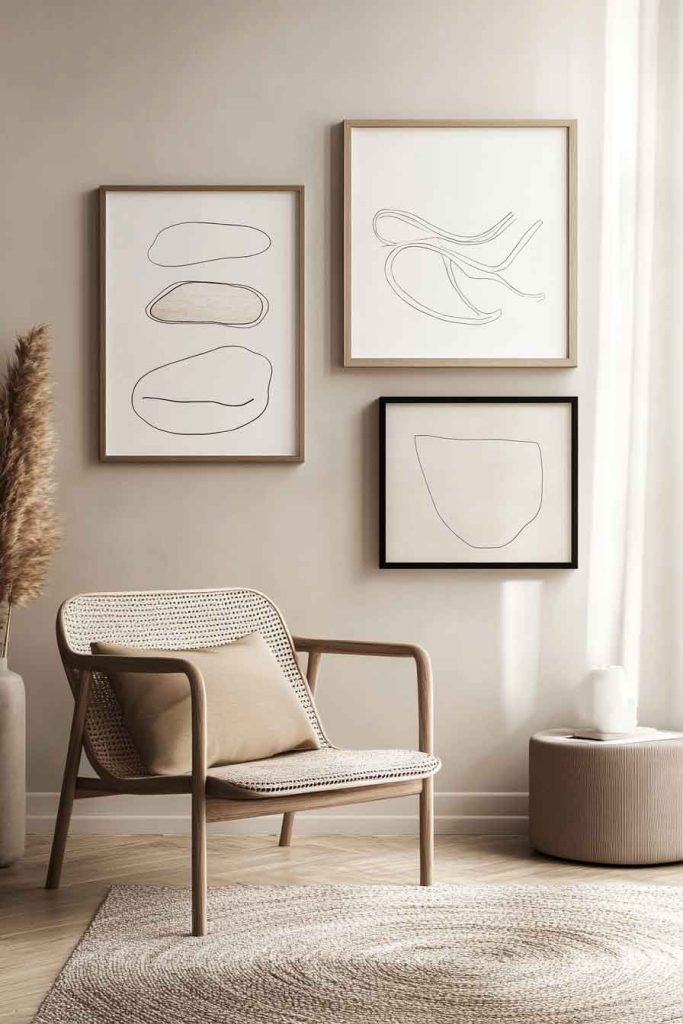
Choose simple line drawings, nature photography, or abstract art in neutral tones. Traditional Japanese art like calligraphy or ink paintings works beautifully. Frame artwork simply in natural wood or black frames. Remember, empty wall space is also part of the design.
13. Natural Wood Tones
Wood is the heart of Japandi design. Use wood in various forms throughout your living room, from flooring to furniture to decorative accents.
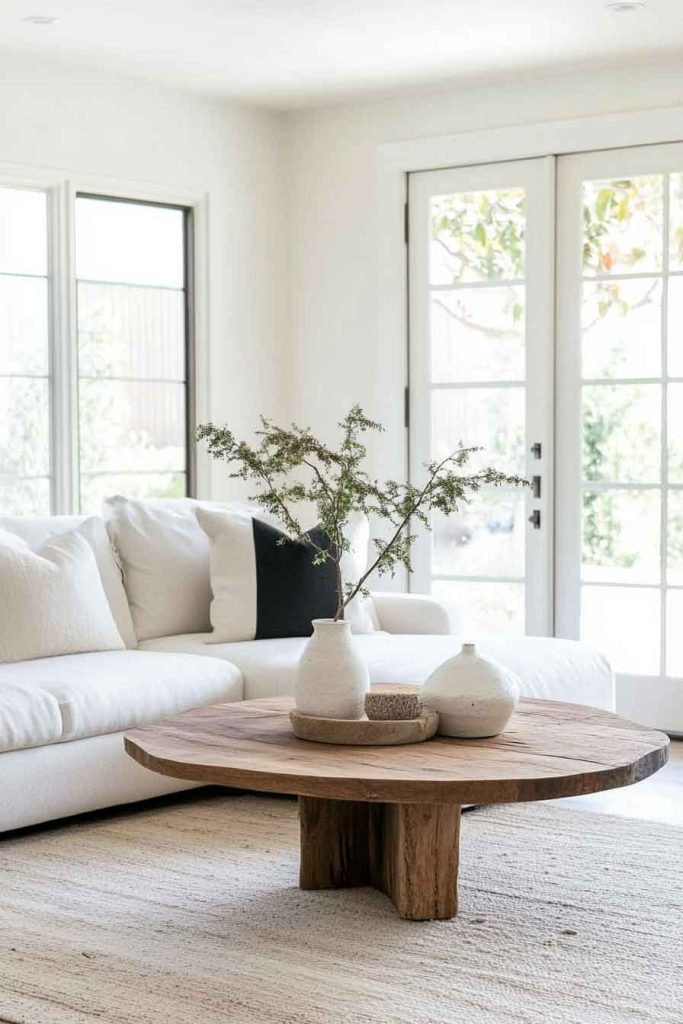
Light to medium wood tones work best, creating a warm and inviting atmosphere. Mix different wood types and finishes to add depth, but keep them within the same color family. The natural grain and texture of wood should be visible and celebrated.
14. Scandinavian-Inspired Seating
Incorporate Scandinavian seating designs that prioritize both comfort and clean aesthetics. Look for sofas and chairs with simple wooden frames, tapered legs, and neutral upholstery.
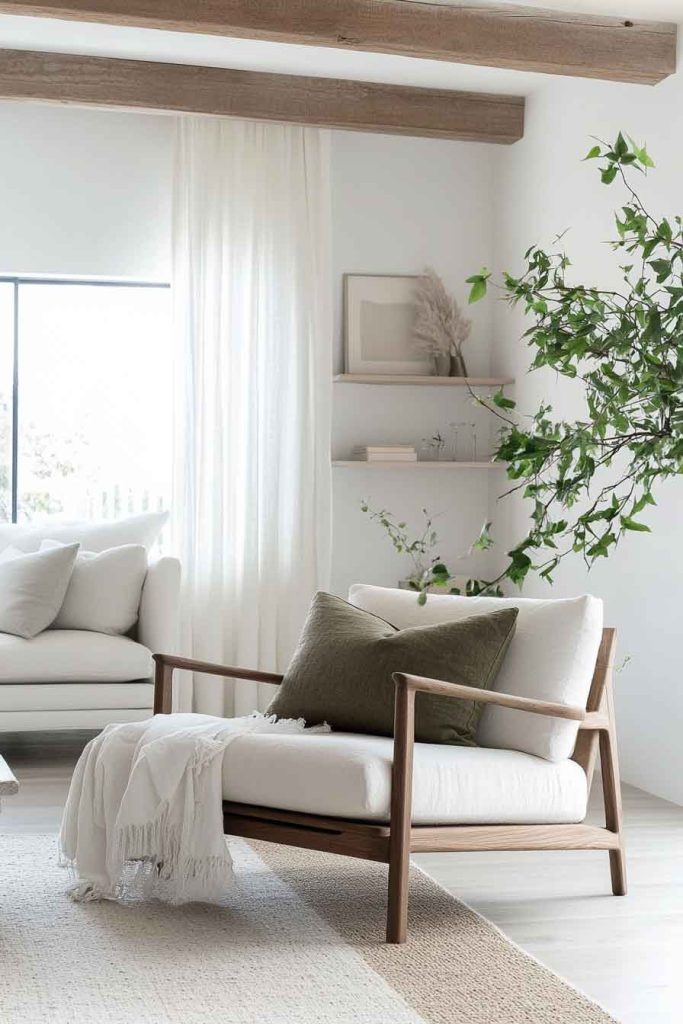
Mid-century modern pieces work well in Japandi spaces. Add comfort with linen or cotton cushions in neutral tones. The seating should invite relaxation while maintaining the room’s minimalist aesthetic.
15. Japanese Sliding Doors or Screens
If possible, incorporate Japanese-inspired sliding doors (shoji screens) or room dividers into your living room design. These elements add authentic Japanese character while serving a functional purpose.
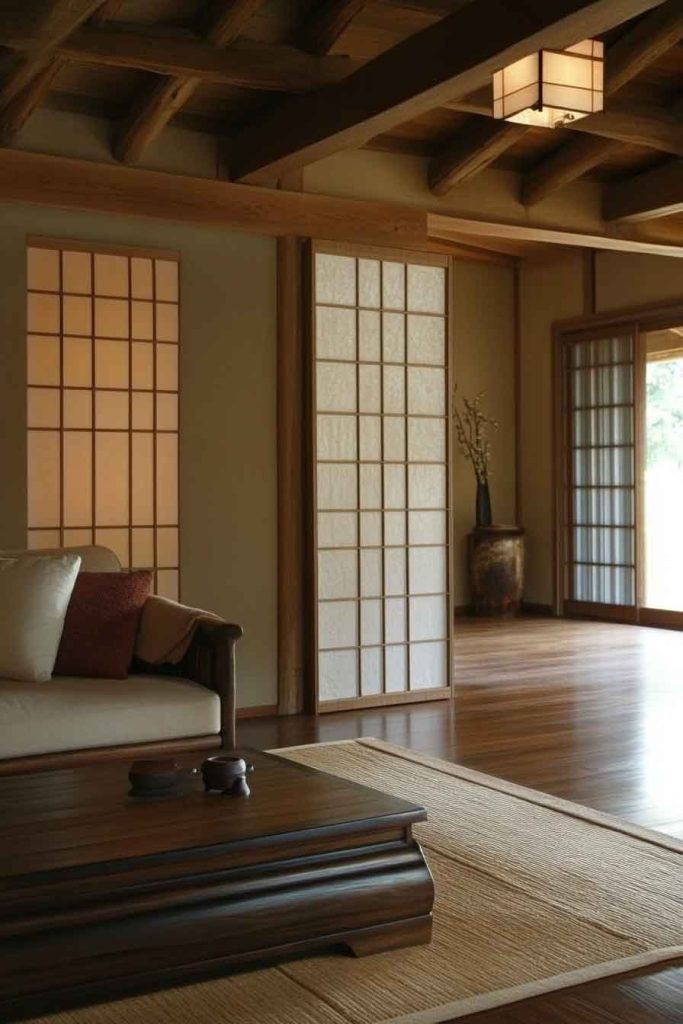
Paper screens with wooden frames allow light to filter through while providing privacy or separating spaces. Even a single decorative screen can add architectural interest to your living room.
16. Simple and Functional Lighting
Lighting in Japandi design should be simple, functional, and beautiful. Paper lanterns (akari), wooden pendant lights, or ceramic table lamps work perfectly.
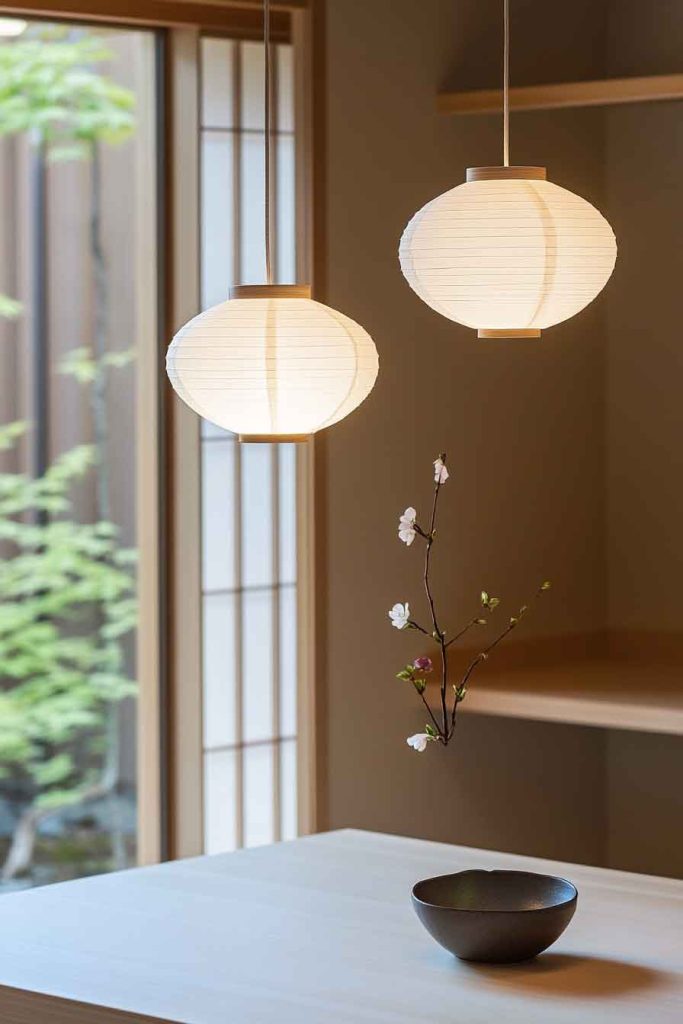
Choose fixtures with clean lines and natural materials. The light should be warm and diffused, creating a soft glow rather than harsh brightness. Layer different light sources at various heights to create ambiance and functionality.
17. Floor Seating Options
Incorporate Japanese-inspired floor seating like meditation cushions (zabuton) or low stools. These elements encourage a connection to the ground and create a relaxed, informal atmosphere.
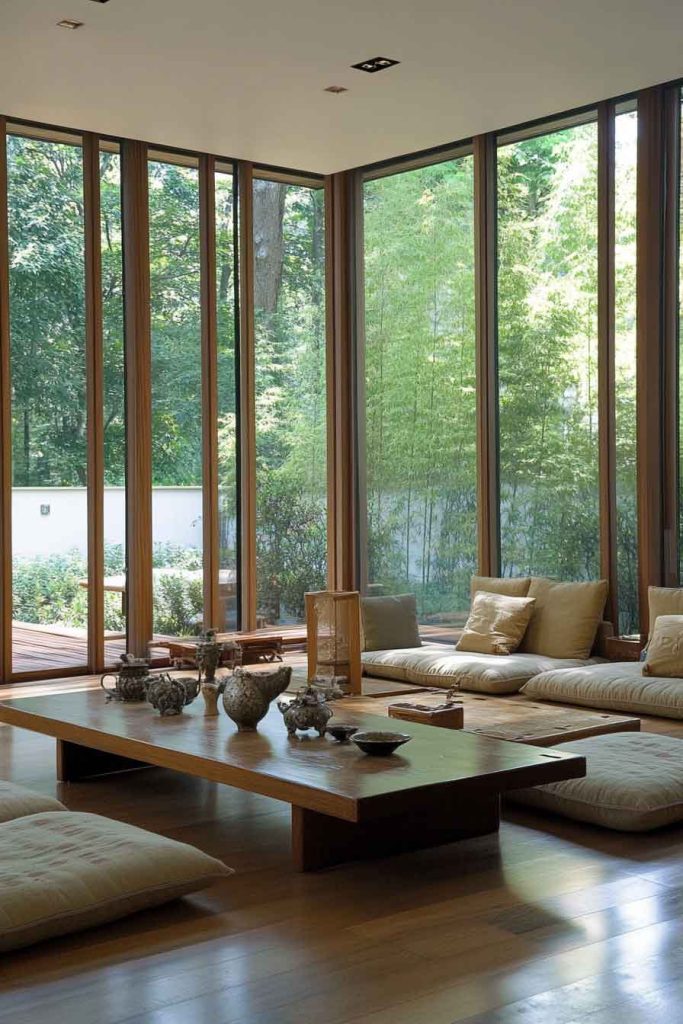
Floor seating can be paired with a low coffee table for a traditional Japanese tea ceremony feel. Even if you don’t use floor seating regularly, having these options adds versatility and cultural authenticity to your space.
18. Declutter and Organize
A clutter-free environment is essential in Japandi design. Regularly declutter your living room and keep only items that are useful or bring you joy.
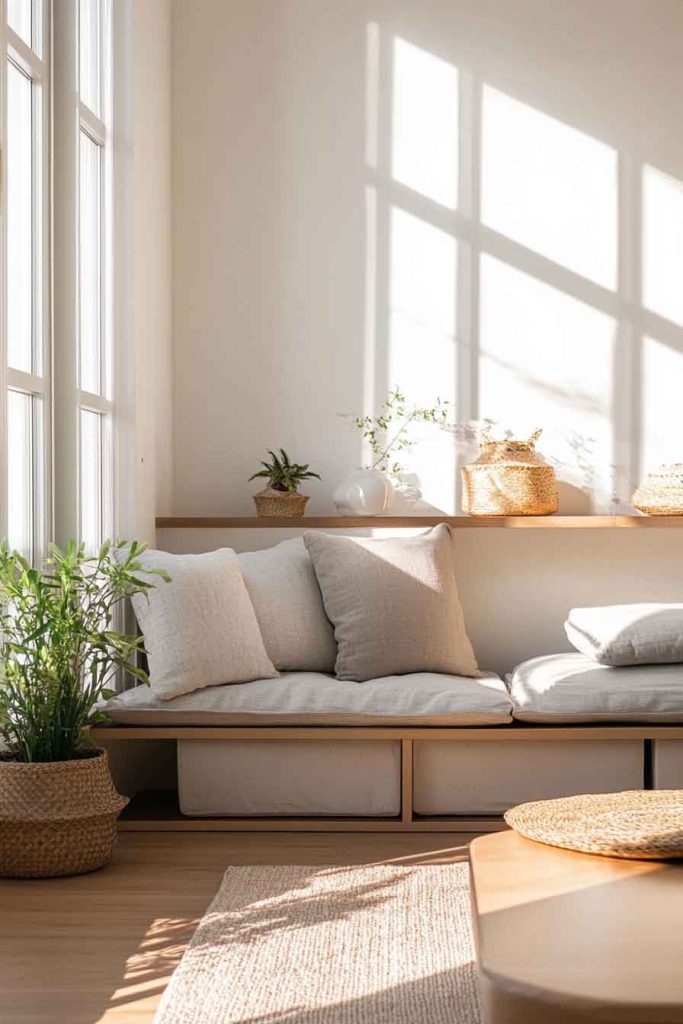
Use hidden storage solutions like built-in cabinets, storage ottomans, or baskets to keep everyday items out of sight. Every surface should have breathing room. This organized approach creates a peaceful environment that promotes relaxation and clarity.
19. Incorporate Stone Elements
Stone adds a grounding, natural element to Japandi design. Consider a stone coffee table, stone bookends, or decorative pebbles in a shallow bowl.
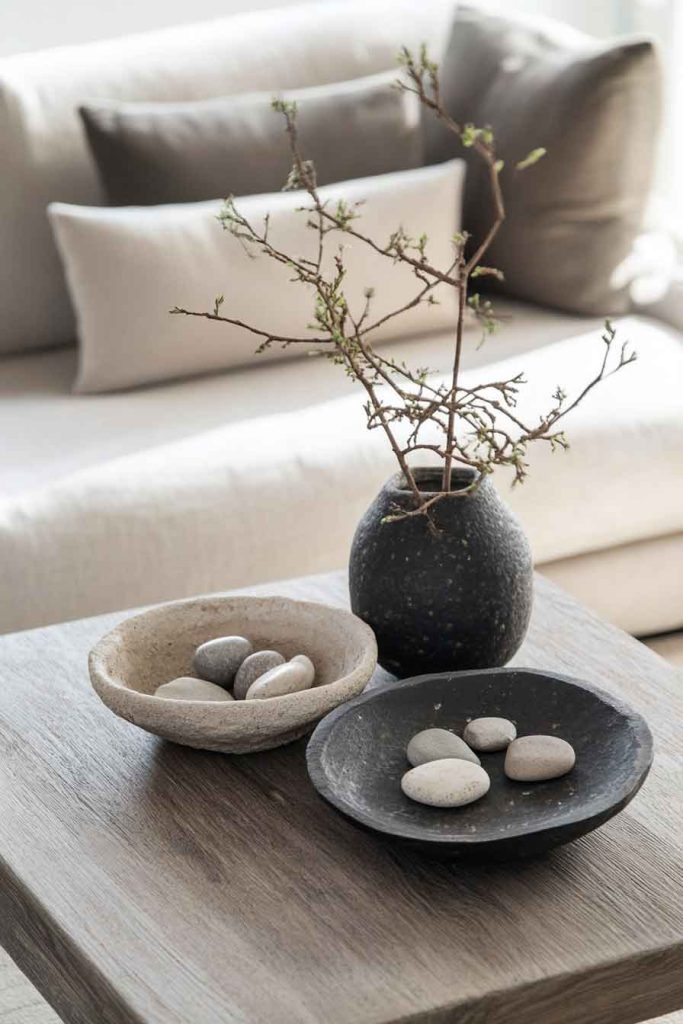
Stone contrasts beautifully with wood and soft textiles, adding visual interest through different textures. Choose stones with natural finishes rather than highly polished surfaces to maintain the organic, wabi-sabi aesthetic.
20. Neutral Textured Rugs
Area rugs define spaces and add warmth to Japandi living rooms. Choose rugs in natural materials like jute, sisal, wool, or cotton in neutral colors.
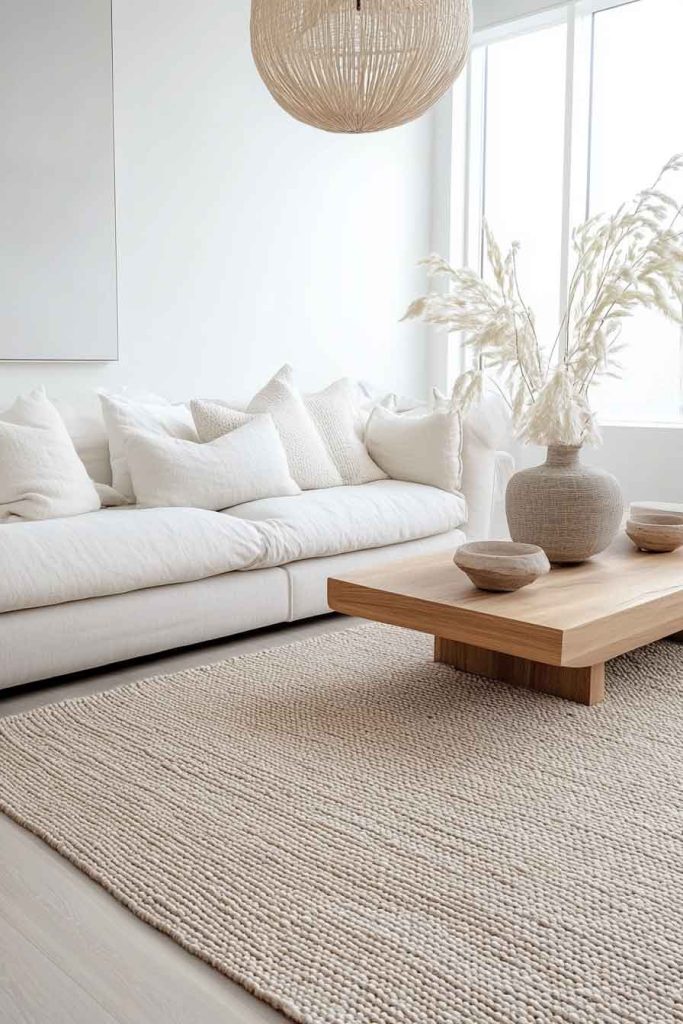
The texture of the rug adds visual interest without introducing patterns or bold colors. A simple, textured rug grounds the seating area and provides comfort underfoot while maintaining the minimalist aesthetic.
21. Ceramic and Pottery Accents
Display handcrafted ceramics and pottery as decorative accents in your living room. Simple vases, bowls, and sculptural pieces in neutral tones add artistry to the space.
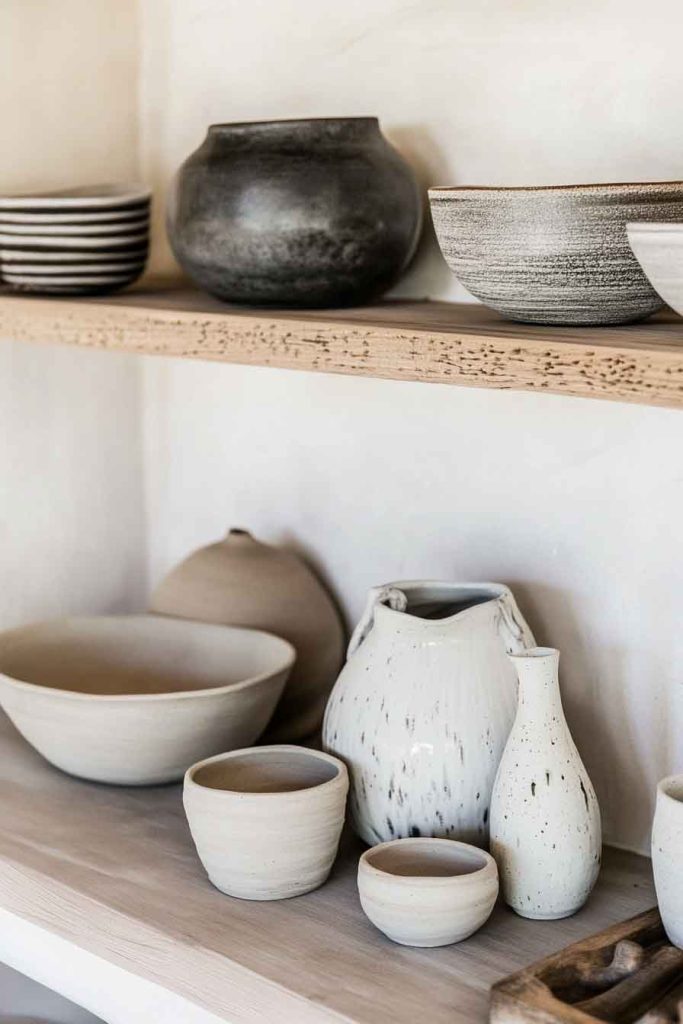
Choose pieces with organic shapes and subtle glazes that reflect the wabi-sabi philosophy. Group ceramics in odd numbers on shelves or tables, allowing each piece to be appreciated individually.
22. Incorporate Paper Elements
Paper is an important material in Japanese design. Incorporate paper through lampshades (washi paper), art prints, or decorative origami.
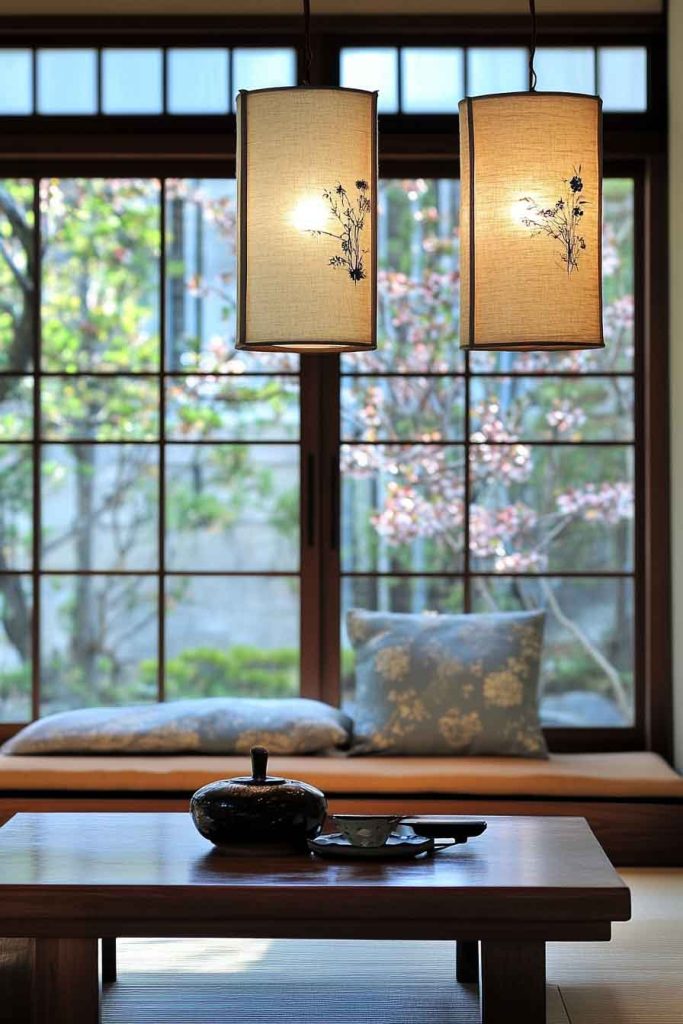
Paper adds a delicate, translucent quality to the space and filters light beautifully. Choose handmade papers with visible fibers for added texture and authenticity.
23. Create a Tea Corner
Dedicate a small area of your living room to tea preparation and enjoyment. A low table with a simple tea set creates a peaceful ritual space.
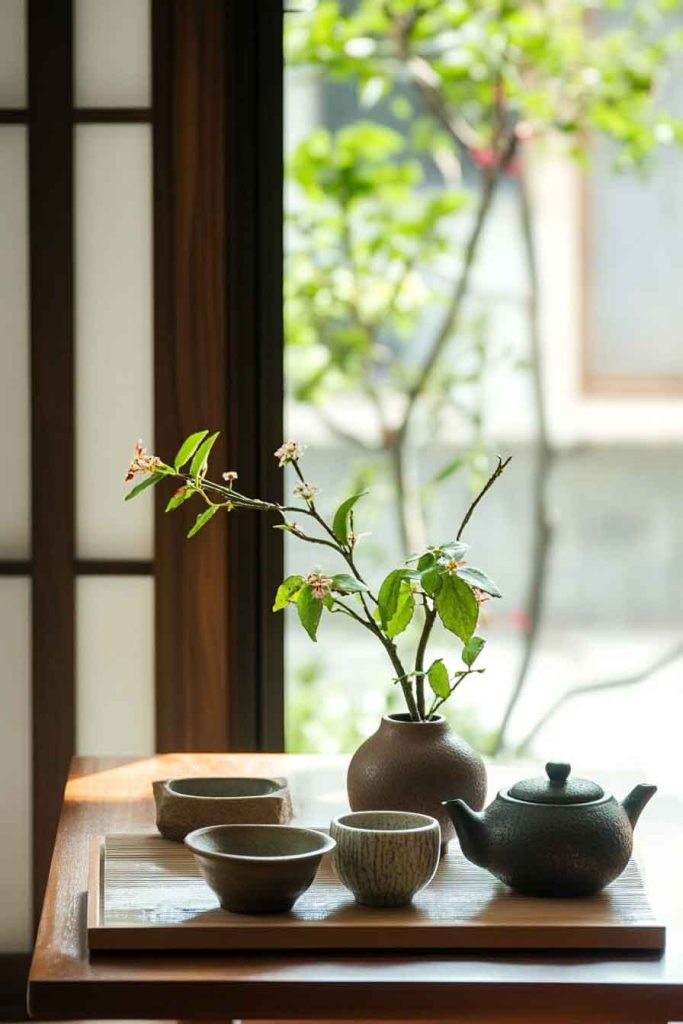
This Japanese-inspired corner encourages mindfulness and slowing down. Keep the tea service simple and beautiful, with handcrafted cups and a minimalist teapot.
24. Scandinavian-Style Shelving
Install simple, functional shelving in light wood or white to display books and decorative objects. Scandinavian-inspired shelving is clean-lined and unobtrusive.
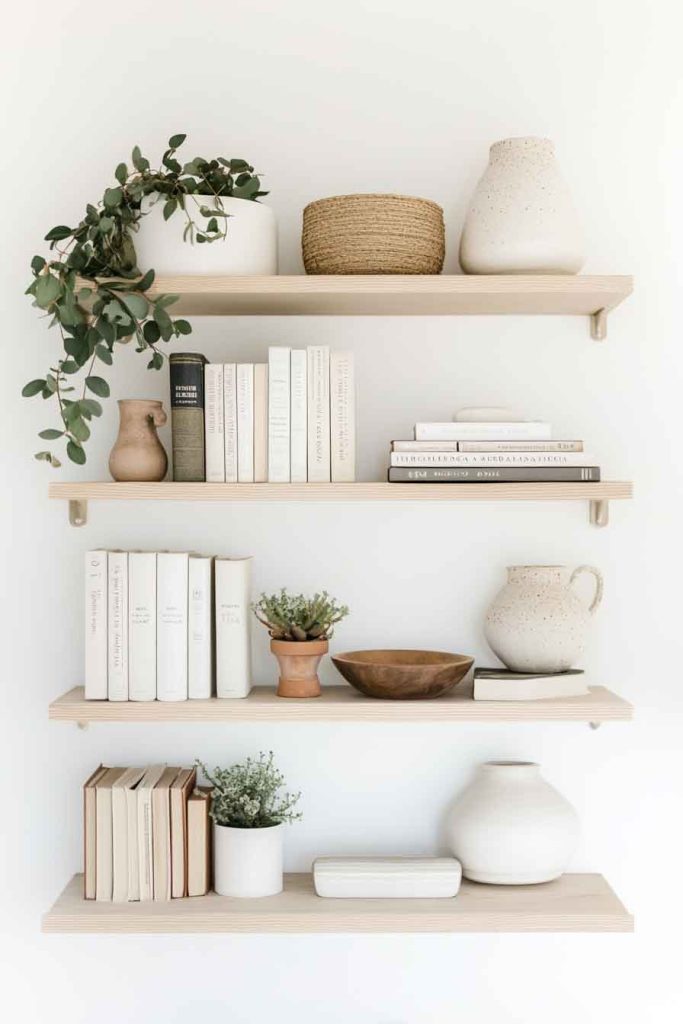
Style shelves minimally, leaving plenty of empty space between objects. Display books, ceramics, and plants thoughtfully, treating each item as a curated piece rather than filling every inch of space.
25. Monochromatic Color Blocking
While maintaining the neutral palette, create visual interest through monochromatic color blocking. Layer different shades of the same color family.
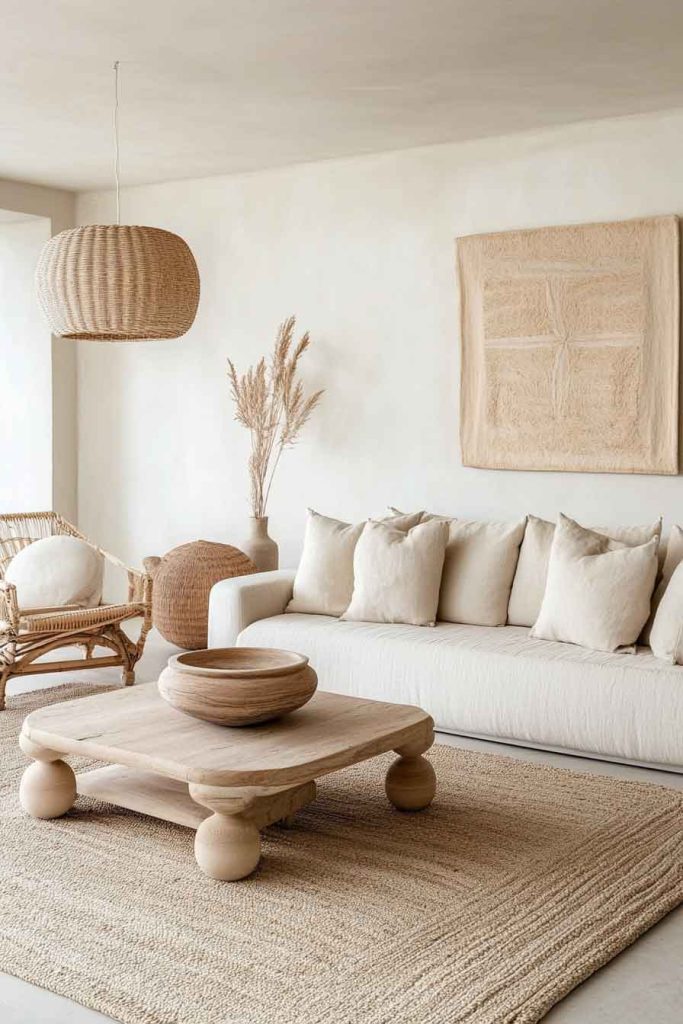
For example, combine cream walls with beige furniture, tan cushions, and light brown wood accents. This subtle variation adds depth while maintaining the calm, cohesive feel of Japandi design.
26. Natural Fiber Window Treatments
Choose window treatments in natural materials like linen, cotton, or bamboo. Keep them simple and unlined to allow natural light to filter through.
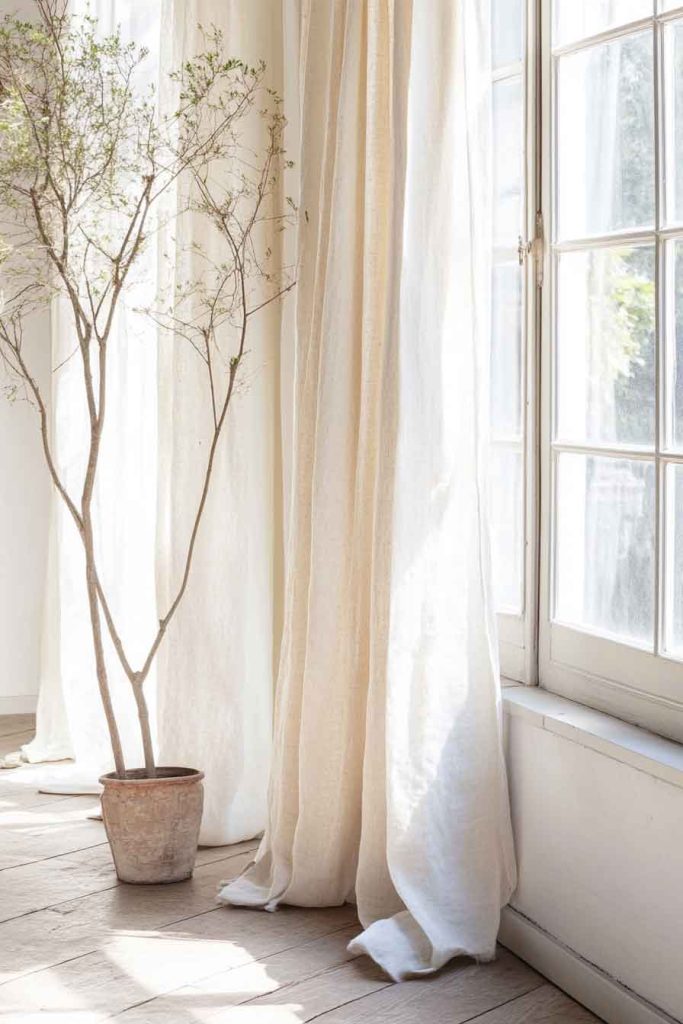
Sheer linen curtains or bamboo blinds work beautifully in Japandi spaces. The window treatments should frame the view and control light without becoming a focal point themselves.
27. Minimalist Fireplace Design
If your living room has a fireplace, style it with Japandi minimalism in mind. Keep the mantel clear or display just one or two simple objects.
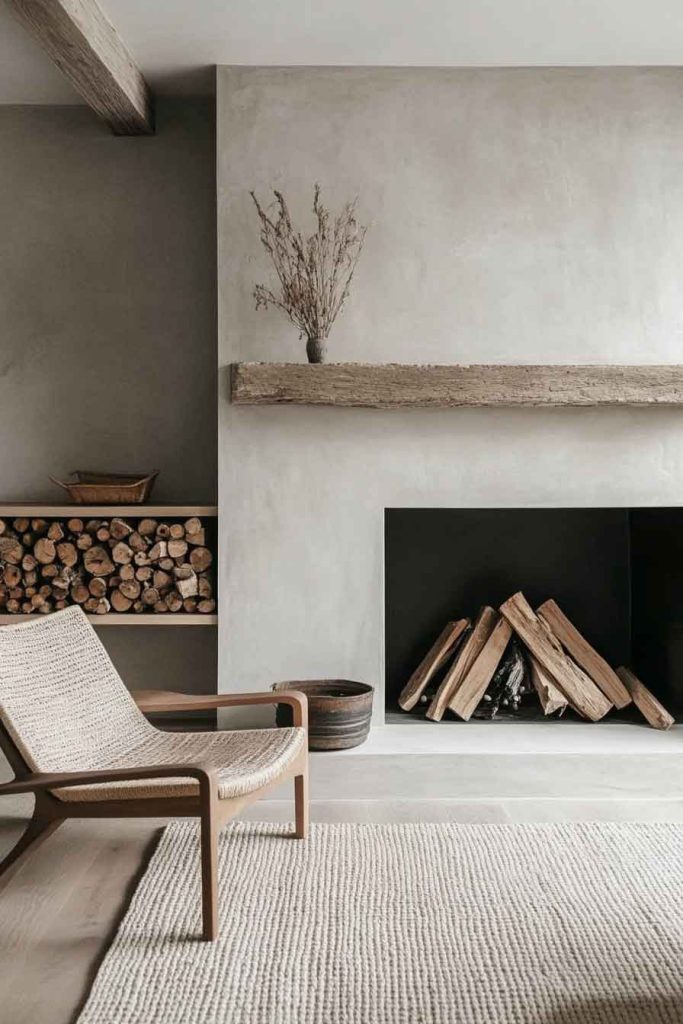
Consider a simple wood storage area beside the fireplace for both function and visual appeal. The fireplace surround should be simple, perhaps in natural stone or clean white plaster.
28. Incorporate Bamboo
Bamboo is a sustainable material that works perfectly in Japandi design. Use bamboo in furniture, blinds, decorative ladders, or plant containers.
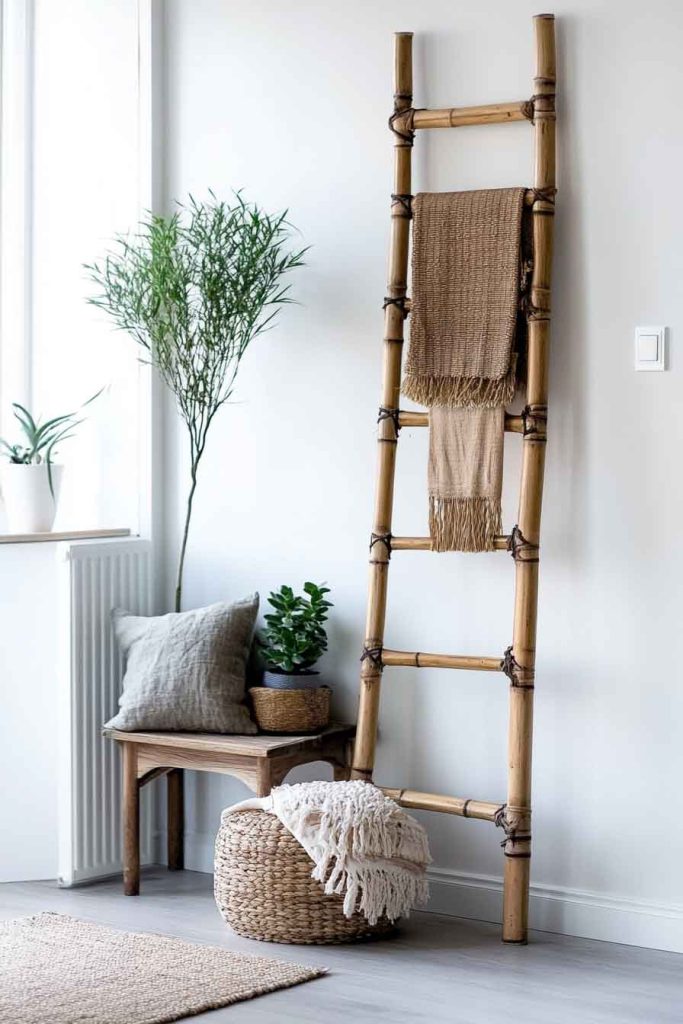
Bamboo adds a distinctly Japanese element while maintaining the natural, organic feel of Scandinavian design. Its light color and linear structure complement the clean aesthetic beautifully.
29. Meditation or Mindfulness Corner
Create a dedicated corner for meditation or mindfulness practice. A simple cushion on a small mat with a nearby plant or stone creates a peaceful spot.
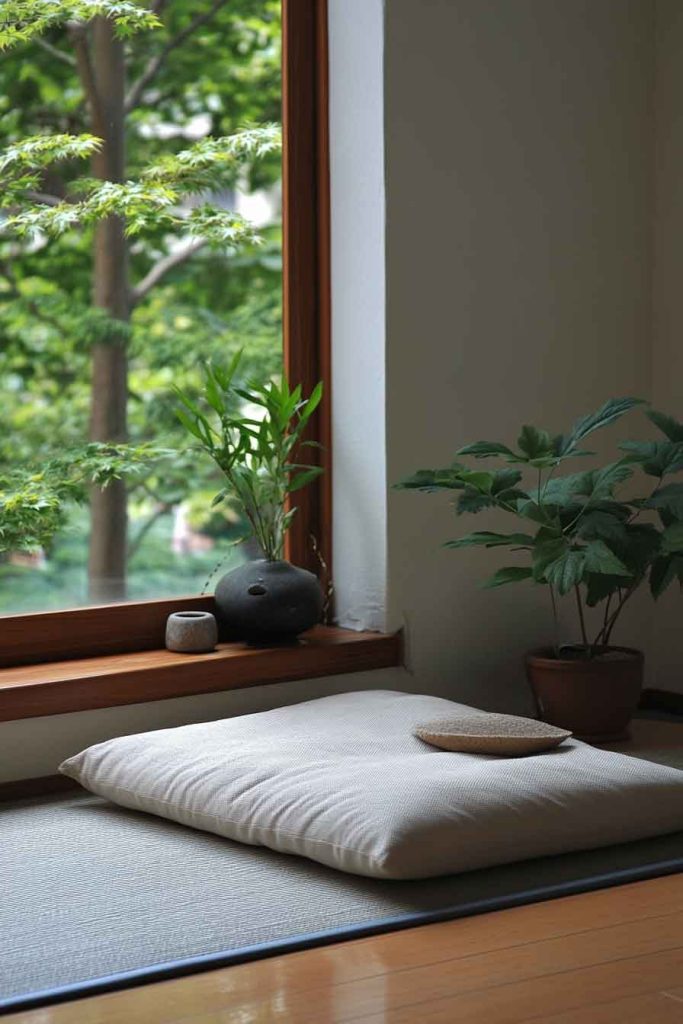
This intentional space encourages the Japanese practice of finding moments of calm in daily life. Keep this area minimal and free from distractions.
30. Quality Over Quantity
Embrace the Japandi principle of choosing fewer, higher-quality items. Invest in well-made furniture and decor that will last for years.
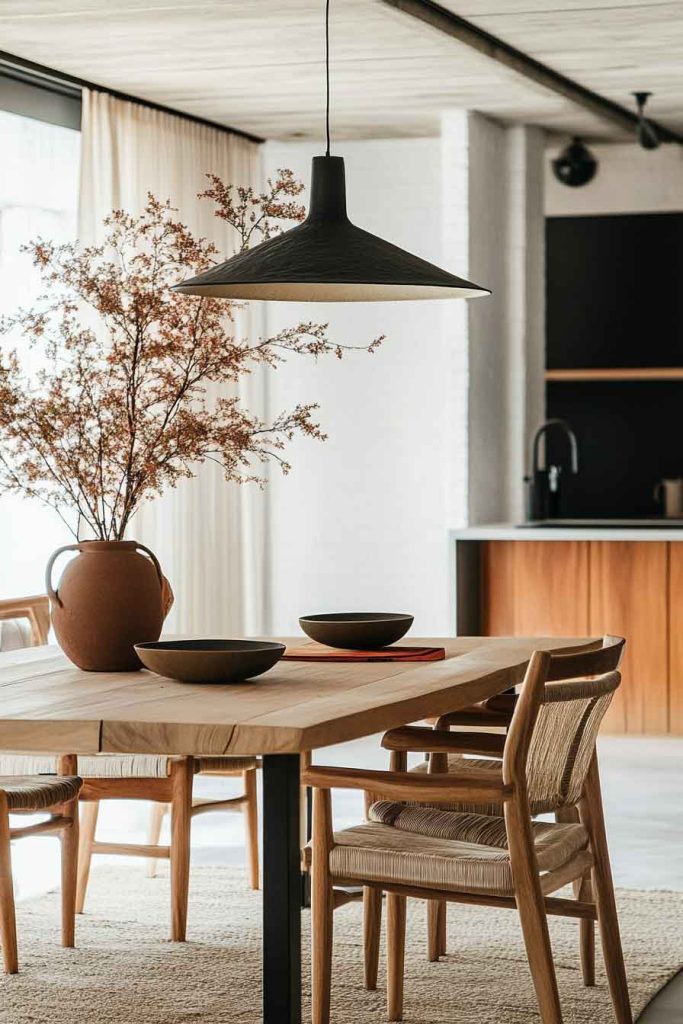
Each piece should be carefully selected for both its function and beauty. This approach creates a more sustainable, meaningful space and reduces the need for constant replacement or updating.
31. Incorporate Black Accents
While the overall palette is neutral, small black accents can add definition and contrast. Black picture frames, a black coffee table base, or black ceramic pieces provide visual anchors.
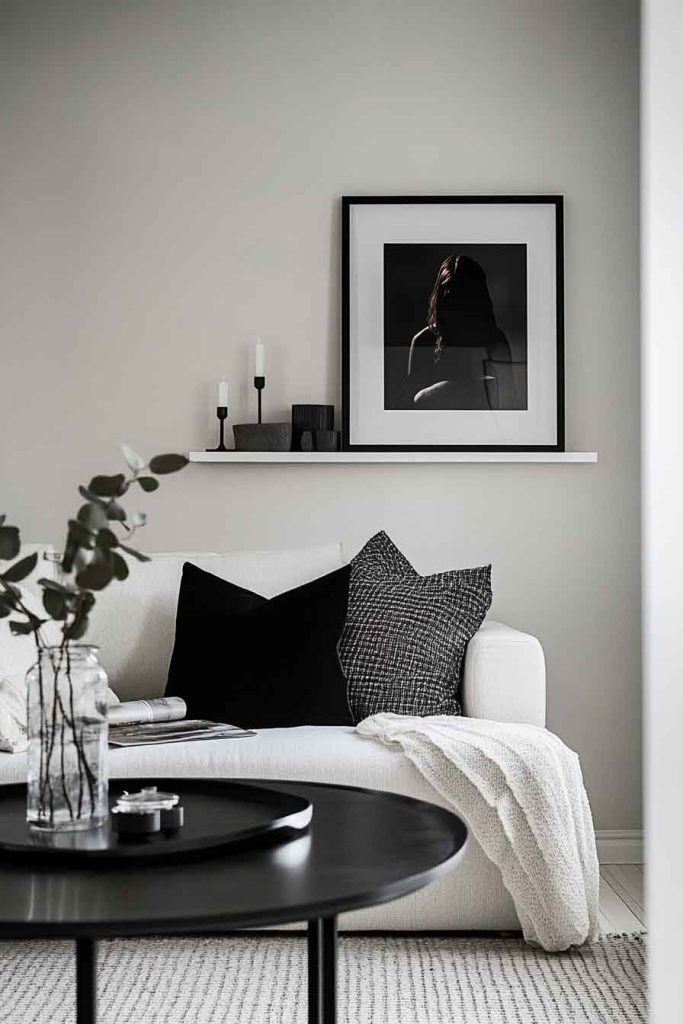
Use black sparingly and intentionally. These darker elements create depth and prevent the space from feeling too washed out while maintaining the minimalist aesthetic.
32. Natural Scent Elements
Engage the sense of smell with natural scents like essential oils, incense, or fresh flowers. Scent creates atmosphere and enhances the overall experience of your living room.
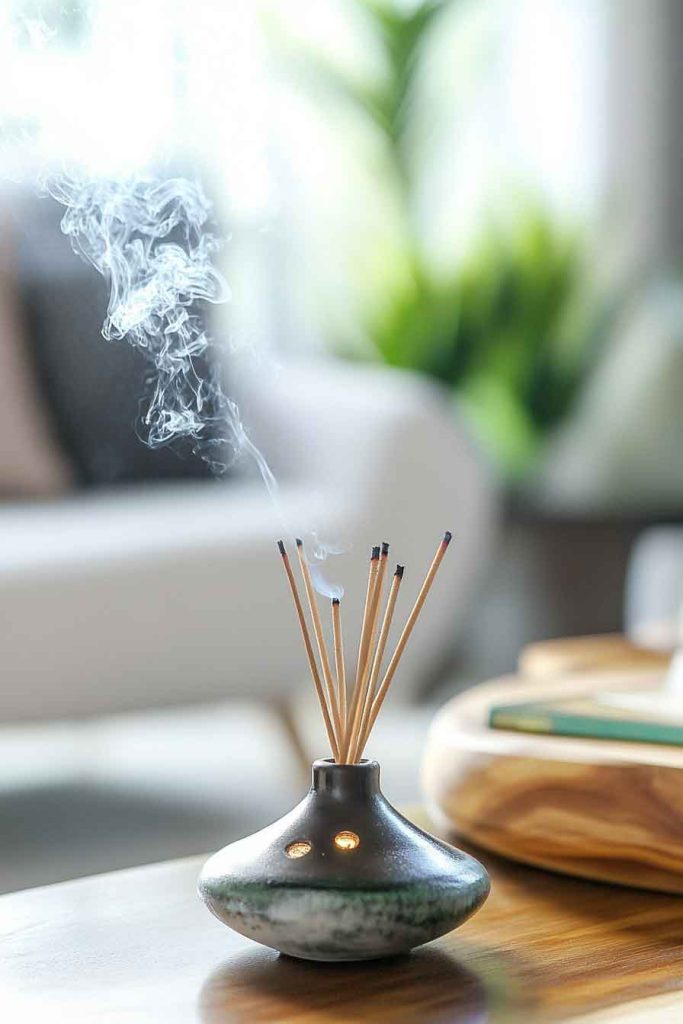
Choose subtle, natural fragrances like cedar, sandalwood, green tea, or fresh bamboo. Keep scent elements simple and unobtrusive, like a small diffuser or incense holder.
33. Embrace Negative Space
Perhaps the most important element of Japandi design is the intentional use of negative space. Empty space is not wasted space but rather an essential part of the design.
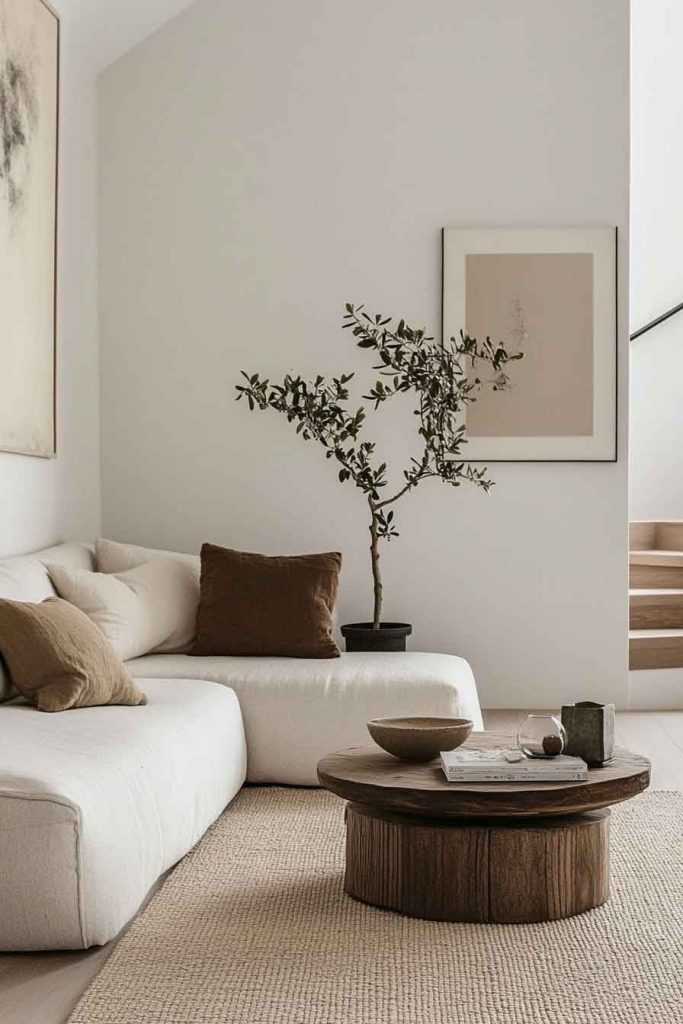
Allow your living room to breathe. Don’t feel the need to fill every corner or surface. The space around and between objects is just as important as the objects themselves, creating a sense of calm, clarity, and balance.
Best Places to Shop for Japandi Decor
If you want to incorporate Japandi design into your living room, there are many places to find beautiful and authentic pieces. Here are some of the best places to shop:
- MUJI: A Japanese retailer known for minimalist, functional design and natural materials at reasonable prices.
- West Elm: Offers modern furniture and decor with clean lines that work well in Japandi spaces.
- Etsy: A great place to find handcrafted ceramics, textiles, and artisan pieces from independent makers.
- IKEA: Provides affordable Scandinavian furniture and accessories with simple, functional designs.
- Local artisan markets: Perfect for finding unique, handmade pottery, textiles, and wooden items that add authenticity to your space.
Conclusion
Creating a Japandi living room is about finding the perfect balance between minimalism and warmth, function and beauty, simplicity and comfort. This design style encourages you to be intentional with every choice, selecting pieces that serve a purpose and bring joy to your daily life.
Whether you’re starting with a complete redesign or gradually adding Japandi elements to your existing space, the key is to focus on quality natural materials, clean lines, and creating a peaceful atmosphere. From low-profile furniture to handcrafted ceramics, the possibilities for creating your perfect Japandi living room are abundant.
Remember, Japandi design is not about following rigid rules but about creating a space that feels calm, balanced, and authentically yours. Embrace the philosophy of wabi-sabi, finding beauty in simplicity and imperfection, while incorporating the Scandinavian concept of hygge to ensure your living room is both beautiful and comfortable.
By thoughtfully combining Japanese and Scandinavian design principles, you can create a living room that serves as a peaceful retreat from the busy world, a space where you can truly relax, connect with nature, and find moments of calm in your everyday life.