28 Raised Garden Bed Plans
Do you want to grow fresh vegetables, herbs, and flowers right in your backyard? Look no further than these raised garden bed plans! Raised garden beds have become incredibly popular among gardening enthusiasts, and it’s easy to see why.
With their ability to improve drainage, prevent soil compaction, and make gardening more accessible, raised beds offer a perfect solution for both beginner and experienced gardeners. In this article, we’ll explore creative and practical raised garden bed plans that will transform your outdoor space into a thriving garden, whether you’re working with a small patio or a spacious yard.
There are many reasons why people choose to build raised garden beds. One of the main reasons is that they create an organized and productive growing space that is perfect for cultivating healthy plants. The elevated design allows for better soil quality, improved drainage, and easier access for planting, weeding, and harvesting.
Additionally, raised beds help keep pests away and allow you to control the soil composition, making your garden more successful and enjoyable. Whether you prefer a simple wooden box design or an elaborate tiered structure, there are endless possibilities for customization.
Raised garden beds typically use natural materials such as wood, stone, or metal, with dimensions that suit your space and gardening needs. This gardening method is known for its practicality and efficiency, making it a popular choice for those who want to maximize their growing potential in limited spaces.
What are Raised Garden Beds?
Raised garden beds are elevated planting areas built above the ground level, filled with quality soil and compost. They are characterized by their defined borders, which can be made from various materials like wood, stone, brick, or metal.
The raised bed gardening method is practical, accessible, and highly productive, often incorporating elements like proper drainage, pest control, and easy maintenance. Raised beds create an ideal growing environment that is warm, inviting, and efficient.
Regardless of your yard size, almost any outdoor space can accommodate raised garden beds. The specific design matters with this approach, and it works best when the structure is sturdy, well-draining, and positioned to receive adequate sunlight.
Simple is effective, and keeping things functional is ideal. Think untreated cedar boards, galvanized metal corners, rich organic soil, proper spacing between beds, and implementing quality materials that will last for years.
Benefits of Raised Garden Beds
1. Better Soil Quality
One of the biggest advantages of raised garden beds is the ability to control your soil composition completely. Unlike in-ground gardening where you’re stuck with whatever soil exists in your yard, raised beds allow you to create the perfect growing medium.
You can mix high-quality topsoil with compost, peat moss, and other amendments to create nutrient-rich soil that drains well and promotes healthy root development. This controlled environment means healthier plants, better yields, and fewer soil-related problems like clay compaction or poor drainage.
2. Improved Drainage
Raised garden beds naturally drain better than ground-level gardens because water flows downward and away from plant roots. This elevation prevents waterlogging, which can cause root rot and other moisture-related diseases.
The improved drainage is especially beneficial in areas with heavy clay soil or regions that experience frequent rainfall. You can further enhance drainage by adding a layer of gravel at the bottom of your raised bed or using a soil mix that includes perlite or coarse sand.
3. Easier Access and Less Strain
The elevated height of raised garden beds makes gardening much easier on your back, knees, and joints. You can build beds at a comfortable working height, reducing the need to bend or kneel for extended periods.
This accessibility makes gardening more enjoyable for people of all ages and physical abilities. Seniors and individuals with mobility challenges particularly benefit from this design, as it allows them to continue enjoying their gardening hobby without unnecessary strain.
4. Extended Growing Season
Raised beds warm up faster in spring because they’re elevated above the cold ground. The soil in raised beds can be several degrees warmer than ground soil, allowing you to plant earlier in the season.
This temperature advantage also means you can extend your growing season into fall, as the beds retain heat longer. For gardeners in cooler climates, this extra growing time can make a significant difference in crop success.
5. Pest and Weed Control
Raised garden beds provide better protection against many common garden pests. The defined borders make it harder for slugs, snails, and some burrowing animals to access your plants.
You can also add barriers like hardware cloth at the bottom to prevent moles and gophers from tunneling into your beds. Weeds are easier to manage in raised beds because you’re starting with fresh, weed-free soil, and the defined space makes it simple to spot and remove any unwanted plants.
6. Better Organization
Raised beds help you organize your garden effectively. You can dedicate specific beds to different types of plants, making crop rotation easier and helping prevent soil depletion.
The structured layout also makes it simpler to plan your garden, track what you’ve planted where, and implement companion planting strategies. Pathways between beds provide easy access to all sides of each growing area.
7. Space Efficiency
Raised beds allow for intensive planting methods because you never walk on the soil, preventing compaction. You can plant more densely than in traditional row gardens, maximizing your harvest from a smaller space.
This efficiency makes raised beds perfect for urban gardens, small yards, or anyone wanting to grow more food in less space. Square-foot gardening, a popular intensive planting method, works exceptionally well in raised beds.
8. Customizable Design
You can build raised garden beds in any size, shape, or height that suits your needs and space. Whether you want a small herb garden near your kitchen door or multiple large beds for vegetable production, the design is entirely up to you.
Choose materials that complement your home’s style, from rustic cedar to sleek metal or classic brick. The versatility of raised beds means they can fit into any landscape design while remaining highly functional.
9. Safer for Children
Raised beds create a clearly defined gardening space that’s perfect for teaching children about growing food. The contained area helps kids understand boundaries and makes it easier for them to take ownership of their own garden space.
The elevated design also keeps plants away from ground-level contaminants and makes it easier for children to reach and tend their plants without stepping on delicate seedlings.
10. Cost-Effective Long-Term
While there’s an initial investment in building raised beds, they’re cost-effective over time. You’ll spend less on soil amendments because you’re only improving the soil within the beds, not your entire yard.
The increased yields and reduced plant losses from pests and diseases mean you’ll get more produce from your gardening efforts. Durable materials like cedar or metal can last for many years with minimal maintenance.
Materials for Building Raised Garden Beds
1. Cedar Wood
Cedar is one of the most popular materials for raised garden beds because it’s naturally resistant to rot and insects. Untreated cedar can last 10-15 years or more, making it a durable and safe choice for food gardens.
Cedar has a beautiful appearance that weathers to an attractive gray color over time. It’s readily available at most lumber yards and relatively easy to work with using basic tools.
2. Redwood
Similar to cedar, redwood is naturally rot-resistant and insect-repellent. It’s slightly more expensive than cedar but can last even longer, sometimes 20 years or more.
Redwood has a rich, warm color and can be left untreated to weather naturally. It’s an excellent choice if you want a premium, long-lasting raised bed.
3. Pine or Fir
Pine and fir are more affordable options than cedar or redwood, but they won’t last as long. Untreated pine or fir beds typically last 3-5 years before needing replacement.
These woods are good choices if you’re on a budget or want to experiment with raised bed gardening before making a larger investment. Never use pressure-treated lumber for vegetable gardens, as the chemicals can leach into the soil.
4. Composite Wood
Composite materials made from recycled plastic and wood fibers offer excellent durability without the environmental concerns of treated lumber. These materials resist rot, insects, and weathering.
Composite raised beds can last 20-25 years and require minimal maintenance. They’re more expensive upfront but offer long-term value and sustainability.
5. Galvanized Metal
Galvanized steel or corrugated metal creates sleek, modern-looking raised beds that are extremely durable. Metal beds can last 20+ years and won’t rot or decompose.
The metal conducts heat, which can warm the soil quickly in spring but may also dry out soil faster in hot climates. Metal beds work well in contemporary garden designs and are becoming increasingly popular.
6. Brick or Stone
Brick and stone create permanent, attractive raised beds that can last indefinitely. These materials work well for formal garden designs and add significant aesthetic value.
Building with brick or stone requires more skill and time than wood construction. You’ll need to consider proper drainage and may want to use mortar for stability, though dry-stacked stone can also work.
7. Concrete Blocks
Concrete blocks are an affordable, durable option for raised beds. You can stack them without mortar for easy assembly and disassembly.
The hollow centers of blocks can be filled with soil and used for planting herbs or flowers. Concrete blocks can last decades and are widely available at home improvement stores.
8. Recycled Materials
Creative gardeners use all sorts of recycled materials for raised beds, including old pallets, wine barrels, dresser drawers, and bathtubs. These options reduce waste and add unique character to your garden.
Ensure any recycled materials are safe for food production and haven’t been treated with harmful chemicals. This approach is budget-friendly and environmentally conscious.
Raised Garden Bed Plans
1. Basic Rectangular Bed
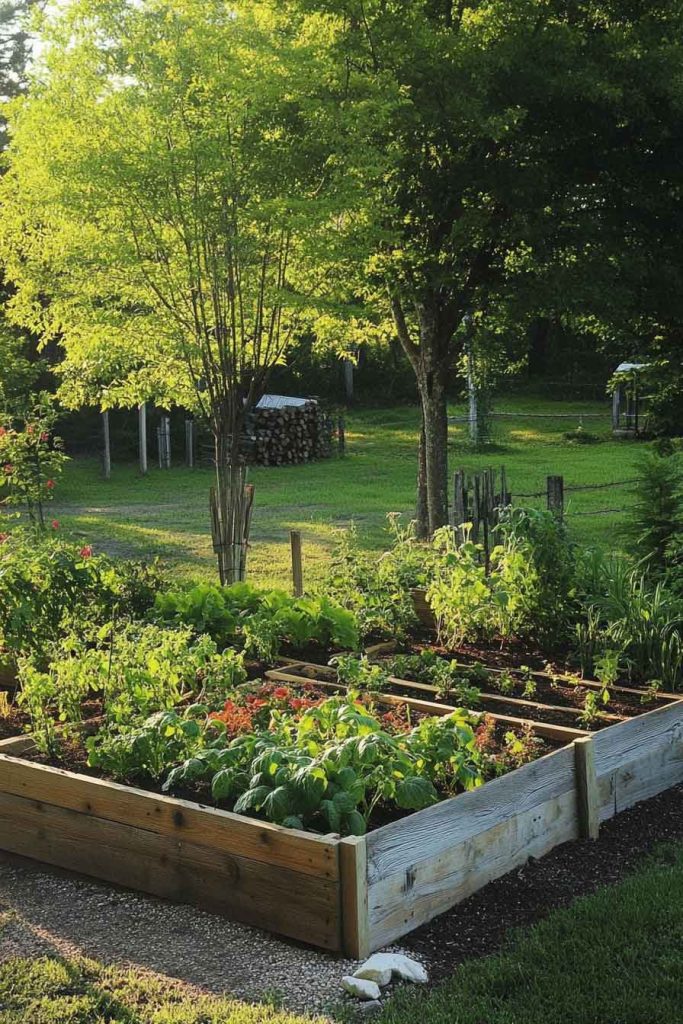
The classic rectangular raised bed is the most common design. Build a simple box using four boards connected at the corners with screws or brackets.
Standard dimensions are 4 feet wide by 8 feet long by 12 inches deep. This size allows you to reach the center from either side without stepping on the soil. Use corner brackets or wooden stakes to secure the structure.
2. Square Foot Garden Bed
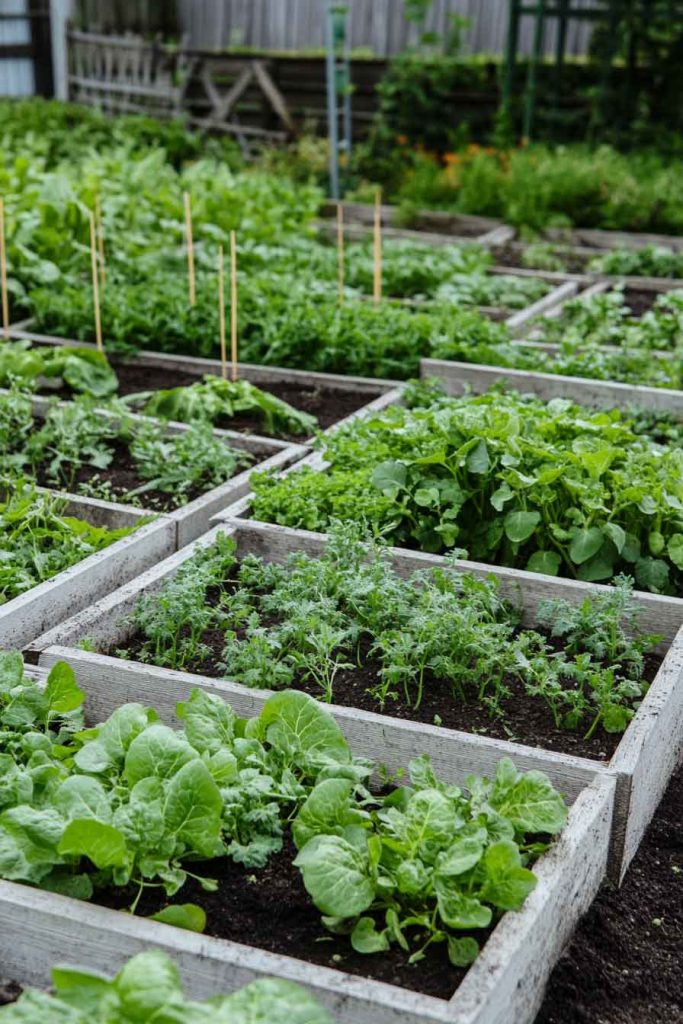
Perfect for small spaces, a square-foot garden bed is typically 4 feet by 4 feet. Divide the bed into 16 one-foot squares using string or thin boards.
Plant different crops in each square according to their spacing needs. This intensive planting method maximizes space and makes planning simple. The compact size is ideal for beginners or urban gardeners.
3. Elevated Waist-Height Bed

Build your bed on legs to create a waist-height growing space that requires no bending. Use 4×4 posts for the legs and build a standard rectangular bed on top.
This design is perfect for people with back problems or mobility issues. Line the bottom with hardware cloth to prevent pests and add a shelf between the legs for tool storage.
4. Tiered Garden Bed
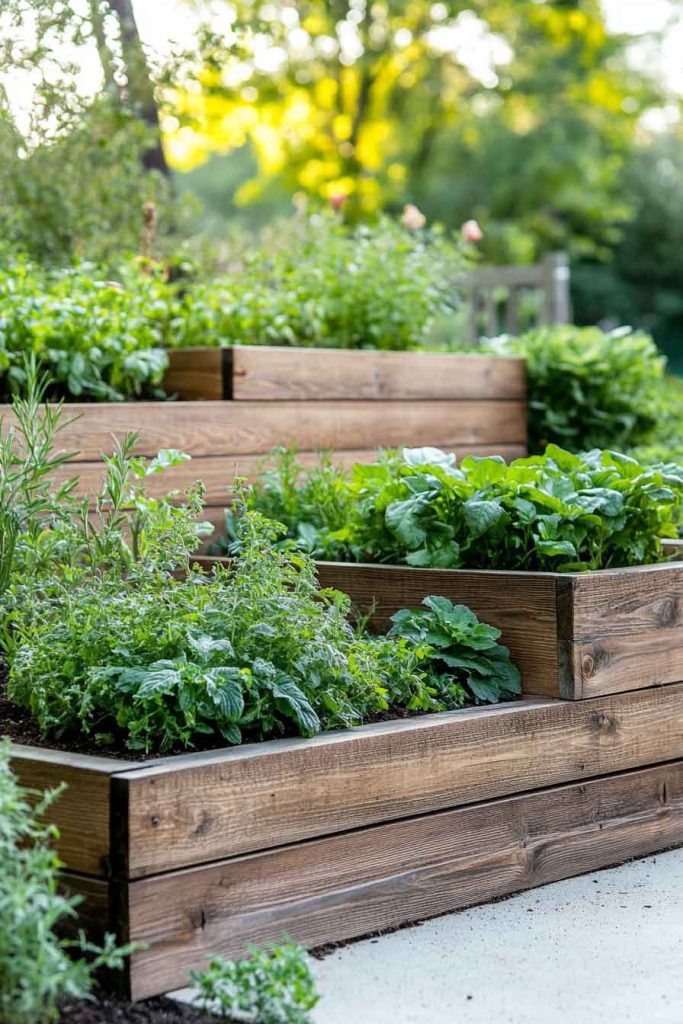
Create multiple levels by stacking beds of different sizes. Build three rectangular boxes in graduating sizes, with the largest on the bottom.
This design adds visual interest to your garden and provides multiple growing zones in a compact footprint. Plant taller crops in the lower tiers and trailing plants or herbs in the upper sections.
5. Corner Bed
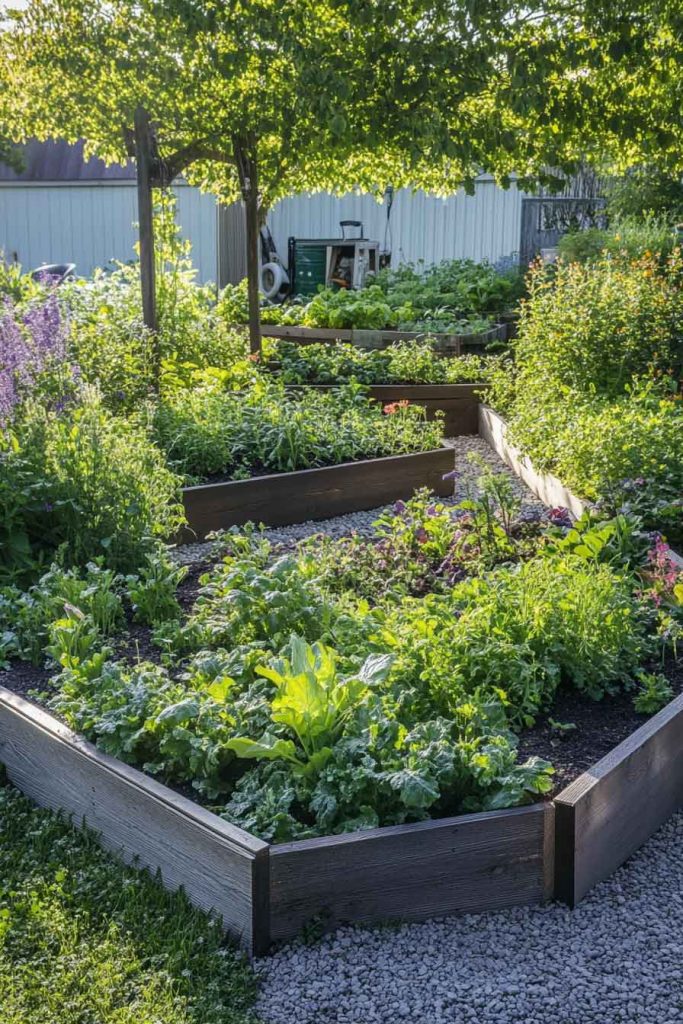
Maximize unused corner spaces by building an L-shaped or triangular raised bed. This design fits perfectly into corner areas of yards or patios.
The angled design adds visual interest and makes efficient use of space that might otherwise go unused. Corner beds work well for herb gardens or compact vegetable gardens.
6. Keyhole Garden Bed
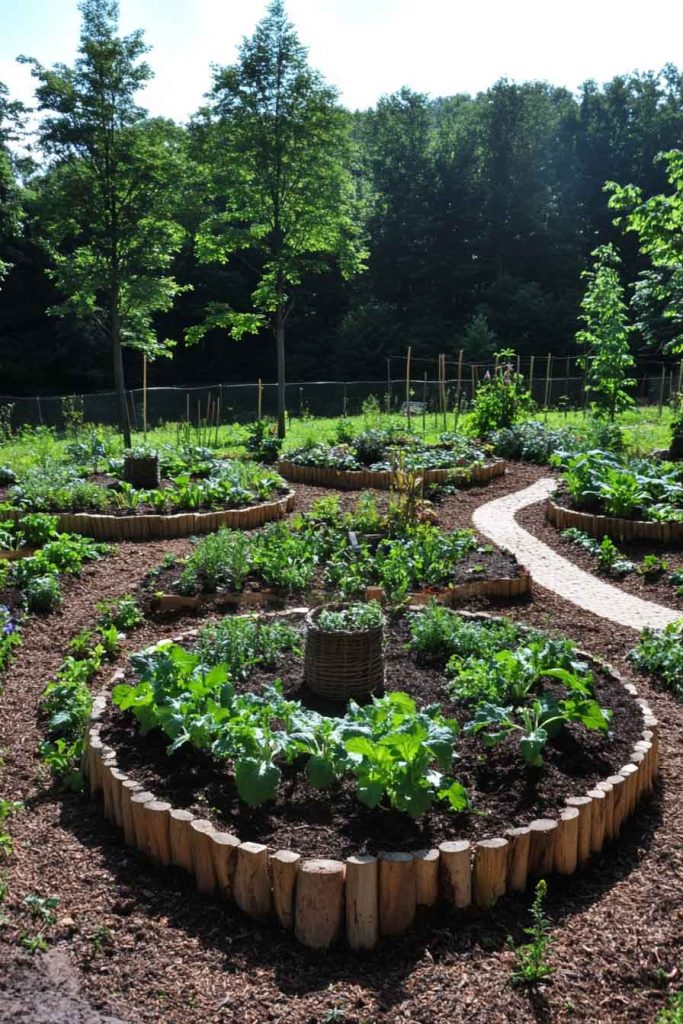
Inspired by permaculture design, keyhole beds have a circular or horseshoe shape with a path cutting into the center. This creates easy access to all planting areas.
Add a composting basket in the center to feed nutrients directly to surrounding plants. The design originated in Africa and is highly efficient for small-space gardening.
7. Hugelkultur Raised Bed
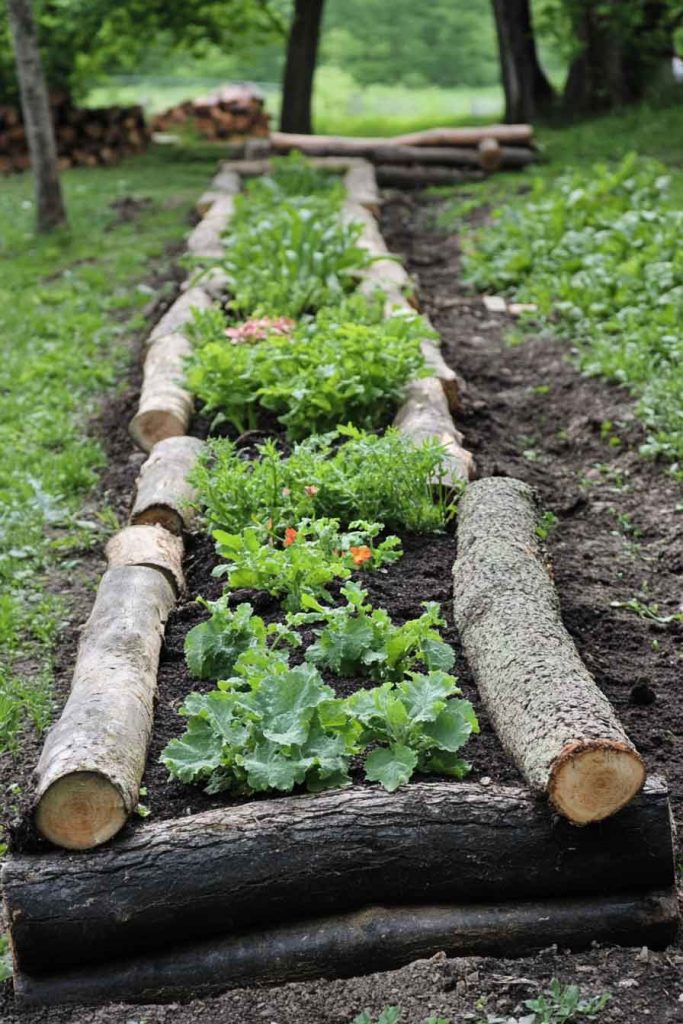
This German gardening technique involves building a bed over a base of logs and woody debris. The decomposing wood acts as a sponge, retaining moisture and releasing nutrients.
Layer logs, branches, leaves, compost, and soil to create a self-fertilizing, water-efficient growing system. Hugelkultur beds can be several feet tall and require less watering over time.
8. Vertical Raised Bed
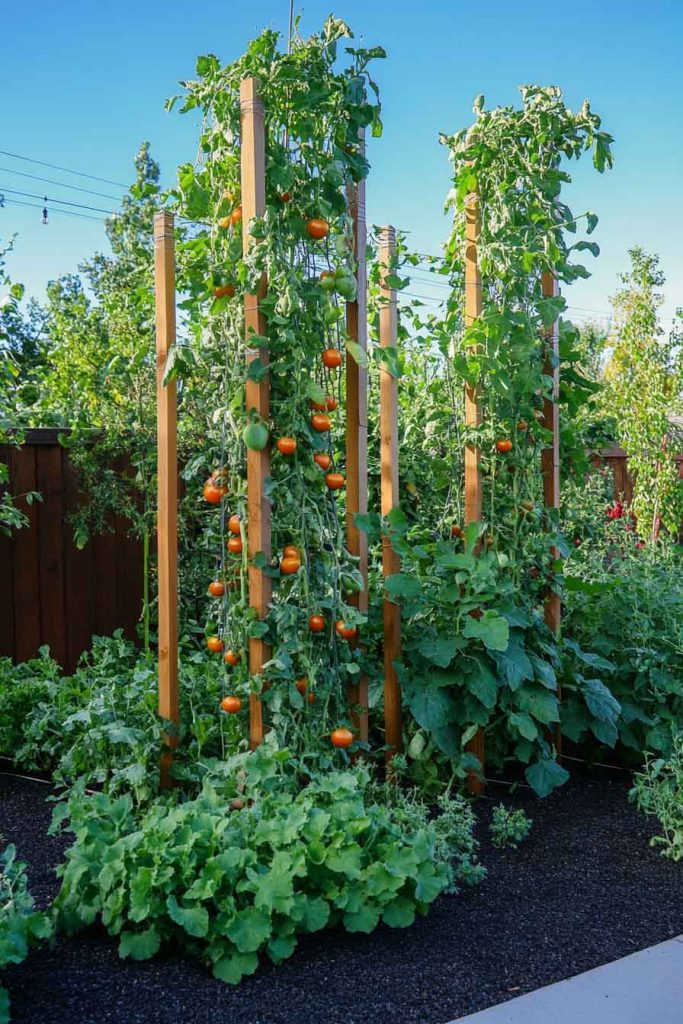
Combine raised beds with vertical growing structures like trellises or towers. Build a standard raised bed and attach a sturdy trellis to one end.
This design maximizes growing space by utilizing vertical area for vining crops like tomatoes, cucumbers, and beans. The vertical element also adds height and visual interest to your garden.
9. Greenhouse Raised Bed
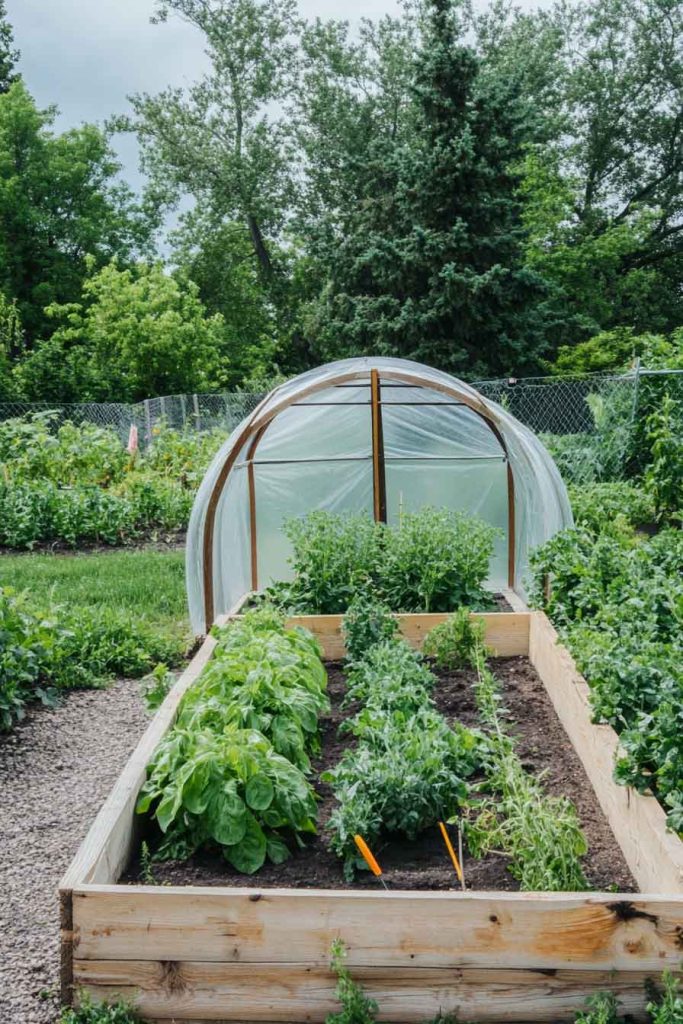
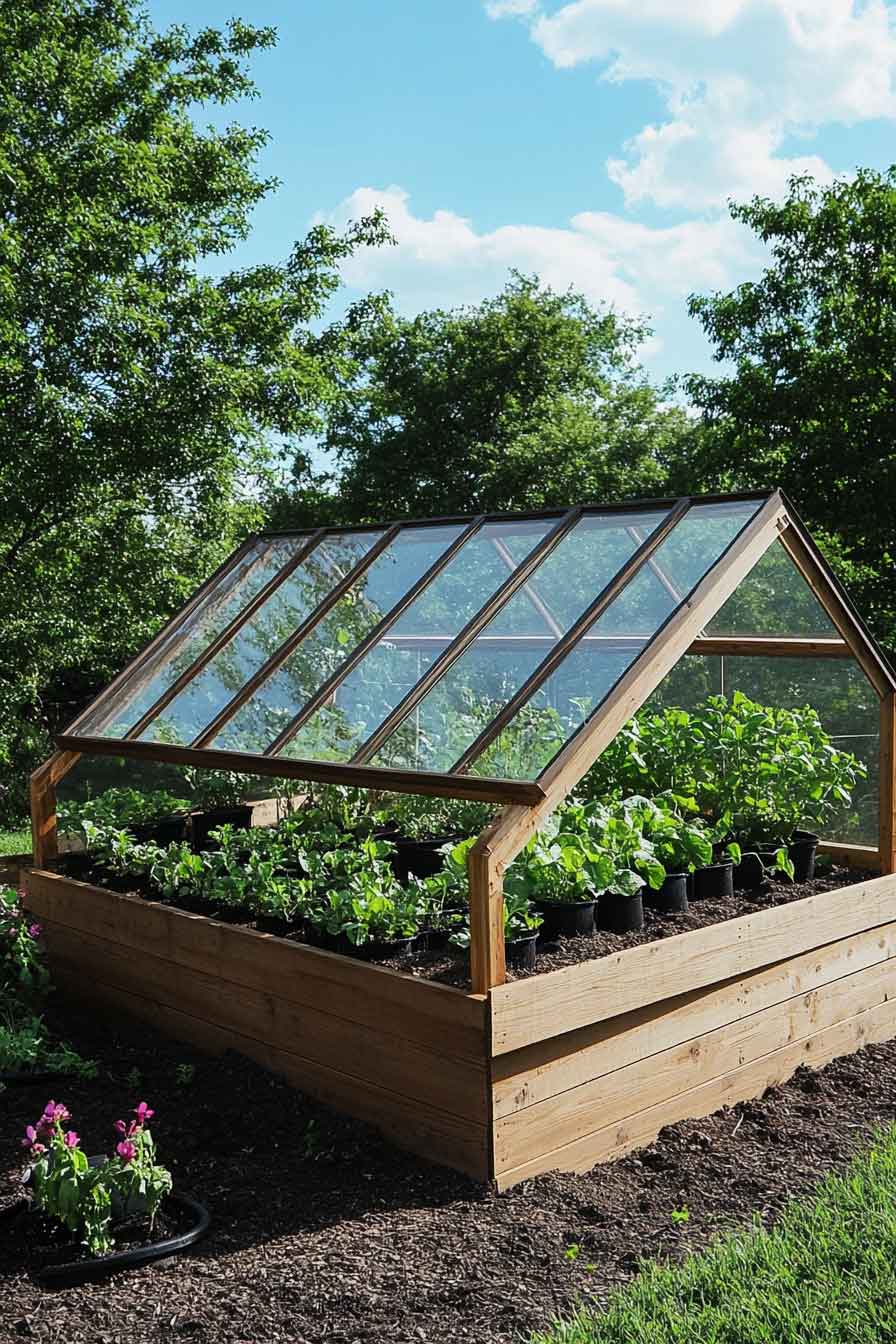
Build a raised bed with a removable hoop house or cold frame cover. The bed itself is standard construction, but you add PVC hoops or a wooden frame that supports plastic sheeting.
This design extends your growing season and protects plants from frost, excessive heat, or pests. The cover can be removed during warm weather and replaced when protection is needed.
10. Raised Bed with Built-In Seating
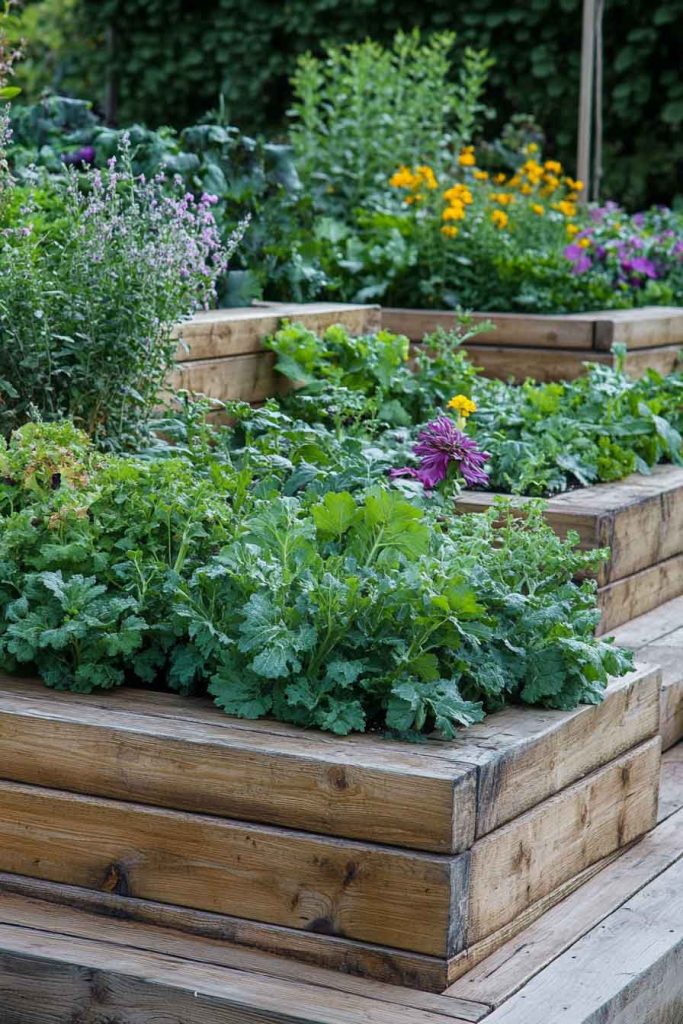
Add wide boards across the top edges of your raised bed to create comfortable seating. Make the borders 10-12 inches wide for a stable sitting surface.
This design is perfect for enjoying your garden while providing a convenient spot to rest while weeding or harvesting. The seating edges can also hold tools or harvested vegetables.
11. Pallet Raised Bed
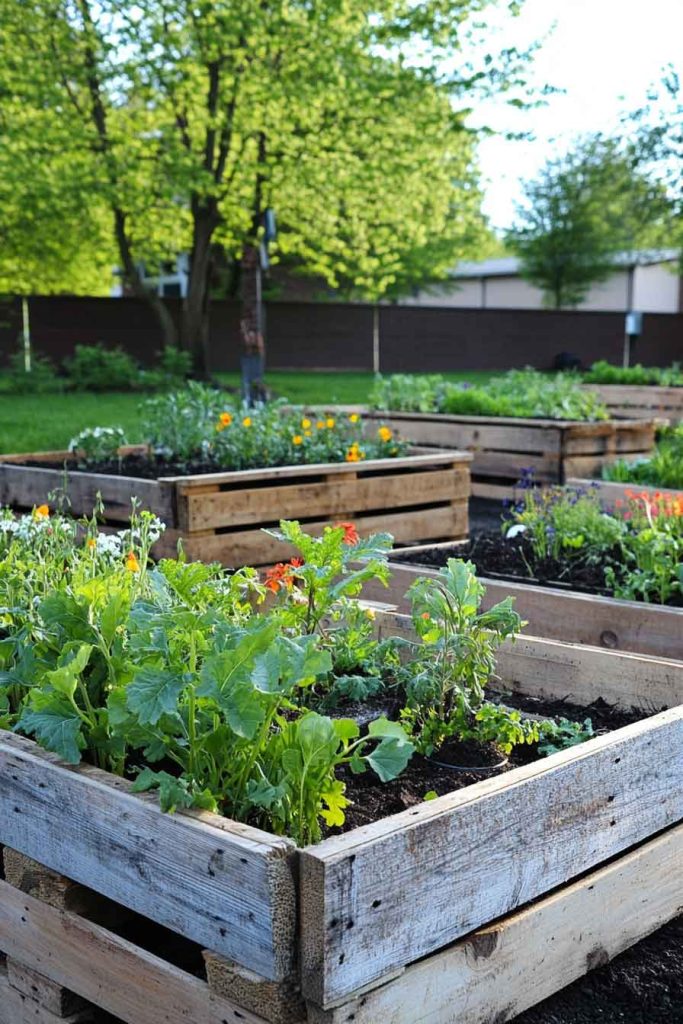
Repurpose wooden pallets by standing them on edge to create the sides of a raised bed. Line the inside with landscape fabric to hold soil in place.
This ultra-budget-friendly option uses free or cheap materials and comes together quickly. Ensure pallets are heat-treated (marked HT) rather than chemically treated for food safety.
12. Galvanized Stock Tank Bed
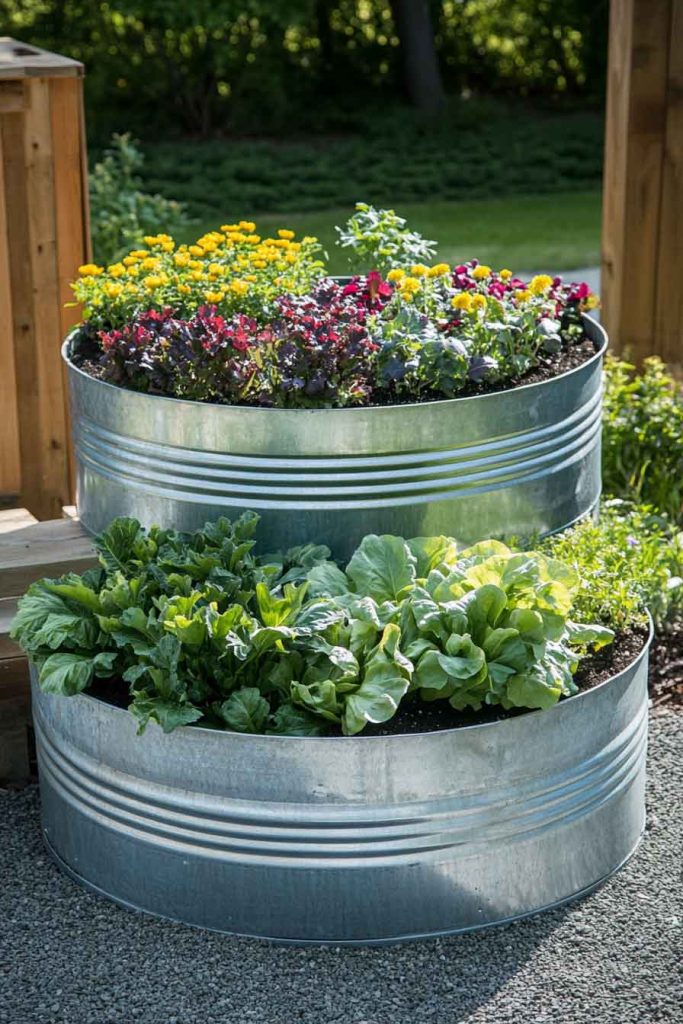
Use a large galvanized stock tank or water trough as a ready-made raised bed. Drill drainage holes in the bottom and fill with soil.
These metal containers are durable, movable, and have a rustic-industrial aesthetic. They work well on patios or in modern garden designs and require no construction skills.
13. Cinder Block Raised Bed
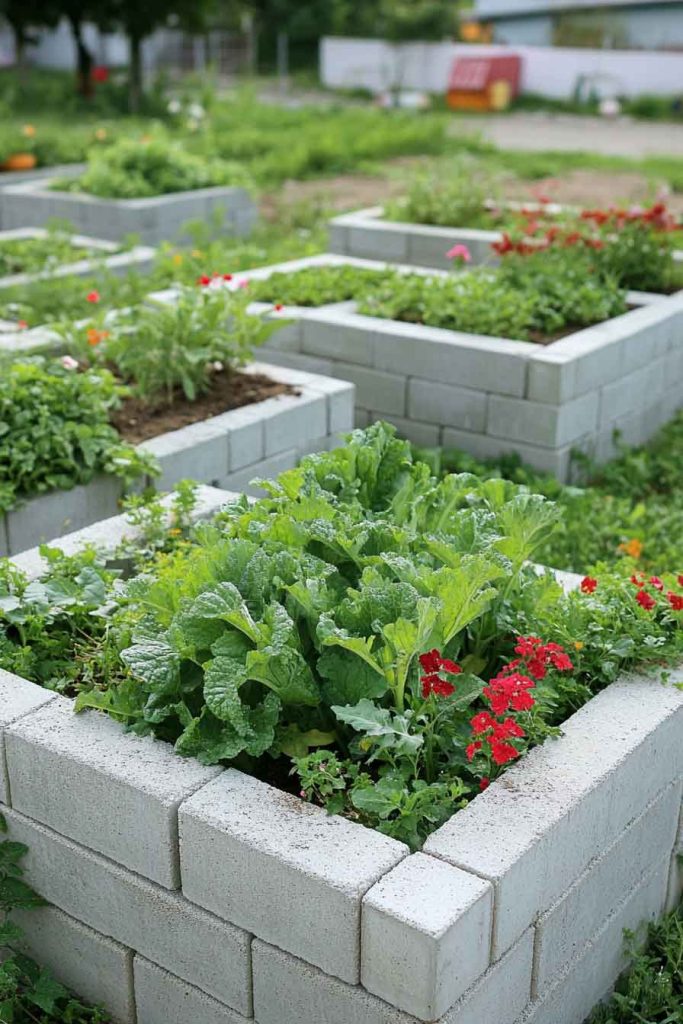
Stack cinder blocks to create raised bed walls without mortar. Arrange blocks in a rectangular pattern, stacking them 2-3 blocks high.
Fill the hollow centers of blocks with soil for planting herbs or flowers. This design is inexpensive, easy to build, and can be disassembled if you move.
14. Sloped Yard Terraced Beds
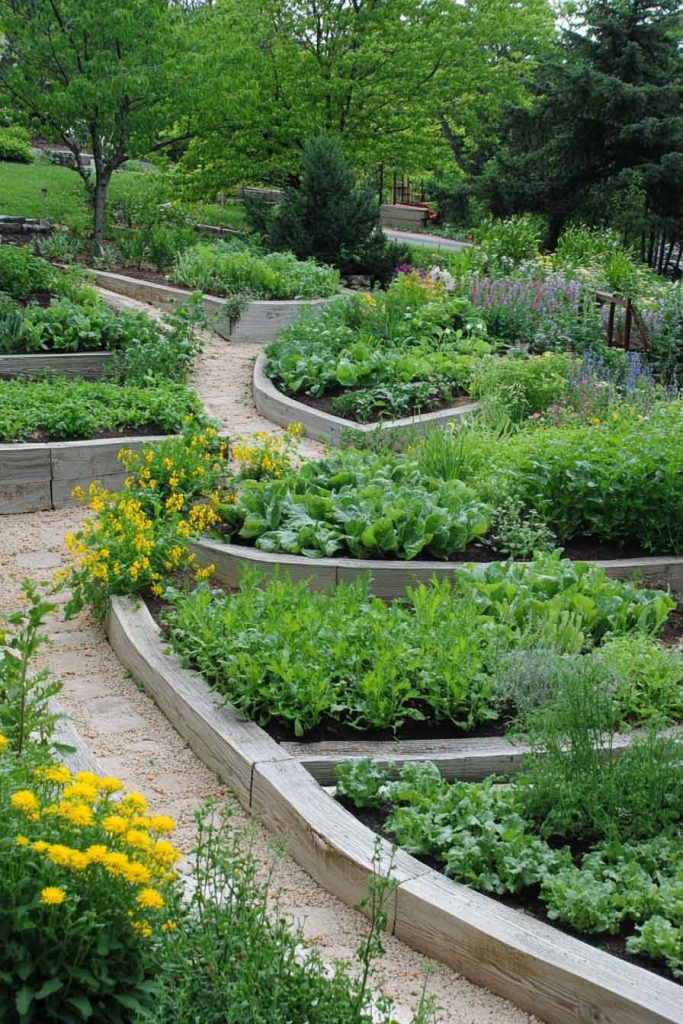
Build multiple raised beds into a slope to create terraced growing areas. Each bed acts as a retaining wall for the soil above it.
This design prevents erosion, makes sloped land usable, and creates an attractive stepped garden. Ensure each bed is level even though the overall yard slopes.
15. Raised Bed Planter Box
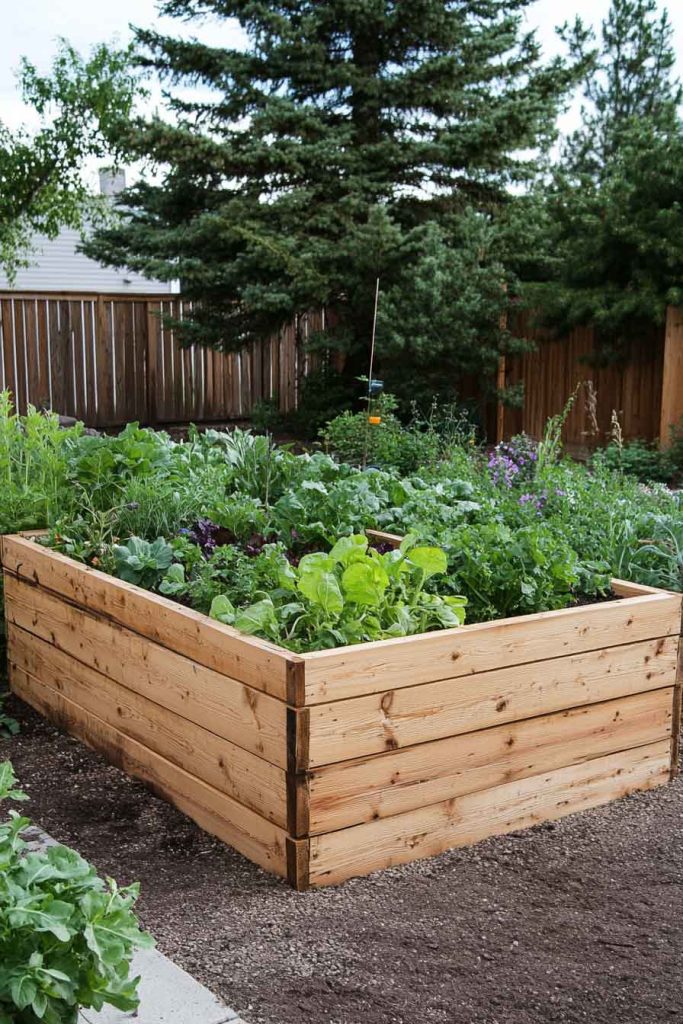
Create a deep planter box style raised bed, essentially a large container on the ground. Build it 18-24 inches deep for root vegetables and deep-rooted plants.
Add legs or a bottom if you want to place it on a deck or patio. This design offers maximum soil depth and excellent drainage for demanding crops.
16. Livestock Panel Arch Bed
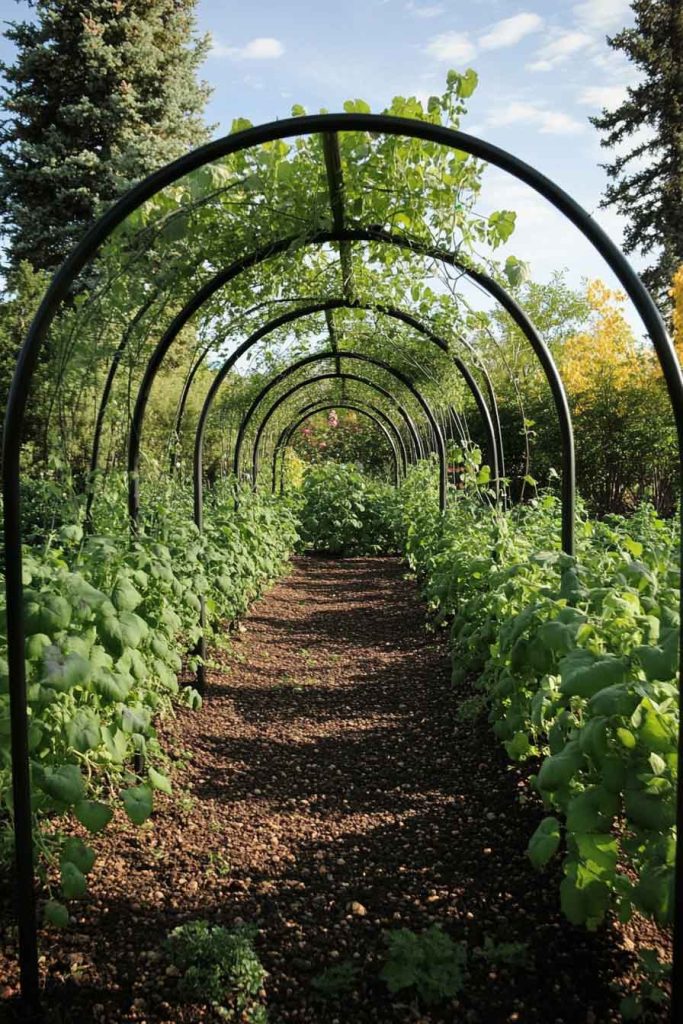
Use a curved livestock panel as a trellis over a raised bed. The metal panel creates an arch that supports climbing plants while defining the bed space.
This design is perfect for growing beans, peas, cucumbers, and squash. The arch creates a tunnel effect and maximizes vertical growing space.
17. Spiral Herb Garden
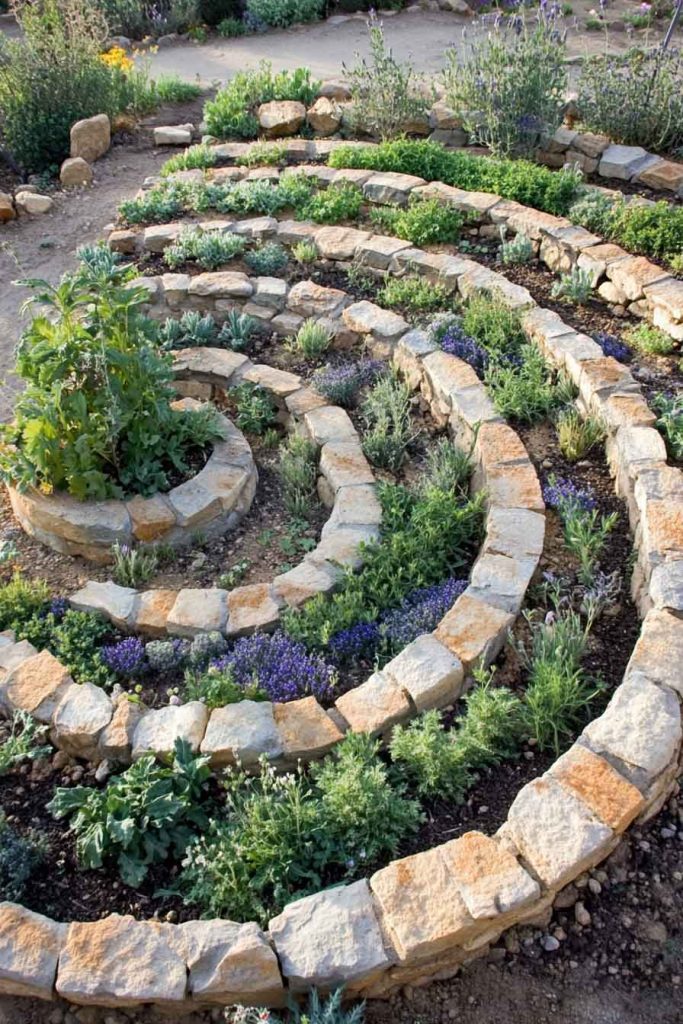
Build a spiral-shaped raised bed using stones or bricks. Start at ground level and spiral upward, creating different microclimates from bottom to top.
Plant moisture-loving herbs at the bottom and drought-tolerant Mediterranean herbs at the top. The spiral design is space-efficient and visually striking.
18. Raised Bed with Integrated Drip Irrigation
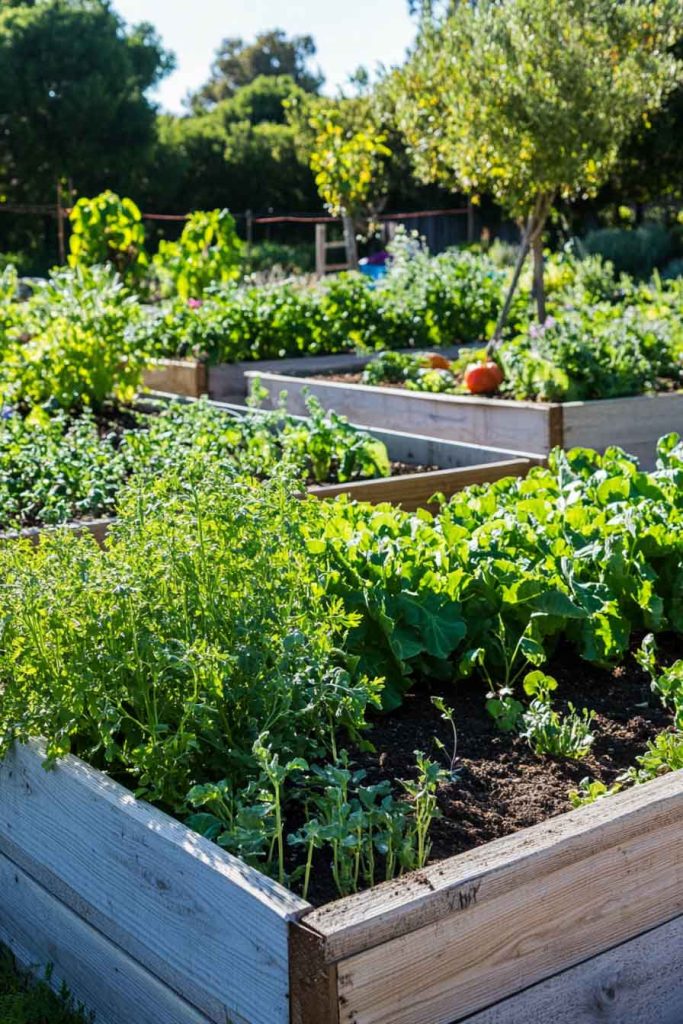
Build a standard raised bed but install a drip irrigation system before adding soil. Run soaker hoses or drip lines throughout the bed.
This design ensures consistent watering and reduces water waste. It’s especially valuable in hot climates or for gardeners who travel frequently.
19. Mobile Raised Bed on Wheels
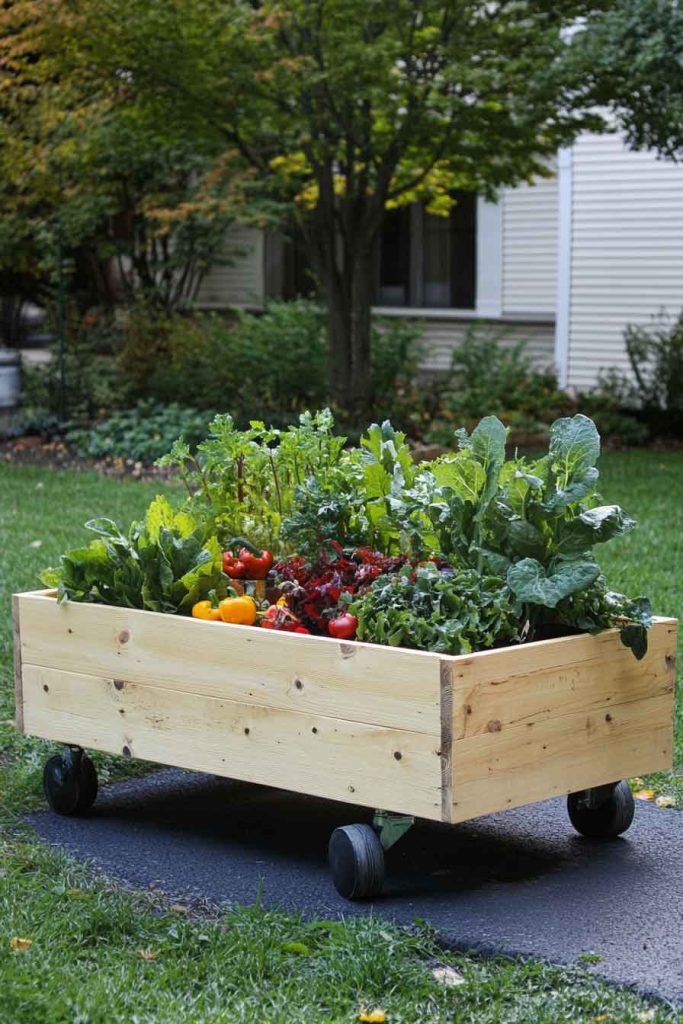
Attach heavy-duty casters to the bottom of a smaller raised bed. Keep the bed size manageable so it can be moved when full of soil.
This design allows you to move your garden to follow the sun or bring plants closer to the house during cold weather. It’s perfect for renters or people who like to rearrange their garden layout.
20. Wicking Bed
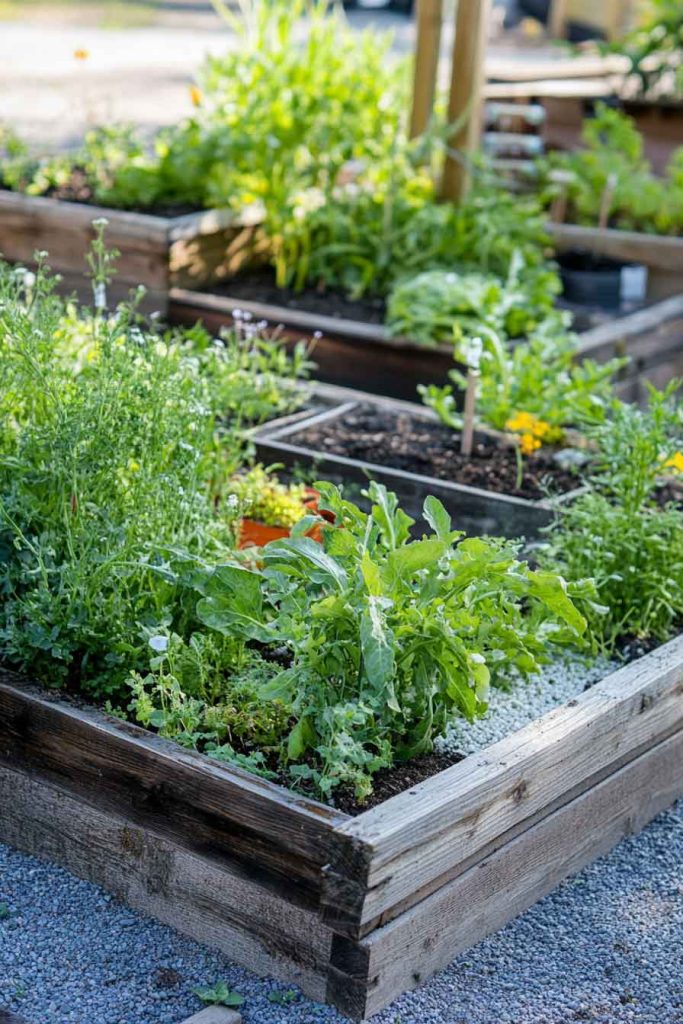
Create a self-watering raised bed with a water reservoir at the bottom. Add a layer of gravel, then a barrier layer, then soil, with pipes leading to the reservoir.
Water is drawn up through the soil through capillary action. This design reduces watering frequency and is excellent for water conservation.
21. Raised Bed Cold Frame
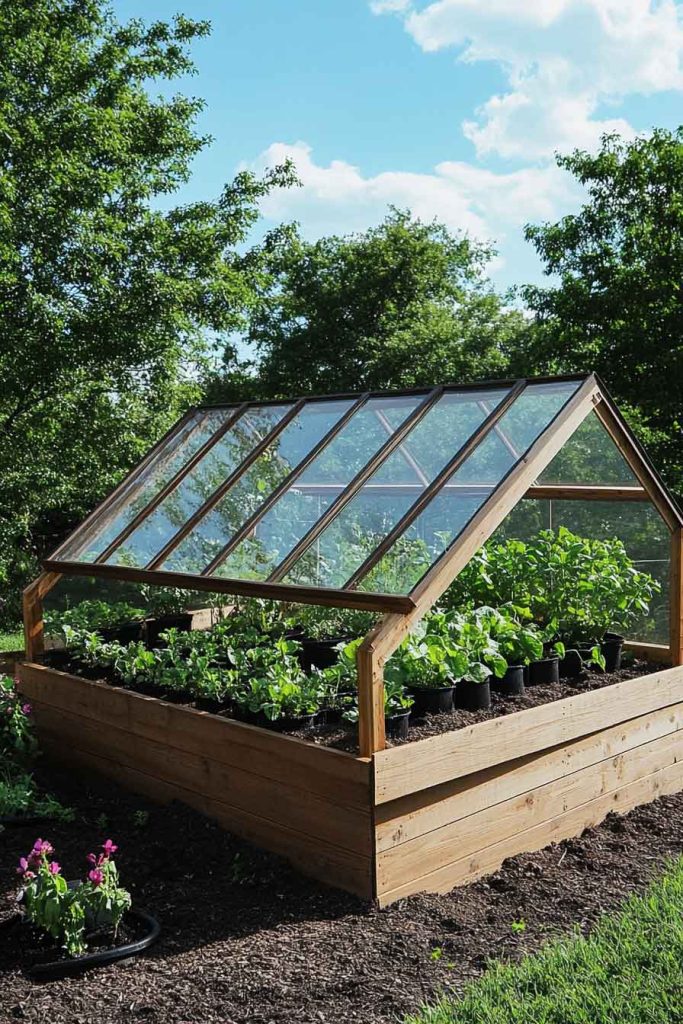
Build a raised bed with a slanted glass or plastic top that creates a miniature greenhouse. The back wall should be taller than the front.
This design captures and retains heat, allowing you to grow crops earlier in spring and later in fall. It’s perfect for greens, herbs, and cool-weather vegetables.
22. Hexagonal Raised Bed
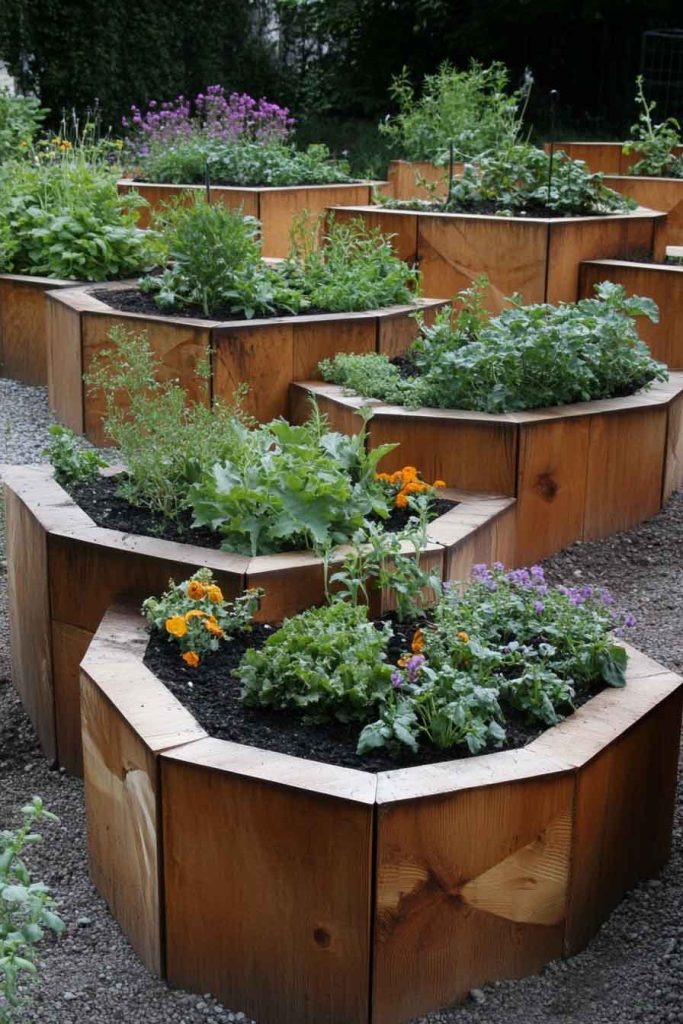
Create a six-sided raised bed for a unique geometric design. Cut boards at 30-degree angles to create the hexagon shape.
This shape is visually interesting and can be grouped with other hexagonal beds in a honeycomb pattern. The design works well for ornamental gardens or herb collections.
23. Railroad Tie Raised Bed
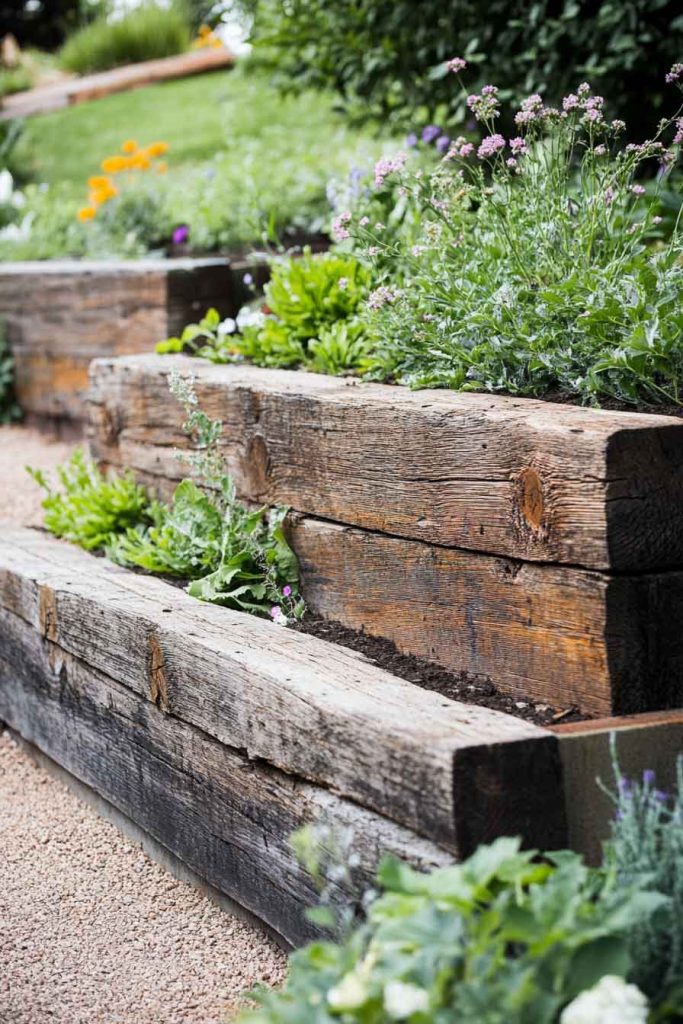
Use old railroad ties to create sturdy, rustic raised beds. Stack ties 2-3 high and secure them with rebar driven through pre-drilled holes.
Railroad ties are heavy and durable but older ties may contain creosote. Use newer, untreated ties for vegetable gardens or reserve creosote-treated ties for ornamental beds.
24. Bamboo Raised Bed
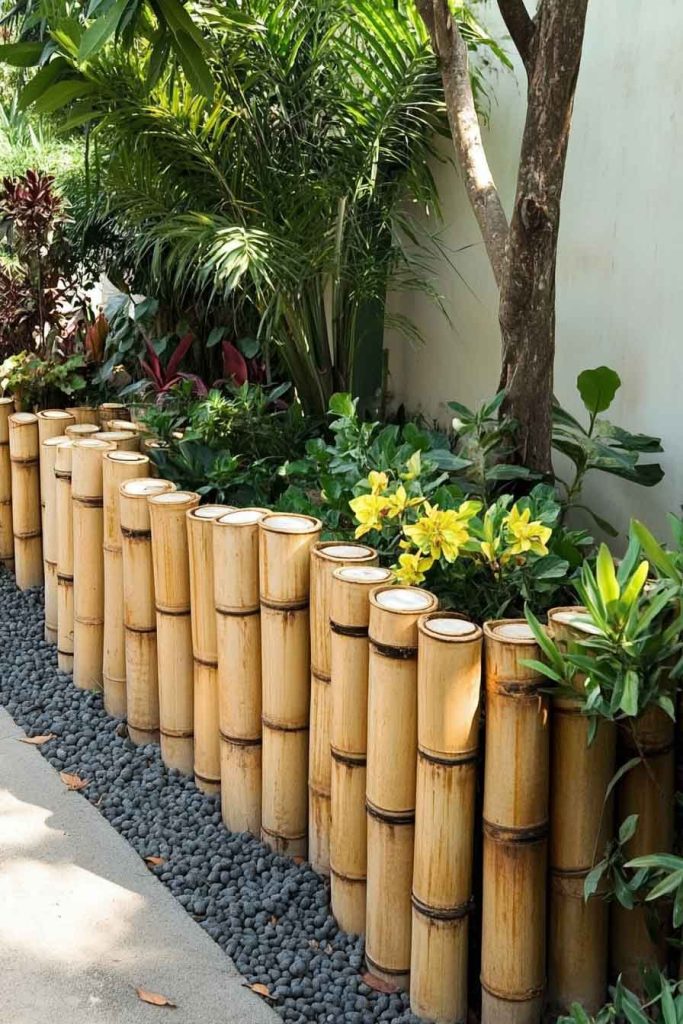
Build raised bed walls from bamboo poles lashed together. Bamboo is sustainable, attractive, and naturally rot-resistant.
This design works well in tropical or Asian-inspired garden designs. Line the inside with landscape fabric to prevent soil from washing through the gaps.
25. Raised Bed with Trellis Wall
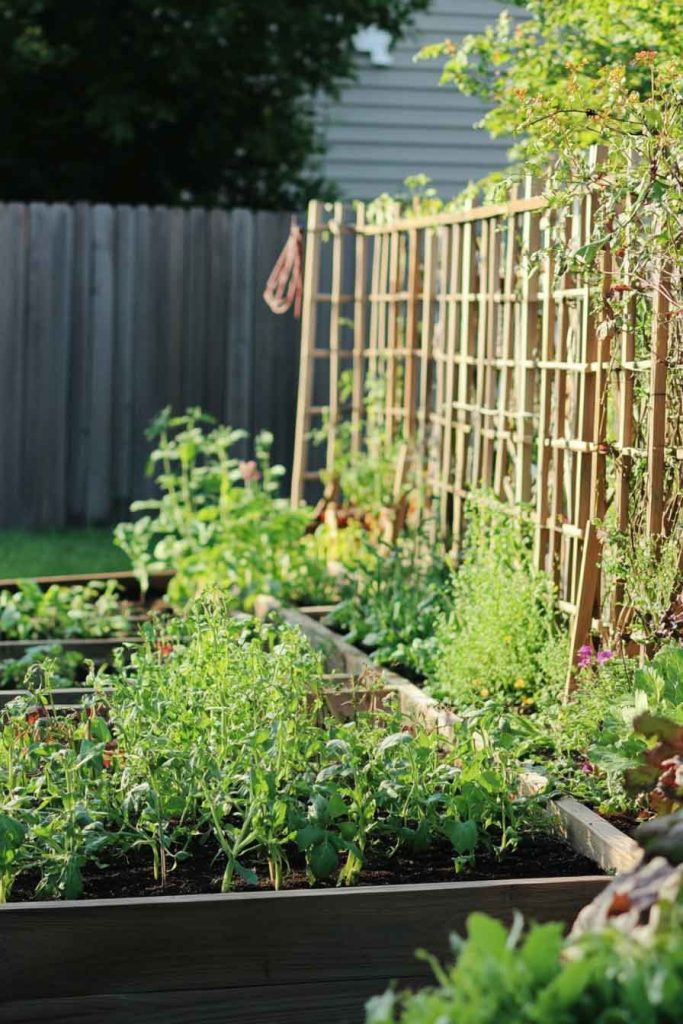
Build a raised bed against a wall or fence and attach a trellis to the vertical surface. This maximizes growing space in narrow areas.
The design is perfect for small yards or urban gardens where space is limited. Train vining crops up the trellis to take advantage of vertical space.
26. Straw Bale Raised Bed
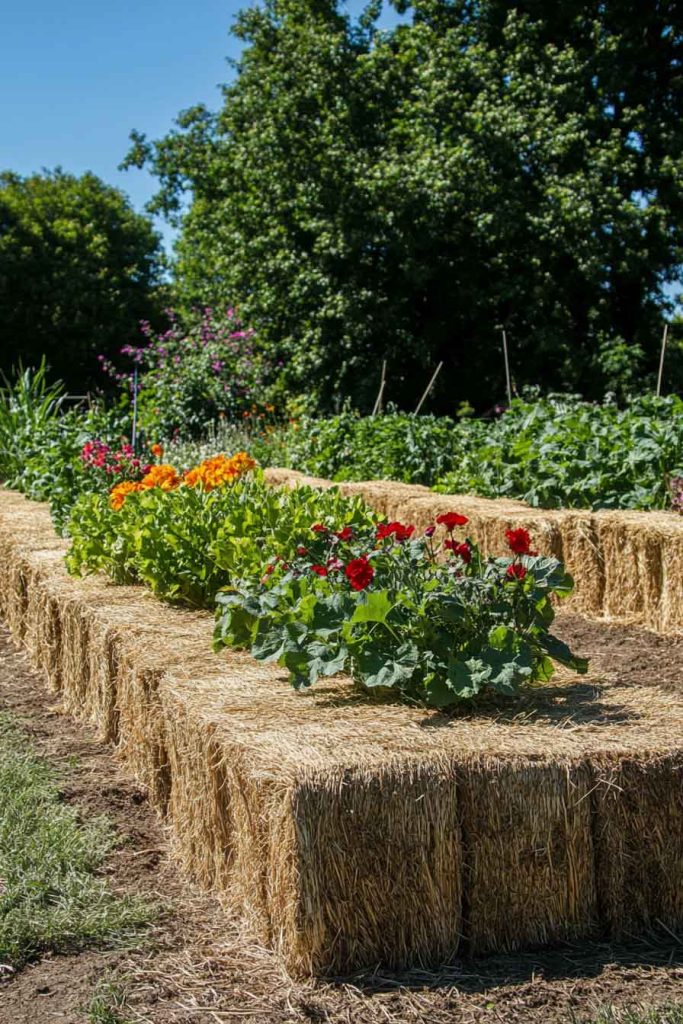
Create temporary raised beds using straw bales as walls. Arrange bales in a rectangular shape and fill the center with soil.
The straw bales gradually decompose, adding nutrients to the soil. This is an excellent option for testing raised bed gardening before building permanent structures.
27. Sunken Raised Bed
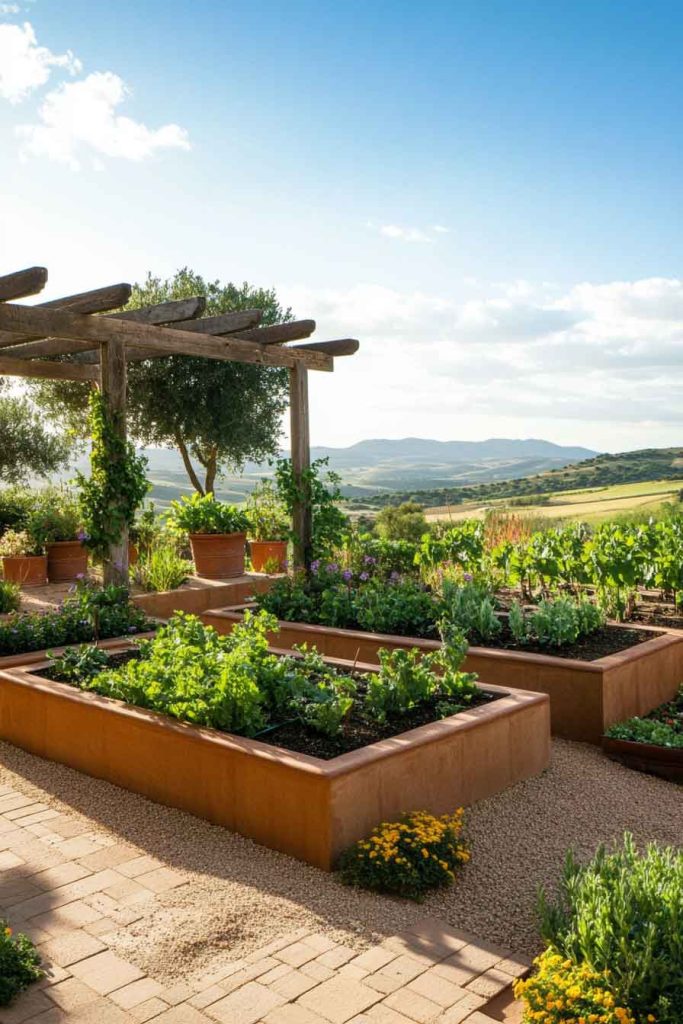
In very hot climates, build beds that are raised above the surrounding ground but recessed into the soil. Dig down 6 inches, then build bed walls 12 inches high.
This design provides the benefits of raised beds while keeping roots cooler and retaining more moisture. It’s ideal for desert gardening or areas with extreme heat.
28. Multi-Level Staircase Bed
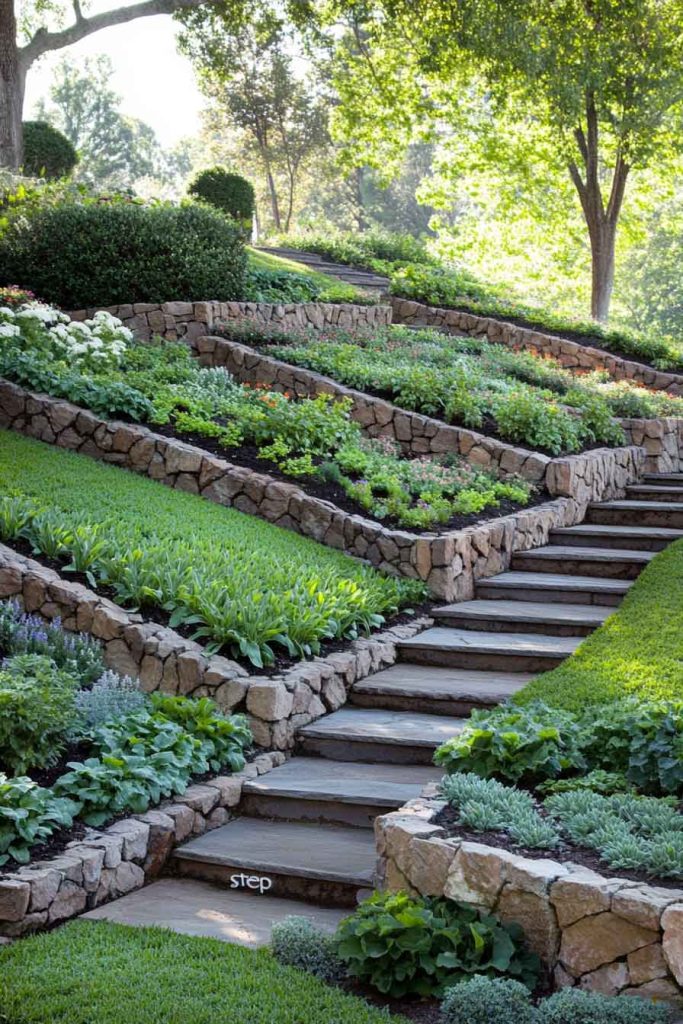
Build a series of raised beds in a staircase pattern, with each level stepping down or up. Each “step” is a separate planting bed.
This dramatic design works well on slopes or as a focal point in the garden. Plant cascading flowers or herbs to emphasize the stepped effect.
Tips for Building and Maintaining Raised Garden Beds
Choose the Right Location
Place your raised beds in an area that receives at least 6-8 hours of direct sunlight daily for vegetable gardens. Consider access to water and proximity to your house for convenience.
Ensure the ground is relatively level or prepare to level it before building. Avoid areas under large trees where roots may compete with your plants.
Prepare the Ground
Remove grass and weeds from the area where your bed will sit. Lay down cardboard or newspaper to suppress future weed growth.
Some gardeners prefer to dig down slightly and fill with gravel for improved drainage. Others place beds directly on the ground to allow plant roots access to deeper soil.
Use Quality Soil
Fill your raised beds with a mixture of topsoil, compost, and other amendments like peat moss or coconut coir. A common ratio is one-third topsoil, one-third compost, and one-third peat or coir.
Avoid using garden soil alone, as it compacts easily. The soil mixture should be light, fluffy, and well-draining while retaining adequate moisture.
Plan Your Layout
Space multiple beds 2-3 feet apart to allow for easy access and maintenance. Consider the mature size of plants when planning what to grow in each bed.
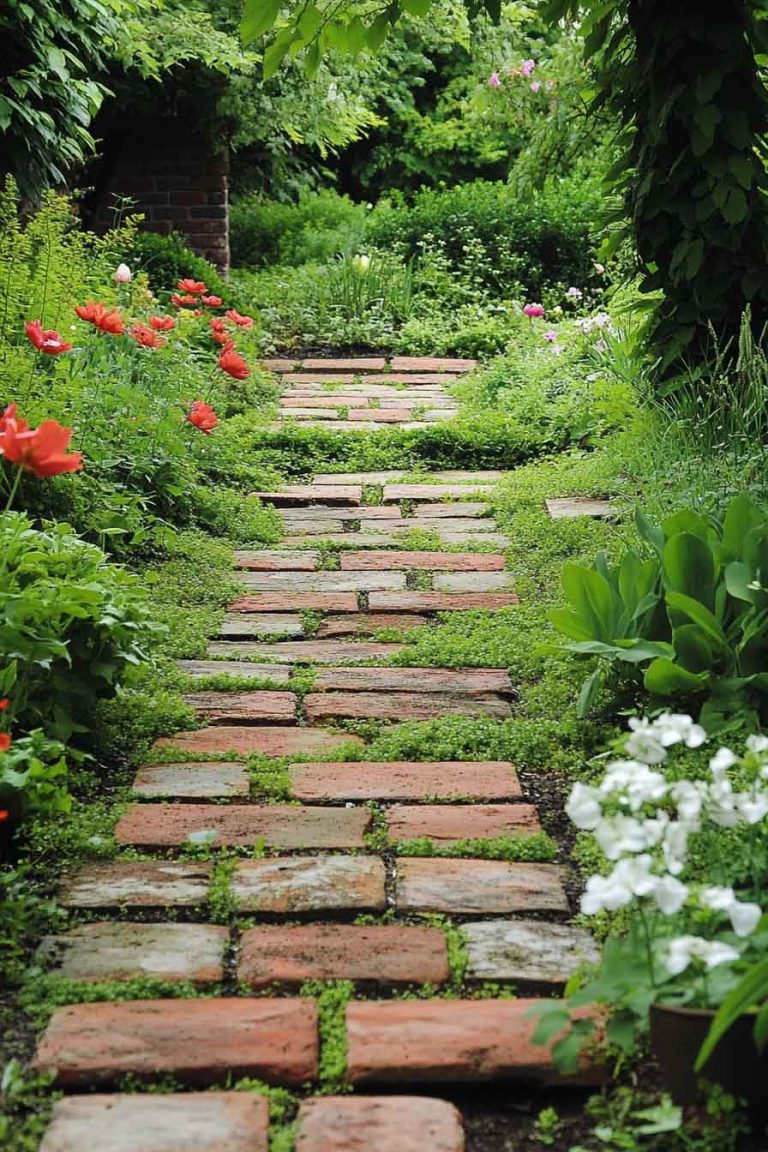
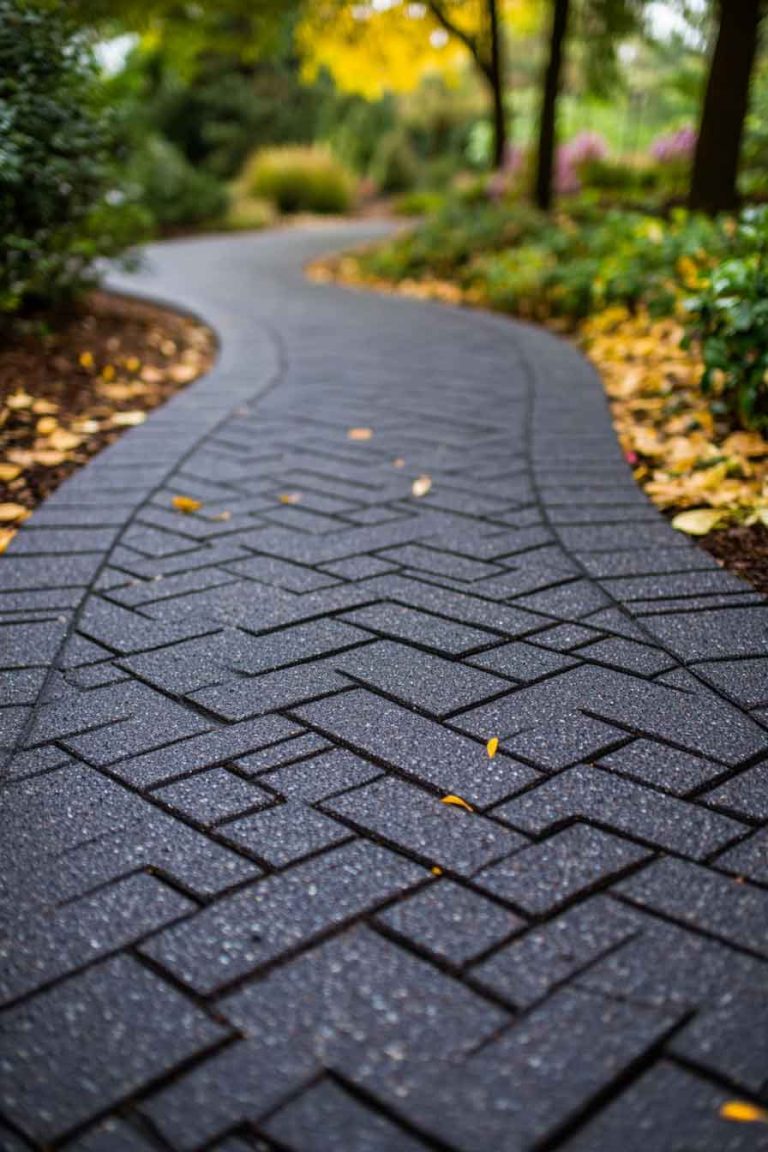
Group plants with similar water and nutrient needs together. Leave room for pathways covered with mulch, gravel, or stepping stones.
Practice Crop Rotation
Rotate plant families through different beds each season to prevent disease buildup and soil depletion. Don’t plant the same family in the same bed more than once every 3-4 years.
This practice helps maintain soil health and reduces pest problems naturally.
Maintain Your Beds
Add fresh compost each season to replenish nutrients. Top-dress beds with mulch to retain moisture and suppress weeds.
Check wooden beds annually for signs of rot and replace boards as needed. Keep pathways clear and maintain good air circulation around plants.
Raised Garden Bed Plans: Conclusion
Building raised garden beds is an excellent way to create a productive and beautiful growing space in your yard. Whether you’re working with a small patio or a large backyard, there are raised bed designs to suit every space, budget, and skill level. From simple wooden boxes to elaborate tiered structures, the possibilities for customization are endless.
The benefits of raised bed gardening include better soil quality, improved drainage, easier maintenance, and increased yields. By choosing quality materials and following proper construction techniques, you can create beds that will serve your garden for many years.
Start with one or two simple beds to learn the basics, then expand your raised bed garden as you gain experience. With proper care and attention, your raised beds will provide fresh vegetables, herbs, and flowers for seasons to come. The investment in time and materials will be rewarded with bountiful harvests and the satisfaction of growing your own food in an organized, efficient, and attractive garden space.